


A block bone graft restores jawbone to support dental implants.
The truth of the matter is, dental implants are very similar to building a house. You can have the best architects and the most expensive materials, but if you build on a swamp, that house is going to sink. In dentistry, your jawbone is the foundation. So, for patients who have lost a significant amount of bone – either because of long-term tooth loss, trauma or gum disease – a standard “fill-in-the-gaps” approach is not going to be enough.
At Lema Dental Clinic, Istanbul, Turkey, we see the block bone graft procedure as a beak point for those patients who have been told by other clinics that they “are not suitable” for implants. A block bone graft is the method that can bring this back. It’s not only a small portion of bone powder; it’s a full architectural restoration.
Know the Block Graft (The “Brick” Analogy)
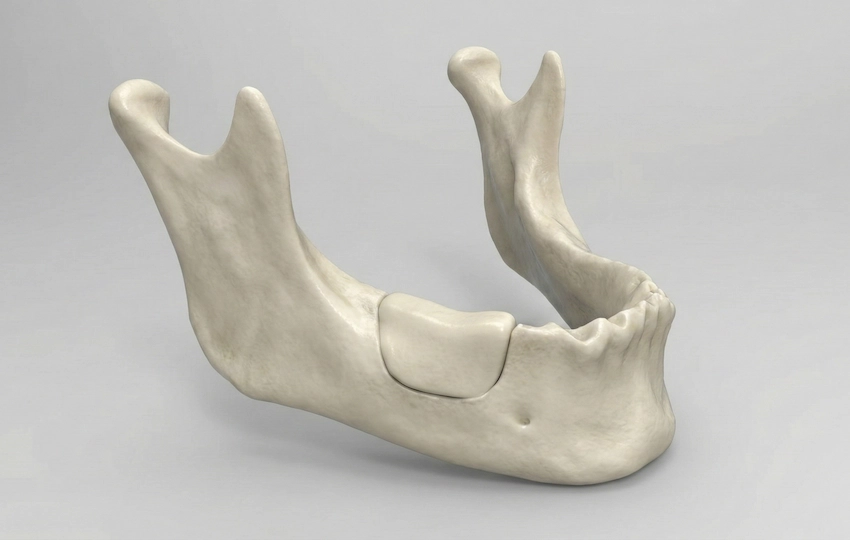
Most of the bone grafting that you will read about involves particulate grafts – think of it as sand or gravel that is used to fill small holes. But when the defect is so massive that the ridge’s height or width is lost, sand will not hold its shape. You need a brick.
Block bone grafting involves harvesting one solid piece of bone (most commonly from the patient’s own chin or backside of the jaw) and then attaching it to the deficient area with miniature titanium screws. It essentially recreates the lost bone shelf physically.
One of the leading oral and maxillofacial surgeons in Turkey, Professor Doctor Coşkun Yıldız, explains it this way: “We are not just patching a hole; we’re restoring the original face contour. The block graft serves as a biological scaffold which becomes integrated with your body, thus becoming living, breathing bone.”
The Procedure: A Step-by-Step Clinical Walkthrough
“Harvesting bone” is likely to get a reaction because it sounds like a very intense idea. However, why don’t we check out the real process of how this is achieved in a contemporary operating scene?. In most cases, the worry results from not knowing, so let’s explore this.
1. Pre-Surgical Mapping
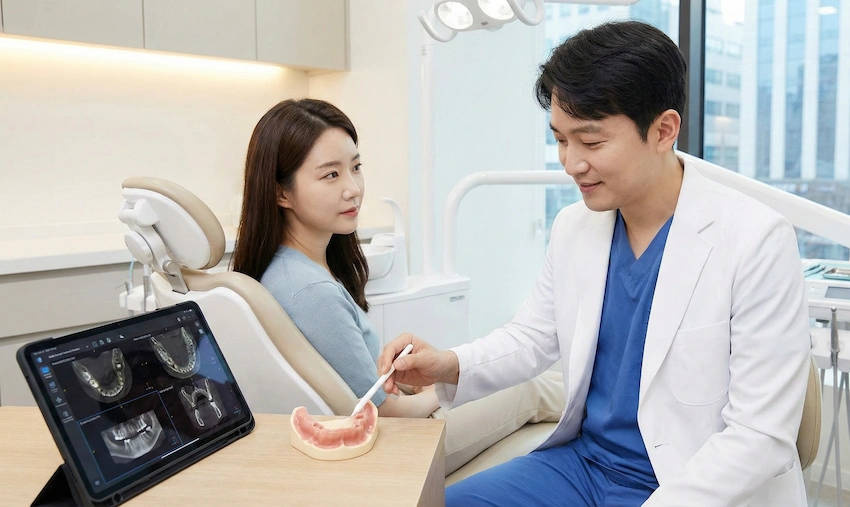
Before we make any incision, Dentist Polen Akkılıç and her team use 3D Cone Beam CT scanning technology to map your jawbone. Our measurements of the defect are very precise – down to the millimeter. We pinpoint the exact area from which we will take the bone block – usually the ramus (the back of the jaw) or the symphysis (the chin area).
2. The Harvest
To open the donor site, general anesthesia or deep sedation is used. With the help of special piezoelectric surgical instruments (which use ultrasonic vibrations to cut bone without damaging soft tissue), a small rectangular block of bone is taken out.
3. Fixation
This is the art of it. The block is customized to fit the defect flawlessly – like a jigsaw piece. It is then fixed to your jaw with microscrews. These screws make sure the block stays still. If the block is unstable, it will not heal, just the same way a broken arm won’t heal if it is not properly immobilized.
4. “Grouting” the Edges
We usually fill the spaces around the block with particulate bone (the “sand”) and then put a collagen membrane over the whole area. This membrane works like a biological band-aid, which stops your gum tissue from growing into the bone while it is healing.
Autogenous vs. Allogenic: What Material to Choose?
Even though we mainly opt for autogenous bone (the bone from your body) as it is the “gold standard” with living cells, that is not the only alternative.
| Feature | Autogenous Block (Your Bone) | Allogenic Block (Donor Bone) | Xenograft (Bovine / Animal) |
| Source | Chin or jaw ramus (intraoral) | Sterilized human donor | Cow or pig bone |
| Integration Speed | Fastest (live cells present) | Moderate | Slowest (scaffold only) |
| Need for 2nd Site? | Yes (harvest site required) | No | No |
| Resorption Risk | Low (maintains volume well) | Moderate | Variable |
| Best For | Severe vertical or horizontal defects | Patients refusing a second surgical site | Minor contouring |
The Healing Timeline
Patience is probably the most difficult thing to deal with in this treatment. In contrast to a mere filling, the biological process can’t be sped up.
Once the block is secured, we usually hold off for 4 to 6 months. During this period of time, the body revascularizes the graft. In essence, the body grows new blood vessels within the graft thus the bone is fused and it becomes an integral part of the jaw. Only when this joining is very firm do we come back to place the implants.
FAQ – Straight Talk from the Clinic
The majority of patients are amazed that the pain is controllable. The harvest site (where the bone was taken) is usually more painful than the graft site. We administer long-acting local anesthetics and instruct the use of anti-inflammatory drugs, so you will not be “chasing the pain” later. You will probably feel sore and swollen for 3-5 days but it will hardly be sharp pain.
Using a bone from a bottle is possible, and sometimes we even do it. However, only your own bone has osteoblasts (bone-forming cells) that are alive. For large, vertical defects, bone from a bottle frequently ends up as fibrous tissue rather than bone. Difficult cases such as these are more predictable with your own bone.
Yes, indeed. At Lema Dental Clinic, our surgical protocols are on par with or are even beyond EU standards. Professor Doctor Coşkun Yıldız is a surgeon who daily performs these kinds of complex reconstructions whereas a general dentist may only perform one a year. This is the way experience breeds expertise.
Thank you for your question. Regarding the dental implant placement after 4-6 months, we are only required to unscrew the small fixation screws. These screws were used only to fix the block securely during the healing period. Removing them is a matter of about 10 seconds.
Generally, we suggest that you stay for about 5 to 7 days after a block graft surgery on the day of the surgery. We will be able to observe the initial healing process, check if the stitches are still holding, make sure there is no infection, and then you can fly home.
- Chiapasco, M., Zaniboni, M., & Rimondini, L. (2007). Autogenous onlay bone grafts vs. alveolar distraction osteogenesis for the correction of vertically deficient edentulous ridges: A 2–4-year prospective study on humans. Clinical Oral Implants Research, 18(4), 432-440.
- Misch, C. M. (2011). Contemporary Implant Dentistry (3rd ed.). Mosby Elsevier.
- Pikos, M. A. (2005). Block autografts for localized ridge augmentation: Part II. The posterior mandible. Implant Dentistry, 14(3), 305-313.
- Sakkas, A., Wilde, F., Heufelder, M., Winter, K., & Schramm, A. (2017). Autogenous bone grafts in oral implantology—is it still a “gold standard”? A consecutive review of 279 patients with 456 clinical procedures. International Journal of Implant Dentistry, 3(1), 23.
- Cordaro, L., Torsello, F., & Miuccio, C. (2011). Mandibular bone harvesting for alveolar reconstruction and implant placement: Subjective and objective cross-sectional evaluation of donor and recipient site morbidity. Clinical Oral Implants Research, 22(11), 1331-1337.

