


Because the tooth loses its blood supply and darkens from within.
This is a scenario we regularly see.Initially, a root canal is performed to preserve the tooth; the pain goes away, and the treatment is deemed a success. However, sometimes after a few months or even years, the tooth starts acting up and becomes the odd one out. The tooth loses its brightness, and it slowly turns dull grayish and even brownish in color.
We at Lema Dental Clinic in Turkey hear patients’ questions about whether the discoloration means the failure of the treatment. Discoloration is indeed a biological after-effect of the tooth being “non-vital”, but it is a condition that we can treat very well. Professor Doctor Coşkun Yıldız frequently makes an analogy between a pulp-less tooth and a tree without sap: the tree keeps standing but it loses its translucent and vibrant glow which is similar to living tissue.
Anatomy of a Change in Color: What Happens in the Tooth
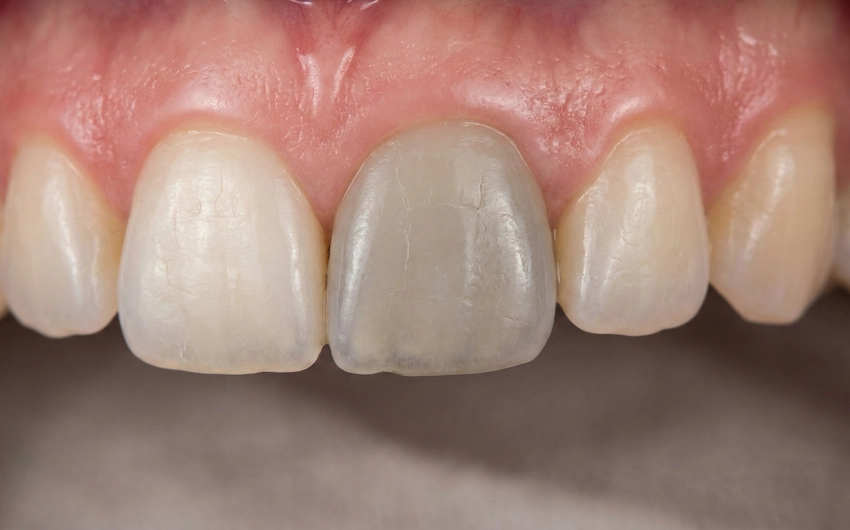
Dental Clinician Akkılıç and her team remove the infection in the root canal by getting rid of the pulp. You may think of it as the “soul” of the tooth since it contains nerves and blood vessels. Once the pulp is taken out, the tooth is without a doubt, non-living. So, what is it that makes the tooth change color?
- Breakdown Products of Hemoglobin: It is an analogy with a bruise hidden under a fingernail. In case there are tiny quantities of blood left in the tooth due to the initial injury or the procedure, the iron component of the blood will decompose. The resulting pigments find their way to the dentin through the microscopic dentinal tubules and thus, the tooth is stained from within.
- Debris and Tissue: If very small pieces of organic tissue tained in the “pulp horns” go through the stages of decomposition, a dark, necrotic, and discolored look can develop.
- Filling Materials: Historically, canal-sealing materials (e.g. silver points or certain pastes) were known to cause discolored crescents around the treated teeth by releasing dark colors into the tooth structure over time. As the pioneers of modern endodontics have sorted this out, older treatments continue to suffer from the drawback of graying.
Lema Style: Smile Restoration in Turkey
The question that everyone probably asks is: should you accept the “dead look” for the tooth? Certainly not. Our clinical experience indicates that the internal stain is more responsive to treatment than the usual surface whitening.
External whitening (the one you do at home by applying to the surface of the teeth) can completely get rid of the stains caused by coffee or smoking, but it has almost no effect on the discoloration from inside a root-canal-treated tooth. What we do in the clinic is simple: we open the tooth. What we call this is Internal Bleaching or the “Walking Bleach” method.
Comparing Your Restoration Options
| Treatment Option | Procedure Method | Best For… | Longevity |
| Internal Bleaching | Placing whitening agent inside the tooth for several days. | Intact teeth with mild to moderate graying. | 1–3 years (may need touch-ups). |
| E-Max Veneers | A thin porcelain shell bonded to the front. | Significant discoloration or minor chips. | 10–15 years. |
| Zirconium Crowns | A full “cap” that covers the entire tooth. | Teeth that are brittle or heavily filled. | 15+ years. |
What Influences Tooth Susceptibility to Fracture?
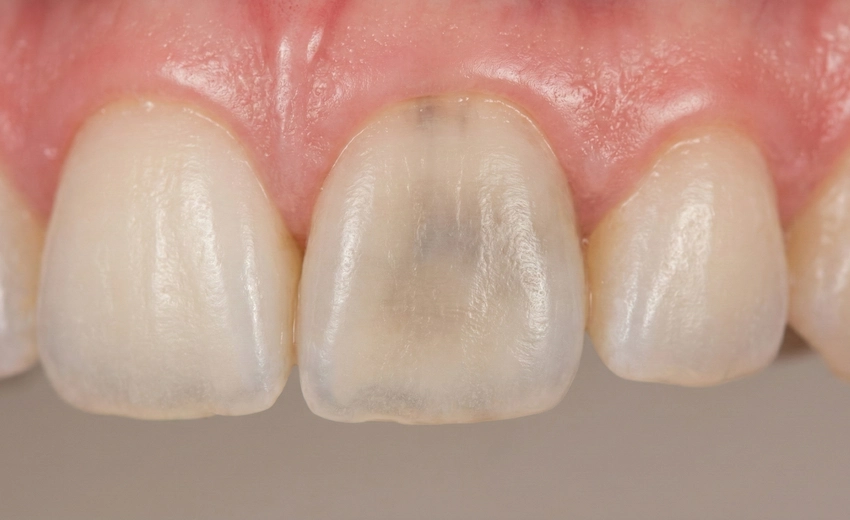
However, a close examination of a tooth’s structure can reveal more things besides discoloration. A dead tooth will also weaken and be more prone to cracking over time.Professor Doctor Coşkun Yıldız explains it by comparing a fresh and a dry branch; the fresh one will bend, but the dry one will break. Because a tooth is no longer “refreshed” from the inside, it becomes barely able to resist breaking. For this reason, we are always willing to cover a tooth with a crown not only to make it look good, but also to give it the best possible protection structurally.
Frequently Asked Questions
It really doesn’t have to be. A dark change in color may indicate a problem, but most of the times, it is just the leftover pigments from the initial treatment or the decay of the inner structure of the tooth. We at Lema Dental Clinic always do the digital X-ray first to check whether the root canal is still healthy.
I’m afraid the idea won’t work typical whitening strips or gels only affect the enamel on the surface of the tooth the discoloration of the root canal treated tooth is actually due to the dentin layer which is underneath the enamel this is like trying to remove a stain on the inside of the window by cleaning the outside.
Definitely not. As the nerve has been removed during your root canal anyway, you will not experience sensitivity or pain while undergoing internal bleaching. It is an easy and non-invasive way of brightening your tooth from the inside.
If internal bleaching is the method we choose, it normally requires two short visits. If masking the color and strengthening the tooth with a veneer or crown is the way we go, Dentist Polen Akkılıç and her team are able to carry out the procedure within 3 to 5 days with the help of our in-house CAD/CAM technology.
There is a slight possibility of relapse over a few years with internal bleaching. On the other hand, a top-grade Zirconium or E-Max restoration will make the color permanent and unchangeable.
- Abbott, P., & Heah, S. Y. (2009). Internal bleaching of non-vital teeth for patients with intracoronal discoloration. International Dental Journal, 59(4), 197–204.
- Dietschi, D. (2006). Non-vital bleaching: general considerations and report of two clinical cases. European Journal of Esthetic Dentistry, 1(1), 52–64.
- Plotino, G., Buono, L., Grande, N. M., Pameijer, C. H., & Somma, F. (2008). Non-vital tooth bleaching: a review of the literature and clinical procedures. Journal of Endodontics, 34(4), 394–407.
- Watts, A., & Addy, M. (2001). Tooth discolouration and staining: a review of the literature. British Dental Journal, 190(6), 309–316.
- Zarow, M. (2014). Endo-Prosthodontics: A Guide for Clinical Practice. Quintessence Publishing.

