


Mouth guards reduce the risk of dental and jaw injuries during sports.
You have spent months training, improving your reflexes, and physically exerting yourself. However, all that can be lost in a moment—a random elbow, a hard fall, or a speeding ball—and a dental emergency may occur. Sports gear can cover the hands and feet, but the truth is, very often the part of the body that is most at risk is completely ignored—the smile, which is the case at Lema Dental Clinic where we receive many such cases.
Sports dental injuries, in fact, can be largely avoided. While your helmet guards your brain, a quality mouth guard can protect your teeth, jaw, and even your brain stem by acting as a shock absorber.
The Shock Absorber Effect: How It Actually Works
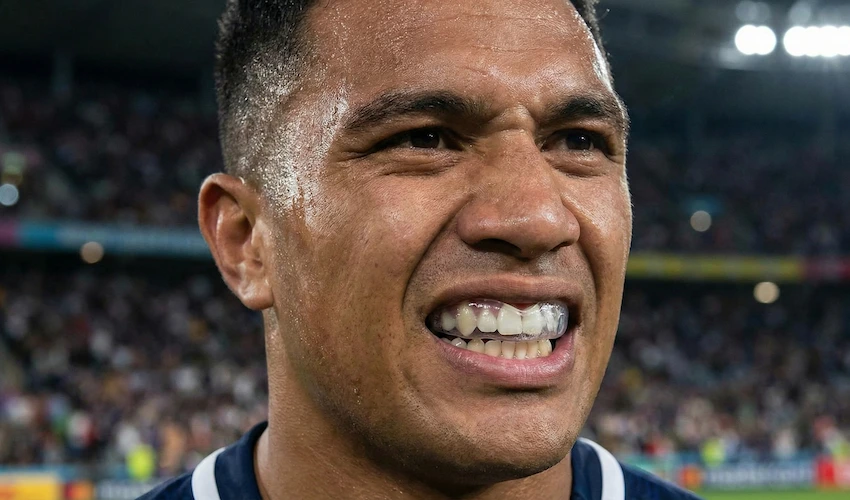
Imagine a mouth guard as more than just a plastic piece, but a crumple zone for your face. Similarly to how a car is designed to fold and thus absorb the impact, saving the passengers inside, a professional mouth guard places the force of the blow in different channels.
When this barrier is missing, the energy of the impact is transferred straight through the teeth, which may result in crown fractures, root damage, or tooth avulsion, a tooth completely knocked out of its socket. Professor Doctor Coşkun Yıldız frequently points out that the price of a custom guard is only a small part of the cost of a full-mouth reconstruction or dental implants after a preventable trauma.
Why “Boil-and-Bite” Often Falls Short
At the sporting goods store, you probably noticed the rows of cheap heat-and-mold guards. They look like a simple solution. On the other hand, Dentist Polen Akkılıç and her team have seen the limitations of these “one-size-fits-most” products very often in their practice.
The question is, if a guard is not comfortable, will you wear it? Most generic guards are so big that they interfere with breathing and speaking. Also, guards tend not to be even in thickness, thus some parts of your teeth are going to be thin and unprotected. Based on our clinical experience at Lema Dental Clinic, Turkey, a vacuum-formed custom-fit guard is far superior in terms of protection. It won’t fall out even when you’re completely out of breath and you can concentrate on the game rather than on your mouth guard.
Comparing Your Protection Options
| Feature | Over-the-Counter (Boil-and-Bite) | Custom-Fit (Lema Dental Clinic) |
| Fit & Comfort | Often loose; requires clenching to stay in | Precise; fits like a second skin |
| Speech & Breathing | Can be restrictive and bulky | Minimal interference with airflow |
| Material Durability | Degrades quickly with use | High-grade, medical-grade laminate |
| Impact Absorption | Inconsistent thickness | Optimized thickness for high-impact zones |
| Long-term Value | Cheap initially, higher injury risk | Investment in lifelong dental health |
It’s More Than Just Your Teeth

However, an examination of the anatomy reveals more details. The mandible can be pressed against the base of the skull with great force if the chin is hit. A mouth guard made especially for your teeth can really help since it keeps a crucial distance between the upper and lower teeth. This gap serves as a “buffer” that can reduce the likelihood of concussions by absorbing the shocks that travel to the head.
That is the reason why we always notice patients who use a tailor-made mouth guard are playing safer and harder, and in the case of boxing, football, or basketball, they even boast about the mental edge it gives them.
What’s The First Thing To Do After A Dental Trauma?
You have to be quick to act when a tooth is involved, in particular. In fact, the maximum “golden window” you might have to get a dental professional to see you and treat you can be as little as 30 to 60 minutes. One of the ways we help our patients at Lema Dental Clinic is by ensuring that we have the ideal arrangements and the right protocols to provide you with the top level of care should the need arise due to dental trauma. But what we essentially want is to meet our patients sociably and in good spirits rather than serving them from the emergency room.
If a tooth comes out, you should try to put it back in right away yourself. Time is of the essence, so reimplant it immediately. Only hold the crown part of the tooth; do not touch the root. In case you are unable to do this, put it in milk and come to us as soon as possible. We will do everything possible to save the tooth.
Frequently Asked Questions
None of the equipment can totally prevent a concussion. At least that’s what we all hope for since various studies have shown that the use of custom-made mouthguards during sports can help reduce the incidence rate of concussion by two mechanisms: absorbing part of the energy of the impact and redistributing it over a broader surface area, thus lowering the peak muscle force that occurs upon impact.
Actually, during the time you have braces, you should be extra careful in protecting your mouth and hence wear a mouth guard (specially made) even when you only practice moderate sports because the mouth once it is broken by the orthodontics appliances breaks further inside third level tissues too—that is why we recommend wearing special mouthguards that will provide space for the brackets to move while still protecting the teeth.
Depending on the level of your sports, one mouth guard might actually last up to several years in a professional soccer player (who is generally an adult). But, for a young athlete who is constantly growing, it is better to check at least every 6 months since the mouth is changing and the protection might not fit anymore.
Yes, and one of the main reasons is the fit because they are usually store-bought and don’t perfectly fit the teeth. On the other hand, if you purchase one from Lema Dental Clinic that is custom-made specifically for your dental arch the mouth guard will definitely not hinder your breathing. Such a mouthguard is made to stick tightly to your teeth so that it requires no biting to keep it in place, which in turn gives you full access to the mouth opening keeping the airway clear.
Keep in mind that it is also a part of you. If you have used it, immediately wash your mouthguard under running cold water and then with an antibacterial liquid. Don’t use hot water because it can change the texture of the material. Last of all, always keep it safe and clean in a container that is breathable container.
- Knapik, J. J., Marshall, S. W., Lee, R. B., et al. (2007). Mouthguards in Sport Activities: History, Physical Properties and Efficacy. Sports Medicine, 37(2), 117–144.
- Newsome, P. R., Tran, D. C., & Cooke, M. S. (2001). The role of the mouthguard in the prevention of sports-related dental injuries: A review. International Journal of Paediatric Dentistry, 11(6), 396–404.
- Green, J. I. (2017). The Role of Mouthguards in Preventing and Reducing Sports-related Orofacial Injuries. Dental Clinics of North America, 61(2), 369–384.
- Labella, C. R., Smith, B. W., & Sigurdsson, A. (2002). Effect of mouthguards on dental injuries and concussions in college basketball. Medicine & Science in Sports & Exercise, 34(1), 41–44.
- Finch, C., Braham, R., McIntosh, A., et al. (2005). Evidence-based relationships between sportspersons’ use of mouthguards and head/orofacial injuries. Journal of Science and Medicine in Sport, 8(3), 308–315.

