


Start with soft foods and avoid sticky or hard foods.
Receiving your first dental prosthetics is a milestone you will always remember. You get back your smile, and you regain confidence. Unfortunately, the first day when you eat after the dentist will probably be your scariest meal. It’ll be like you put an entirely new object into your mouth. It takes effort even to do a simple chewing motion.
Imagine your gums like the base of a new construction. A denture is a large piece of a building standing on that base. Naturally, any construction will settle over time. You are unsteady until you get your balance right. It is hard work to alter the types of food you get used to eating. But we are with you every step of the way, so do not worry, for you are going to start having the foods you love in no time.
First Month: Your Mouth Needs Some Training
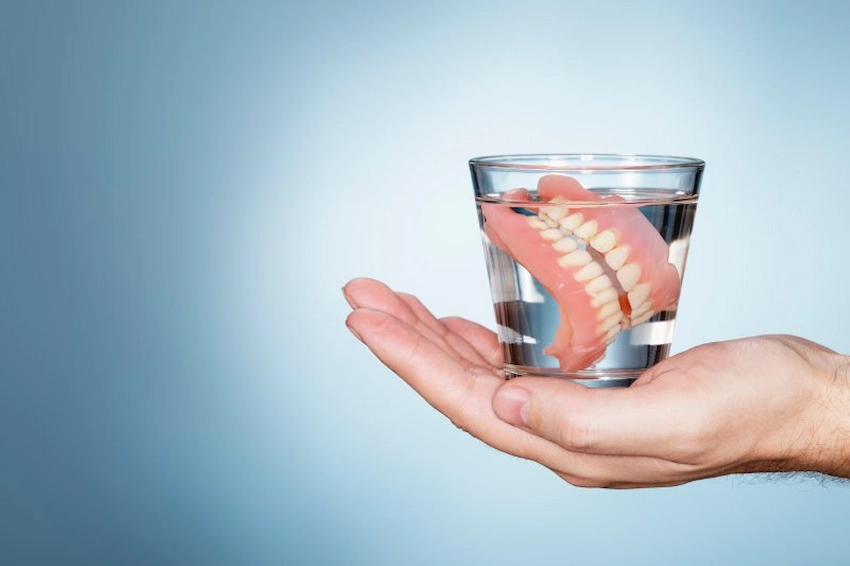
Your mouth must take some time getting used to and healing up to your new denture. In a sense, it’s like teaching a bike and dentures at the same time: both activities demand training of the cheeks, tongue, and jaw in an entirely different way.
In our practice, Dr. Polen Akkılıç and her team of professionals ensure that all of the details will match your denture well. Even with this, it’s still a good idea to go slow. Take your food in very small bite sizes. Use your left and right sides of the mouth to chew together simultaneously. This way you can ensure that your jaw does not shift or your denture tip over accidentally.
Why Adhesives Work Best for Us?
On many occasions, we are approached with a question: how to keep the newly-fitted teeth in place? We recommend to our patients the use of a premium dental adhesive in the first weeks after denture insertion. It doesn’t seem enough to rely on natural suction only, for instance. A quality adhesive offers another layer by means of cushioning; it is soft and allows food particles to be locked out, plus it is a great support when you are biting down.
Guide to Diet: What Can You and Should You Eat?
Nevertheless, let’s get down to your plate. Choosing your meals really affects your recovery and the time your teeth learn to chew.
You should start off your menu only with soft foods and liquids at the beginning. Some great dishes you can enjoy during this time include the warming soups, the thick yogurt, and, of course, the soft-boiled eggs!
After your teeth are getting used to it, you should be able to handle even baked fish and soft pasta.
This is the situation with our patients at the clinic after their first month:
| Food Category | Recommended Choice | Not Recommended |
| Protein food | Soft-cooked fish, scrambled eggs, soft tofu | Tough beef, especially with tendons and muscles, tough beef jerky, meat that sticks to the bone |
| Fruits and Vegetables | Fruit puree, mashed potatoes or banana | Carrots raw, apple, a slice of corn with its cob |
| Breads and Grains | Soft noodles, porridge, soft bread | A crusty or hardened loaf, seeds on your roll |
| Snacks & Dessert | Ice cream, soft cheese, mousse | Caramel-coated candy, sticky gum candy, hard nuts |
Chewing on tough meats causes your muscles to strain and your jaw to clench, which can lead to pain in your mouth that is sensitive because of being newly operated on or having dentures.
Sticky foods can actually cause the teeth to move out of place and break the seal of the adhesive. Hard foods will not only cause denture discomfort but will also hurt your gums because a tiny piece of such food can actually be caught right in between the upper denture and your jaw and cause a very sudden and very severe pain.
Success Stories in Long-Term: A Lema Dental Clinic Story

This question keeps coming up: Do I have to keep eating just soft food forever?
No, of course not. With your muscles adapting and strong development of your gum tissues.
Gradually, our patients who come for denture treatment in Turkey go back to enjoying their former favorite foods. It’s not even very difficult to learn how to prepare the food the right way. Chop apples into very small pieces, peel corn from the cob, then go easy and enjoy meals without stress again.
Frequently Asked Questions (FAQ)
When will it be safe enough to eat a normal meal?
Doctor’s Comment: No two patients go at the same speed, ed so healing will be different. Still,l we reckon it is about three to four weeks before one can be totally confident if he or she can start eating normally. Keep calm as it’s very natural, and if you feel pain in any of the dentures, we shall modify the shape so that they fit better for you.
Will I still be able to eat steak?
Doctor’s Comment: Definitely yes! As your gums become healed and your dentist makes you very comfortable with your teeth, you can definitely go for that steak. Only that, when you do it, you have to make sure that the pieces of meat are really small and that you chew on both sides of the jaw.
What reason have I got for my food having a different taste?
Doctor’s Answer: The majority of the taste buds on the roof of the mouth are covered by the upper denture. It will therefore take longer for your brain, which interprets taste, to come to terms with the plastic covering. Your taste will almost immediately get better in a few weeks.
Is it advisable to wear the denture at night?
Doctor’s Answer: I have always advised my patients that they should keep their dentures out at night. You do this because your gums are alivingtissues and the need is to rest and get some oxygen through them. To clean the teeth and avoid any bacterial growth at night, you can soak them in water.
When to know if a new application of adhesive is needed?
Doctor’s Comment: You feel your teeth are not steady anymore when you eat or talk. The taste of food might be more affected by your denture, and also because there were food particles trapped under the base. In addition, if the denture is still loose after that, come to me for a small fix.
Academic References
- Carlsson, G. E. (2014). Implant and root supported overdentures–a literature review and some data on bone loss in edentulous jaws. Journal of Advanced Prosthodontics, 6(4), 245-252.
- Felton, D., Cooper, L., Duqum, I., Minsley, G., Guckes, A., Haug, S., … & Sweitzer, B. (2011). Evidence-based guidelines for the care and maintenance of complete dentures: a publication of the American College of Prosthodontists. Journal of Prosthodontics, 20(s1), S1-S12.
- Kossioni, A. E., Hajto-Bryk, J., Maggi, S., McKenna, G., Petrovic, M., Roller-Wirnsberger, R. E., … & Muller, F. (2018). An expert opinion from the European College of Gerodontology and the European Geriatric Medicine Society: European policy recommendations on oral health in older adults. Journal of the American Geriatrics Society, 66(3), 609-613.
- Visscher, C. M., Lobbezoo, F., & Schuller, A. A. (2013). Dental status and oral health-related quality of life. A population-based study. Journal of Dentistry, 41(5), 416-422.
- Zitzmann, N. U., Hagmann, E., & Weiger, R. (2007). What is the prevalence of various types of prosthetic dental restorations in Europe?. Clinical Oral Implants Research, 18(s3), 20-33.

