

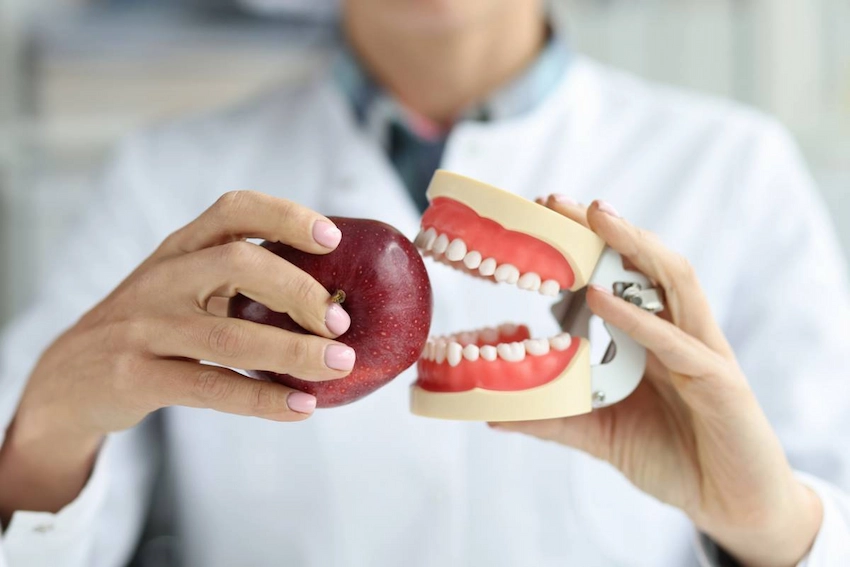
Mangiare con protesi: consigli e cibi da evitare.
Iniziate con cibi morbidi ed evitate quelli appiccicosi o duri.
Ricevere la tua prima protesi dentale è una tappa fondamentale che ricorderai per sempre. Ritrovi il tuo sorriso e riacquisti fiducia. Sfortunatamente, il primo giorno in cui mangerai dopo il dentista sarà probabilmente il tuo pasto più spaventoso. Sarà come mettere un oggetto completamente nuovo in bocca. Richiede sforzo anche solo per fare un semplice movimento di masticazione. Immagina le tue gengive come la base di una nuova costruzione. Una protesione è un grande pezzo di un edificio che poggia su quella base. Naturalmente, qualsiasi costruzione si assesterà nel tempo. Sarai instabile finché non troverai il tuo equilibrio. È un duro lavoro modificare i tipi di cibo a cui sei abituato. Ma siamo con te in ogni fase del percorso, quindi non preoccuparti, perché inizierai a gustare i cibi che ami in pochissimo tempo.Primo Mese: La Tua Bocca Ha Bisogno di Allenamento
Perché gli Adesivi Funzionano Meglio per Noi?
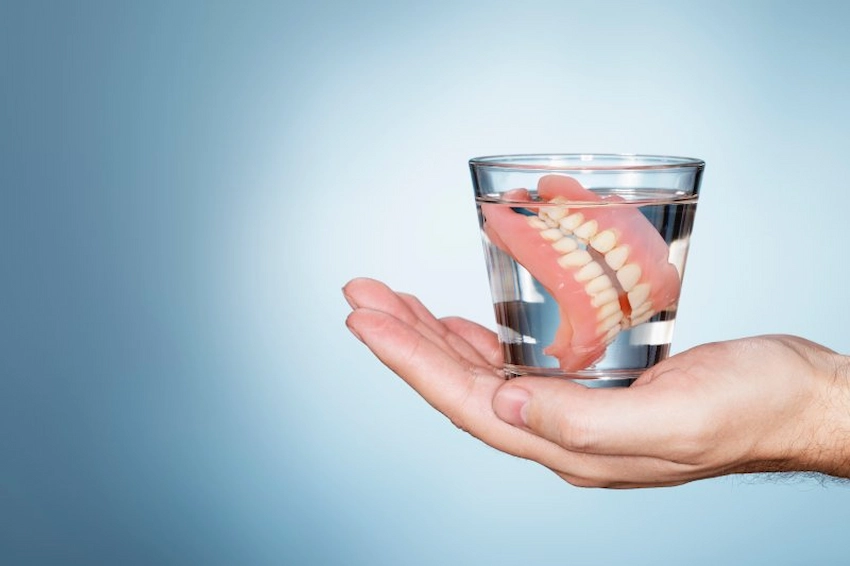
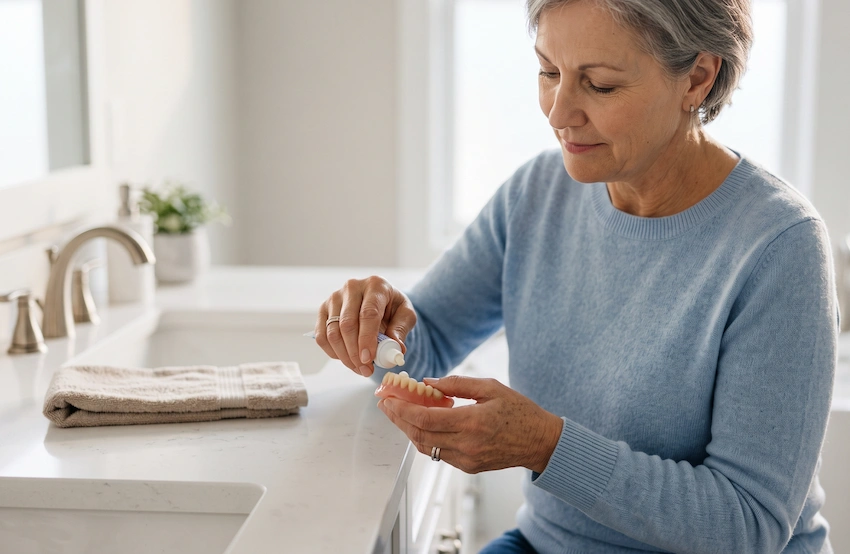
In molte occasioni, ci viene posta una domanda: come mantenere i denti appena inseriti al loro posto? Raccomandiamo ai nostri pazienti l'uso di un adesivo dentale di alta qualità nelle prime settimane dopo l'inserimento della protesi. Non sembra sufficiente affidarsi solo alla suzione naturale, per esempio. Un adesivo di qualità offre un ulteriore strato di ammortizzazione; è morbido e impedisce l'intrappolamento di particelle di cibo, inoltre è un ottimo supporto quando si morde.Guida alla Dieta: Cosa Puoi e Dovresti Mangiare?
Ciononostante, passiamo al tuo piatto. La scelta dei pasti influisce realmente sul tuo recupero e sul tempo che i tuoi denti impiegheranno per imparare a masticare. Dovresti iniziare il tuo menu solo con cibi morbidi e liquidi all'inizio. Alcuni ottimi piatti che puoi gustare durante questo periodo includono le zuppe calde, lo yogurt denso e, naturalmente, le uova alla coque! Dopo che i tuoi denti si saranno abituati, dovresti essere in grado di gestire anche pesce al forno e pasta morbida. Questa è la situazione dei nostri pazienti in clinica dopo il primo mese:| Categoria di Cibo | Scelta Consigliata | Sconsigliato |
| Alimenti Proteici | Pesce cotto morbido, uova strapazzate, tofu morbido | Manzo duro, specialmente con tendini e muscoli, carne secca dura, carne che si attacca all'osso |
| Frutta e Verdura | Passato di frutta, purè di patate o banana | Carote crude, mela, una fetta di mais con la pannocchia |
| Pane e Cereali | Noodles morbidi, porridge, pane morbido | Un pane croccante o indurito, semi sul tuo panino |
| Spuntini e Dessert | Gelato, formaggio morbido, mousse | Caramelle ricoperte di caramello, caramelle gommose appiccicose, noci dure |
Storie di Successo a Lungo Termine: Una Storia della Lema Dental Clinic
Domande Frequenti (FAQ)
Riferimenti Accademici
- Carlsson, G. E. (2014). Implant and root supported overdentures–a literature review and some data on bone loss in edentulous jaws. Journal of Advanced Prosthodontics, 6(4), 245-252.
- Felton, D., Cooper, L., Duqum, I., Minsley, G., Guckes, A., Haug, S., ... & Sweitzer, B. (2011). Evidence-based guidelines for the care and maintenance of complete dentures: a publication of the American College of Prosthodontists. Journal of Prosthodontics, 20(s1), S1-S12.
- Kossioni, A. E., Hajto-Bryk, J., Maggi, S., McKenna, G., Petrovic, M., Roller-Wirnsberger, R. E., ... & Muller, F. (2018). An expert opinion from the European College of Gerodontology and the European Geriatric Medicine Society: European policy recommendations on oral health in older adults. Journal of the American Geriatrics Society, 66(3), 609-613.
- Visscher, C. M., Lobbezoo, F., & Schuller, A. A. (2013). Dental status and oral health-related quality of life. A population-based study. Journal of Dentistry, 41(5), 416-422.
- Zitzmann, N. U., Hagmann, E., & Weiger, R. (2007). What is the prevalence of various types of prosthetic dental restorations in Europe?. Clinical Oral Implants Research, 18(s3), 20-33.
Domande frequenti
When will it be safe enough to eat a normal meal?
Doctor's Comment: No two patients go at the same speed, ed so healing will be different. Still,l we reckon it is about three to four weeks before one can be totally confident if he or she can start eating normally. Keep calm as it's very natural, and if you feel pain in any of the dentures, we shall modify the shape so that they fit better for you.
Will I still be able to eat steak?
Doctor's Comment: Definitely yes! As your gums become healed and your dentist makes you very comfortable with your teeth, you can definitely go for that steak. Only that, when you do it, you have to make sure that the pieces of meat are really small and that you chew on both sides of the jaw.
What reason have I got for my food having a different taste?
Doctor’s Answer: The majority of the taste buds on the roof of the mouth are covered by the upper denture. It will therefore take longer for your brain, which interprets taste, to come to terms with the plastic covering. Your taste will almost immediately get better in a few weeks.
Is it advisable to wear the denture at night?
Doctor’s Answer: I have always advised my patients that they should keep their dentures out at night. You do this because your gums are alivingtissues and the need is to rest and get some oxygen through them. To clean the teeth and avoid any bacterial growth at night, you can soak them in water.
When to know if a new application of adhesive is needed?
Doctor’s Comment: You feel your teeth are not steady anymore when you eat or talk. The taste of food might be more affected by your denture, and also because there were food particles trapped under the base. In addition, if the denture is still loose after that, come to me for a small fix.