

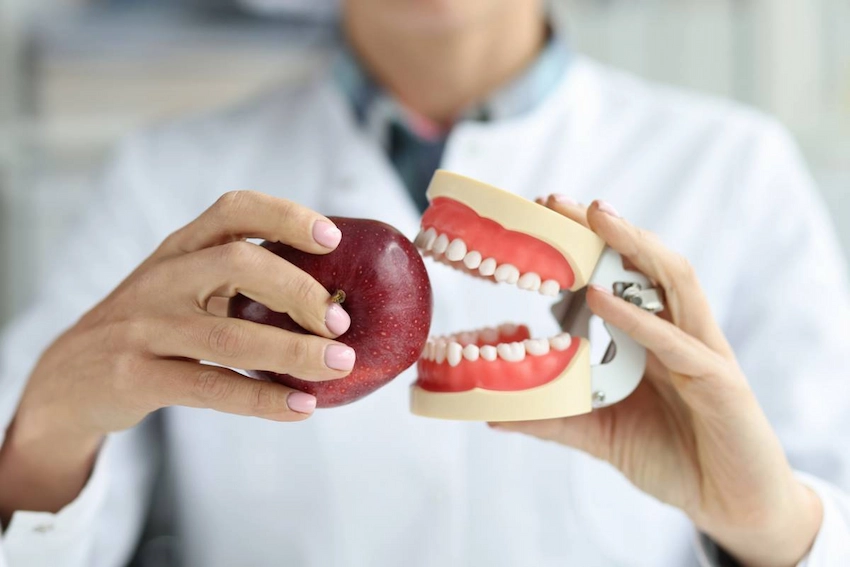
Jedzenie z protezami: Wskazówki i czego unikać
Zacznij od miękkich pokarmów i unikaj pokarmów kleistych i twardych.
Otrzymanie pierwszej protetyki stomatologicznej to kamień milowy, który zawsze będziesz pamiętać. Odzyskujesz uśmiech i pewność siebie. Niestety, pierwszy posiłek po wizycie u dentysty będzie prawdopodobnie Twoim najbardziej przerażającym. Będzie to tak, jakbyś włożył do ust zupełnie nowy przedmiot. Wymaga wysiłku nawet wykonanie prostego ruchu żucia. Wyobraź sobie swoje dziąsła jako fundament nowej konstrukcji. Proteza zębowa to duży element budynku stojący na tym fundamencie. Naturalnie, każda konstrukcja z czasem się ustabilizuje. Jesteś niestabilny, dopóki nie odzyskasz równowagi. Zmiana nawyków żywieniowych wymaga ciężkiej pracy. Ale jesteśmy z Tobą na każdym kroku, więc nie martw się, wkrótce znów będziesz cieszyć się ulubionymi potrawami.Pierwszy Miesiąc: Twoje Usta Potrzebują Treningu
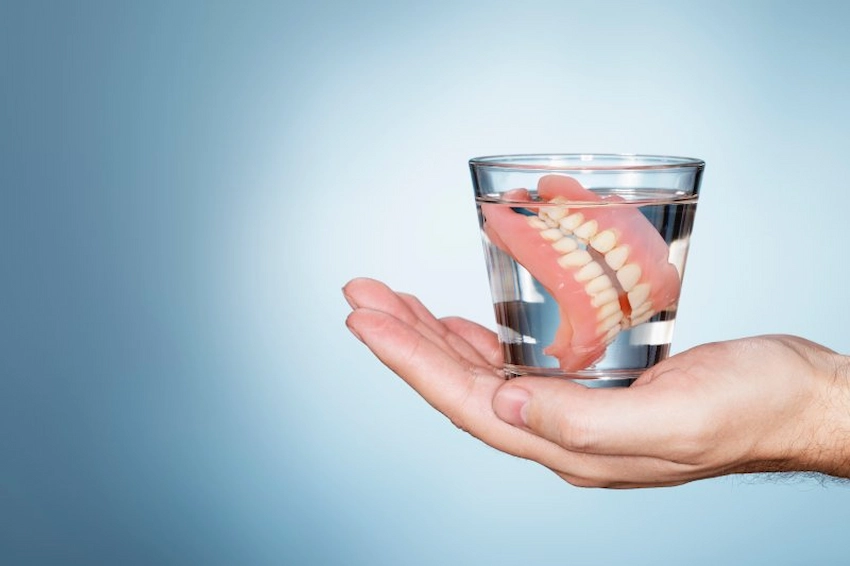
Dlaczego Kleje Działają dla Nas Najlepiej?
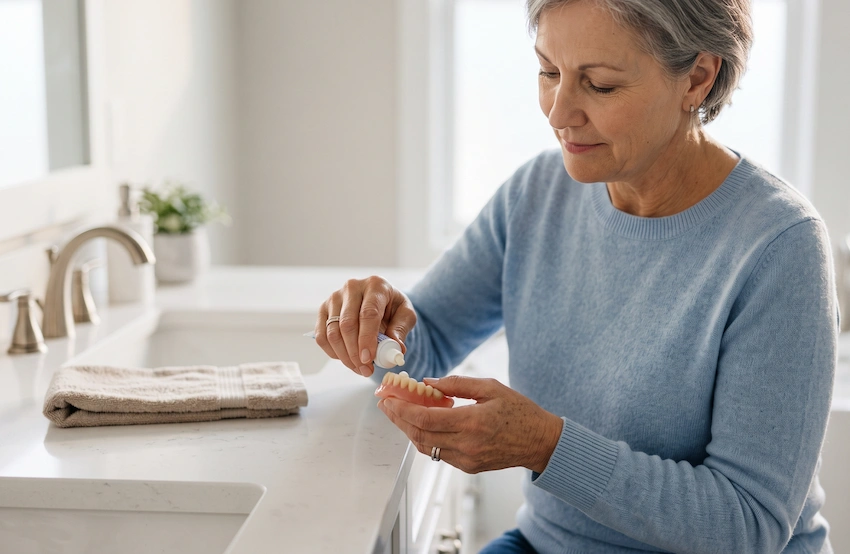
Wielokrotnie zadawano nam pytanie: jak utrzymać nowo dopasowane zęby na miejscu? Naszym pacjentom zalecamy stosowanie wysokiej jakości kleju do protez w pierwszych tygodniach po założeniu protezy. Samo poleganie na naturalnym ssaniu, na przykład, wydaje się niewystarczające. Wysokiej jakości klej oferuje dodatkową warstwę amortyzacji; jest miękki i zapobiega przedostawaniu się cząstek jedzenia, a także stanowi doskonałe wsparcie podczas gryzienia.Przewodnik po Diecie: Co Możesz i Powinieneś Jeść?
Niemniej jednak, przejdźmy do Twojego talerza. Wybór posiłków naprawdę wpływa na Twoje zdrowienie i czas, w którym Twoje zęby nauczą się żuć. Na początku powinieneś zacząć od menu składającego się wyłącznie z miękkich pokarmów i płynów. Wspaniałe dania, którymi możesz się cieszyć w tym czasie, to rozgrzewające zupy, gęsty jogurt i, oczywiście, jajka na miękko! Gdy Twoje zęby się przyzwyczają, powinieneś być w stanie jeść nawet pieczoną rybę i miękki makaron. Tak wygląda sytuacja naszych pacjentów w klinice po pierwszym miesiącu:| Kategoria Żywności | Zalecany Wybór | Niezalecane |
| Produkty białkowe | Miękko gotowana ryba, jajecznica, miękkie tofu | Twarda wołowina, zwłaszcza z ścięgnami i mięśniami, twarda suszona wołowina, mięso przylegające do kości |
| Owoce i Warzywa | Przecier owocowy, puree ziemniaczane lub banan | Surowa marchew, jabłko, plasterek kukurydzy z kolbą |
| Pieczywo i Zboża | Miękki makaron, kasza, miękkie pieczywo | Chrupiący lub twardy bochenek, nasiona na bułce |
| Przekąski i Desery | Lody, miękki ser, mus | Cukierki w karmelu, lepkie żelki, twarde orzechy |
Historie Sukcesu w Długoterminowej Perspektywie: Historia Lema Dental Clinic
Często Zadawane Pytania (FAQ)
Piśmiennictwo Naukowe
- Carlsson, G. E. (2014). Implant and root supported overdentures–a literature review and some data on bone loss in edentulous jaws. Journal of Advanced Prosthodontics, 6(4), 245-252.
- Felton, D., Cooper, L., Duqum, I., Minsley, G., Guckes, A., Haug, S., ... & Sweitzer, B. (2011). Evidence-based guidelines for the care and maintenance of complete dentures: a publication of the American College of Prosthodontists. Journal of Prosthodontics, 20(s1), S1-S12.
- Kossioni, A. E., Hajto-Bryk, J., Maggi, S., McKenna, G., Petrovic, M., Roller-Wirnsberger, R. E., ... & Muller, F. (2018). An expert opinion from the European College of Gerodontology and the European Geriatric Medicine Society: European policy recommendations on oral health in older adults. Journal of the American Geriatrics Society, 66(3), 609-613.
- Visscher, C. M., Lobbezoo, F., & Schuller, A. A. (2013). Dental status and oral health-related quality of life. A population-based study. Journal of Dentistry, 41(5), 416-422.
- Zitzmann, N. U., Hagmann, E., & Weiger, R. (2007). What is the prevalence of various types of prosthetic dental restorations in Europe?. Clinical Oral Implants Research, 18(s3), 20-33.
Pytania pacjentów
When will it be safe enough to eat a normal meal?
Doctor's Comment: No two patients go at the same speed, ed so healing will be different. Still,l we reckon it is about three to four weeks before one can be totally confident if he or she can start eating normally. Keep calm as it's very natural, and if you feel pain in any of the dentures, we shall modify the shape so that they fit better for you.
Will I still be able to eat steak?
Doctor's Comment: Definitely yes! As your gums become healed and your dentist makes you very comfortable with your teeth, you can definitely go for that steak. Only that, when you do it, you have to make sure that the pieces of meat are really small and that you chew on both sides of the jaw.
What reason have I got for my food having a different taste?
Doctor’s Answer: The majority of the taste buds on the roof of the mouth are covered by the upper denture. It will therefore take longer for your brain, which interprets taste, to come to terms with the plastic covering. Your taste will almost immediately get better in a few weeks.
Is it advisable to wear the denture at night?
Doctor’s Answer: I have always advised my patients that they should keep their dentures out at night. You do this because your gums are alivingtissues and the need is to rest and get some oxygen through them. To clean the teeth and avoid any bacterial growth at night, you can soak them in water.
When to know if a new application of adhesive is needed?
Doctor’s Comment: You feel your teeth are not steady anymore when you eat or talk. The taste of food might be more affected by your denture, and also because there were food particles trapped under the base. In addition, if the denture is still loose after that, come to me for a small fix.