

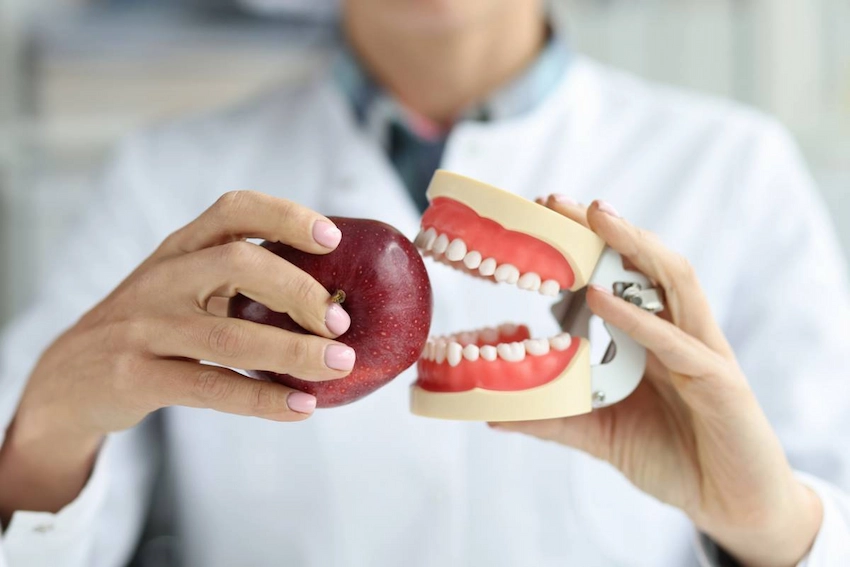
Eten met een gebitsprothese: Tips en te vermijden voedingsmiddelen
Begin met zachte voedingsmiddelen en vermijd plakkerig of hard voedsel.
Het ontvangen van uw eerste tandprothesen is een mijlpaal die u zich altijd zult herinneren. U krijgt uw glimlach terug en herwint uw zelfvertrouwen. Helaas zal de eerste dag dat u eet na de tandarts waarschijnlijk uw engste maaltijd zijn. Het zal voelen alsof u een volledig nieuw object in uw mond heeft. Zelfs een eenvoudige kauwbeweging kost moeite. Stel u uw tandvlees voor als de basis van een nieuwe constructie. Een gebitsprothese is een groot onderdeel van een gebouw dat op die basis staat. Natuurlijk zal elke constructie na verloop van tijd 'zetten'. U bent onstabiel totdat u uw evenwicht heeft gevonden. Het is moeilijk om de soorten voedsel waaraan u gewend bent te veranderen. Maar we begeleiden u bij elke stap, dus maak u geen zorgen, want u zult binnenkort weer van uw favoriete gerechten kunnen genieten.Eerste Maand: Uw Mond Heeft Wat Training Nodig
Waarom Kleefmiddelen Het Beste Werken Voor Ons?
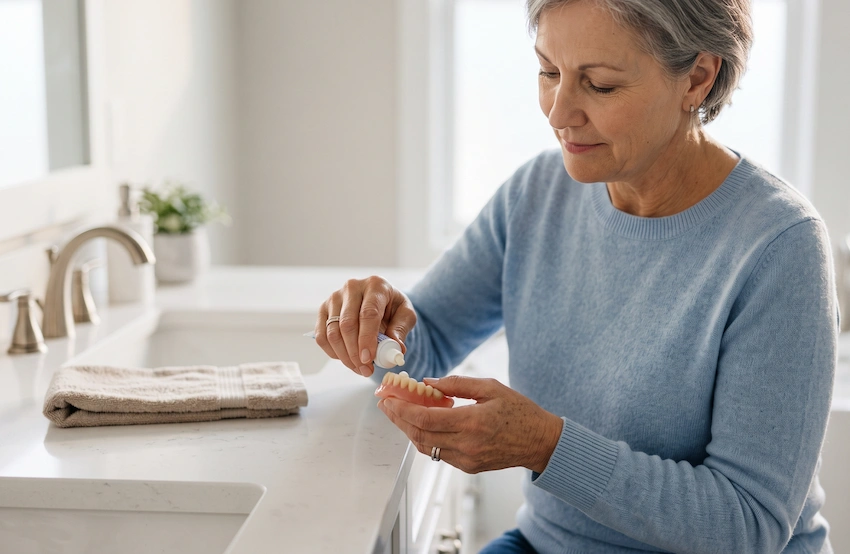
Vaak krijgen we de vraag: hoe houd je de nieuw geplaatste tanden op hun plaats? We adviseren onze patiënten om in de eerste weken na het plaatsen van de gebitsprothese een hoogwaardig tandheelkundig kleefmiddel te gebruiken. Het is bijvoorbeeld niet voldoende om alleen op natuurlijke zuigkracht te vertrouwen. Een kwaliteitskleefmiddel biedt een extra laag door middel van demping; het is zacht en voorkomt dat voedseldeeltjes eronder komen, en het biedt bovendien uitstekende ondersteuning bij het bijten.Dieetgids: Wat Kunt U En Moet U Eten?
Laten we desondanks naar uw bord kijken. De keuze van uw maaltijden beïnvloedt echt uw herstel en de tijd die uw tanden nodig hebben om te leren kauwen. U moet uw menu in het begin alleen met zachte voedingsmiddelen en vloeistoffen beginnen. Enkele heerlijke gerechten waarvan u in deze periode kunt genieten, zijn verwarmende soepen, dikke yoghurt en natuurlijk zachtgekookte eieren! Nadat uw tanden eraan gewend zijn, zou u zelfs gebakken vis en zachte pasta moeten kunnen eten. Dit is de situatie bij onze patiënten in de kliniek na hun eerste maand:| Voedselcategorie | Aanbevolen Keuze | Niet Aanbevolen |
| Eiwitrijk voedsel | Zachtgekookte vis, roerei, zachte tofu | Taai rundvlees, vooral met pezen en spieren, taaie beef jerky, vlees dat aan het bot kleeft |
| Fruit en Groenten | Fruitpuree, aardappelpuree of banaan | Rauwe wortels, appel, een maïskolf |
| Brood en Granen | Zachte noedels, pap, zacht brood | Een knapperig of hard brood, zaden op uw broodje |
| Snacks & Dessert | IJs, zachte kaas, mousse | Met karamel omhulde snoepjes, kleverige gumsnoepjes, harde noten |
Succesverhalen op Lange Termijn: Een Verhaal van Lema Dental Clinic
Veelgestelde Vragen (FAQ)
Academische Referenties
- Carlsson, G. E. (2014). Implant and root supported overdentures–a literature review and some data on bone loss in edentulous jaws. Journal of Advanced Prosthodontics, 6(4), 245-252.
- Felton, D., Cooper, L., Duqum, I., Minsley, G., Guckes, A., Haug, S., ... & Sweitzer, B. (2011). Evidence-based guidelines for the care and maintenance of complete dentures: a publication of the American College of Prosthodontists. Journal of Prosthodontics, 20(s1), S1-S12.
- Kossioni, A. E., Hajto-Bryk, J., Maggi, S., McKenna, G., Petrovic, M., Roller-Wirnsberger, R. E., ... & Muller, F. (2018). An expert opinion from the European College of Gerodontology and the European Geriatric Medicine Society: European policy recommendations on oral health in older adults. Journal of the American Geriatrics Society, 66(3), 609-613.
- Visscher, C. M., Lobbezoo, F., & Schuller, A. A. (2013). Dental status and oral health-related quality of life. A population-based study. Journal of Dentistry, 41(5), 416-422.
- Zitzmann, N. U., Hagmann, E., & Weiger, R. (2007). What is the prevalence of various types of prosthetic dental restorations in Europe?. Clinical Oral Implants Research, 18(s3), 20-33.
Veelgestelde vragen
When will it be safe enough to eat a normal meal?
Doctor's Comment: No two patients go at the same speed, ed so healing will be different. Still,l we reckon it is about three to four weeks before one can be totally confident if he or she can start eating normally. Keep calm as it's very natural, and if you feel pain in any of the dentures, we shall modify the shape so that they fit better for you.
Will I still be able to eat steak?
Doctor's Comment: Definitely yes! As your gums become healed and your dentist makes you very comfortable with your teeth, you can definitely go for that steak. Only that, when you do it, you have to make sure that the pieces of meat are really small and that you chew on both sides of the jaw.
What reason have I got for my food having a different taste?
Doctor’s Answer: The majority of the taste buds on the roof of the mouth are covered by the upper denture. It will therefore take longer for your brain, which interprets taste, to come to terms with the plastic covering. Your taste will almost immediately get better in a few weeks.
Is it advisable to wear the denture at night?
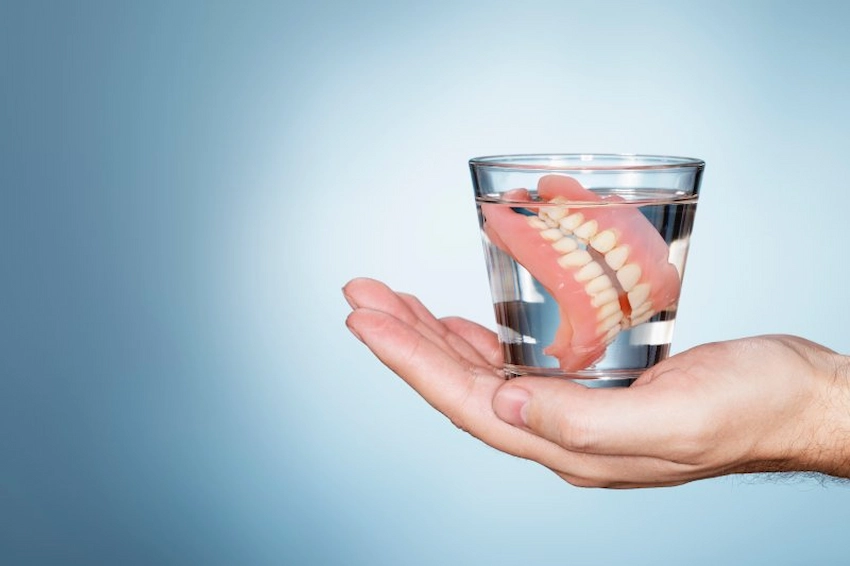
Doctor’s Answer: I have always advised my patients that they should keep their dentures out at night. You do this because your gums are alivingtissues and the need is to rest and get some oxygen through them. To clean the teeth and avoid any bacterial growth at night, you can soak them in water.
When to know if a new application of adhesive is needed?
Doctor’s Comment: You feel your teeth are not steady anymore when you eat or talk. The taste of food might be more affected by your denture, and also because there were food particles trapped under the base. In addition, if the denture is still loose after that, come to me for a small fix.