

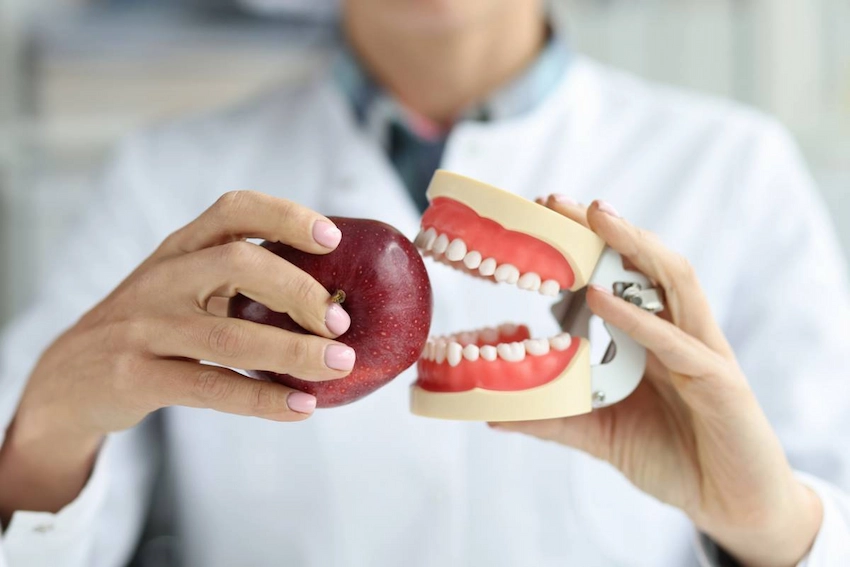
Valgymas su dantų protezais: patarimai ir vengtinas maistas
Pradėkite nuo minkšto maisto ir venkite lipnaus ar kieto maisto.
Pirmųjų dantų protezavimas gavimas yra įvykis, kurį visada prisiminsite. Jums grįžta šypsena ir atgaunate pasitikėjimą. Deja, pirmoji diena, kai valgysite po apsilankymo pas odontologą, tikriausiai bus baisiausias jūsų valgis. Bus jausmas, tarsi į burną įdėjote visiškai naują objektą. Net paprastas kramtymo judesys reikalauja pastangų. Įsivaizduokite savo dantenas kaip naujos konstrukcijos pagrindą. Dantų protezas yra didelė pastato dalis, stovinti ant to pagrindo. Natūralu, kad bet kokia konstrukcija laikui bėgant nusės. Jūs būsite nestabilūs, kol neatgausite pusiausvyros. Sunku pakeisti maisto rūšis, prie kurių esate pripratę. Tačiau mes esame su jumis kiekviename žingsnyje, todėl nesijaudinkite, nes netrukus vėl galėsite mėgautis mėgstamais patiekalais.Pirmasis mėnuo: Jūsų burnai reikia treniruotės
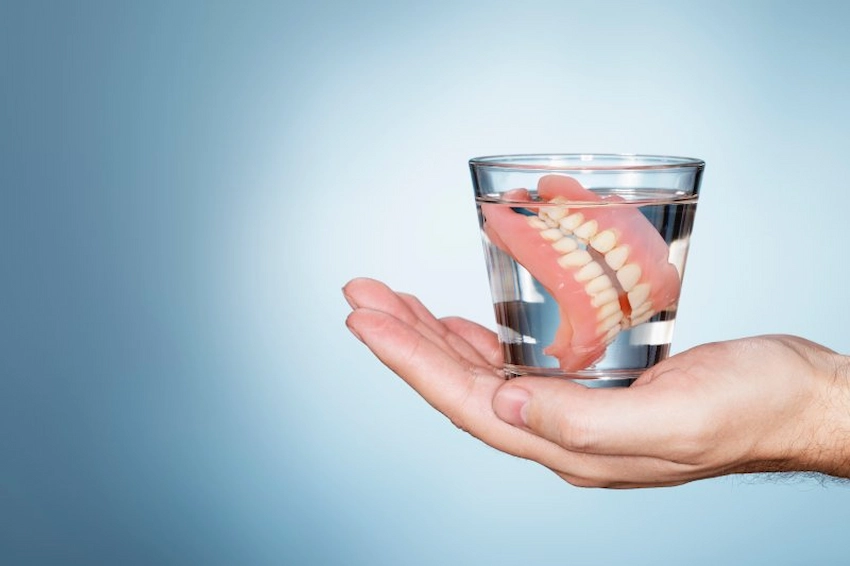
Kodėl klijai mums tinka geriausiai?
Daugeliu atvejų mums užduodamas klausimas: kaip išlaikyti naujai įdėtus dantis vietoje? Pirmosiomis savaitėmis po dantų protezo įdėjimo savo pacientams rekomenduojame naudoti aukščiausios kokybės dantų protezų klijus. Pavyzdžiui, vien tik natūraliu siurbimu pasikliauti nepakanka. Kokybiški klijai suteikia papildomą amortizacinį sluoksnį; jie yra minkšti ir neleidžia maisto dalelėms patekti po protezu, be to, puikiai palaiko kramtant.Mitybos gidas: ką galite ir turėtumėte valgyti?
Vis dėlto, pereikime prie jūsų lėkštės. Maisto pasirinkimas iš tiesų veikia jūsų gijimą ir laiką, per kurį jūsų dantys išmoksta kramtyti. Pradžioje savo meniu turėtumėte sudaryti tik iš minkštų maisto produktų ir skysčių. Puikūs patiekalai, kuriais galite mėgautis šiuo laikotarpiu, yra šildančios sriubos, tirštas jogurtas ir, žinoma, minkštai virti kiaušiniai! Kai jūsų dantys pripras, galėsite valgyti net keptą žuvį ir minkštus makaronus. Štai kokia situacija su mūsų klinikos pacientais po pirmojo mėnesio:| Maisto kategorija | Rekomenduojamas pasirinkimas | Nerekomenduojama |
| Baltyminis maistas | Minkštai virta žuvis, kiaušinienė, minkštas tofu | Kieta jautiena, ypač su sausgyslėmis ir raumenimis, kieta džiovinta jautiena, prie kaulo prilipusi mėsa |
| Vaisiai ir daržovės | Vaisių tyrė, bulvių košė arba bananas | Žalios morkos, obuolys, kukurūzų burbuolės griežinėlis |
| Duona ir grūdai | Minkšti makaronai, košė, minkšta duona | Traški ar sukietėjusi duona, sėklos ant bandelės |
| Užkandžiai ir desertai | Ledai, minkštas sūris, putėsiai | Karamelės glaisto saldainiai, lipnūs guminukai, kieti riešutai |
Ilgalaikės sėkmės istorijos: „Lema Dental Clinic“ istorija
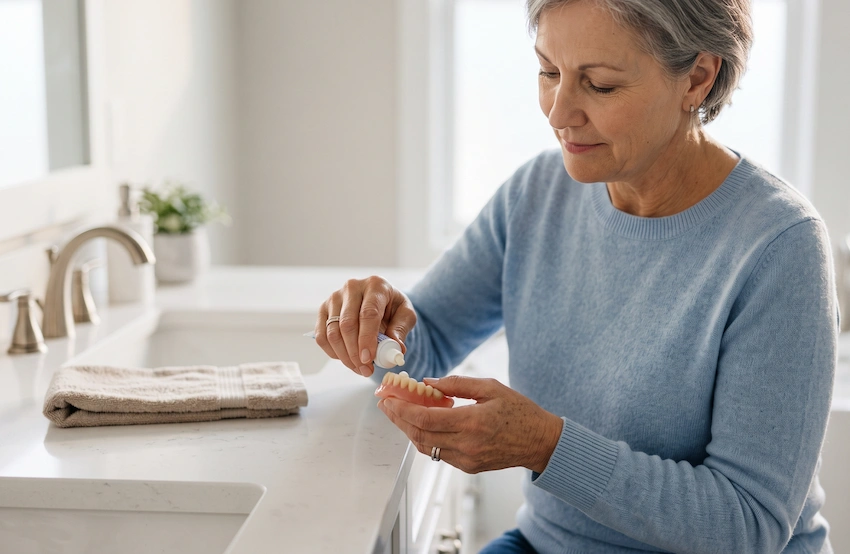
Dažniausiai užduodami klausimai (DUK)
Akademinės nuorodos
- Carlsson, G. E. (2014). Implant and root supported overdentures–a literature review and some data on bone loss in edentulous jaws. Journal of Advanced Prosthodontics, 6(4), 245-252.
- Felton, D., Cooper, L., Duqum, I., Minsley, G., Guckes, A., Haug, S., ... & Sweitzer, B. (2011). Evidence-based guidelines for the care and maintenance of complete dentures: a publication of the American College of Prosthodontists. Journal of Prosthodontics, 20(s1), S1-S12.
- Kossioni, A. E., Hajto-Bryk, J., Maggi, S., McKenna, G., Petrovic, M., Roller-Wirnsberger, R. E., ... & Muller, F. (2018). An expert opinion from the European College of Gerodontology and the European Geriatric Medicine Society: European policy recommendations on oral health in older adults. Journal of the American Geriatrics Society, 66(3), 609-613.
- Visscher, C. M., Lobbezoo, F., & Schuller, A. A. (2013). Dental status and oral health-related quality of life. A population-based study. Journal of Dentistry, 41(5), 416-422.
- Zitzmann, N. U., Hagmann, E., & Weiger, R. (2007). What is the prevalence of various types of prosthetic dental restorations in Europe?. Clinical Oral Implants Research, 18(s3), 20-33.
Dažniausiai užduodami klausimai
When will it be safe enough to eat a normal meal?
Doctor's Comment: No two patients go at the same speed, ed so healing will be different. Still,l we reckon it is about three to four weeks before one can be totally confident if he or she can start eating normally. Keep calm as it's very natural, and if you feel pain in any of the dentures, we shall modify the shape so that they fit better for you.
Will I still be able to eat steak?
Doctor's Comment: Definitely yes! As your gums become healed and your dentist makes you very comfortable with your teeth, you can definitely go for that steak. Only that, when you do it, you have to make sure that the pieces of meat are really small and that you chew on both sides of the jaw.
What reason have I got for my food having a different taste?
Doctor’s Answer: The majority of the taste buds on the roof of the mouth are covered by the upper denture. It will therefore take longer for your brain, which interprets taste, to come to terms with the plastic covering. Your taste will almost immediately get better in a few weeks.
Is it advisable to wear the denture at night?
Doctor’s Answer: I have always advised my patients that they should keep their dentures out at night. You do this because your gums are alivingtissues and the need is to rest and get some oxygen through them. To clean the teeth and avoid any bacterial growth at night, you can soak them in water.
When to know if a new application of adhesive is needed?
Doctor’s Comment: You feel your teeth are not steady anymore when you eat or talk. The taste of food might be more affected by your denture, and also because there were food particles trapped under the base. In addition, if the denture is still loose after that, come to me for a small fix.