


Teeth grinding during sleep can happen from stress, bite problems, sleep disorders, or jaw muscle tension.
In reality, waking with a hurting jaw and tender teeth is the worst beginning to the day. It is sleep bruxism, or grinding or clenching in the night, that is the medical term. It is like a battle that your body fights while you sleep. You may even remain totally unaware of it. Perhaps a partner will catch the noise, a dentist could notice the harm, or you might spot the signs yourself.
We at Lema Dental Clinic often see weary, exhausted patients seeking treatments that will not only look nice but also last. These people travel here because they are desperate for a durable solution to their dental condition.
Professor Doctor Coşkun Yıldız often emphasizes the fact that “grinding should no longer be regarded as an occasional bad habit only. It is an actual and very real issue in relation to human anatomy involving the jaw muscles, temporomandibular joints, etc.”, and “such a physical and structural problem should be treated with a genuine solution, and not just a cosmetic cover-up”.
We are going to examine exactly what triggers this teeth grinding, how it can affect your entire body, and how we can get rid of it.
The Most Common Causes: A Running Car with Its Transmission in Neutral
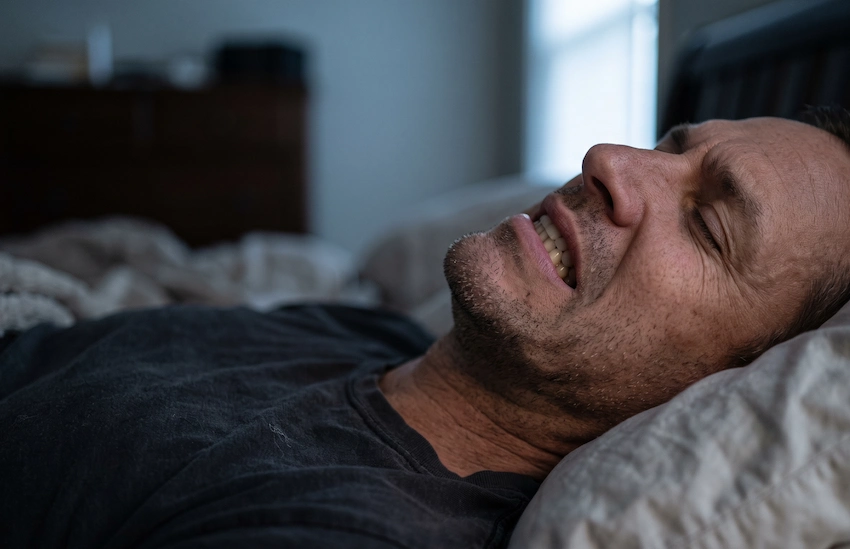
Imagine that your nervous system is the engine of a car. Throughout the day of stress, your mind is pushing hard to the pedals. When your eyes close and you fall asleep, your brain still might want to keep the car going. Butyou’re already asleep, and your body isn’t physically moving. Like a motor revving in neutral, the body cannot do anything, but you can still feel something like teeth grinding.
But let’s check more closely. Stress is by no means the only trigger for teeth grinding.
- Breathing issues: if you have sleep apnea, your upper airway narrows. A reduction in oxygen in your body can make you very sleepy, or your brain might be deprived if that happens. To keep you alive, they have ordered the muscles in your face and jaw to work hard to open your airway. Hence, as a means of getting air, you unconsciously start grinding teeth.
- Malalignment of the Bite: Your bite is said to be a problem when the upper and lower teeth do not fit perfectly together. So the jaw muscles keep on working as they look for comfort without sleep.
- Everyday Habits: The intake of too many caffeine and alcohol beverages before bedtime causes the jaw muscles to contract when you are sleeping.
Your Teeth Will Suffer from Grinding
The jaw muscles are quite powerful. Chewing generally involves only 20 to 40 pounds of weight. However, night grinding may exert up to 250 pounds on a tooth, a real dent in it!
Such immense stress leads to the formation of microscopic fractures on the tooth surface. Eventually, the teeth will get flattened, the edges will become chipped, the sensitive layer will be exposed, and they will respond to hot or cold stimuli. Even porcelain dental crowns cannot withstand such high forces during grinding. When we fix this kind of damage, we use a very durable material that can withstand the pressure of an aggressive bite and stay in good shape for a long time. Therefore, we never opt for very weak, short-lived materials.
How We Treat Teeth Grinding in Turkey
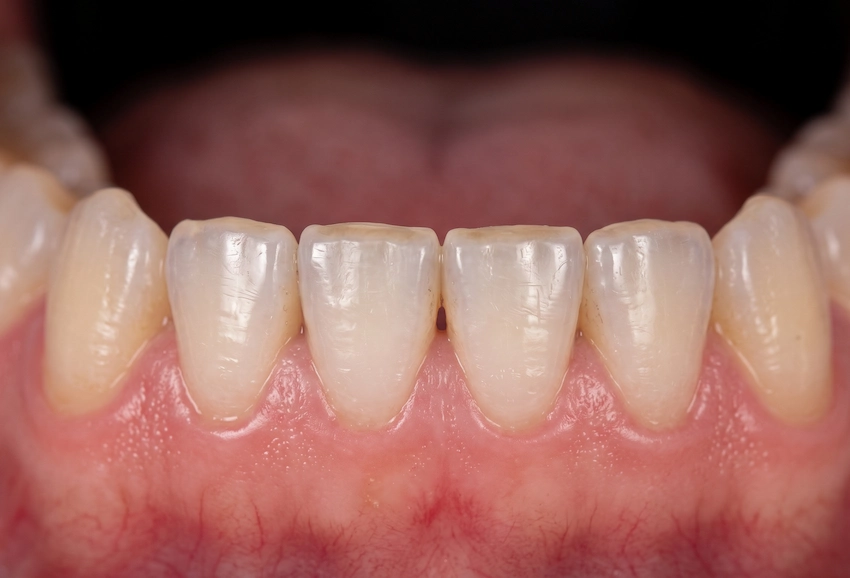
Below, I will outline the most common scenario at Lema Dental Clinic.
Aside from the physical aspect, it is almost impossible for a doctor to help a patient relax simply by telling them to do so. So, Dentist Polen Akkılıç and her team carefully review every patient’s history and plan their treatment step by step at Lema Dental Clinic.
Treatment Options
| Treatment | Helps you the way | The time the treatment lasts (how many times should you return for each visit) | Rationale (best patient) |
| Custom Night Guard | It is sort of a buffer between your teeth. It also can relax the jaw muscles. | Relief comes immediately when you put it on for the first time. | In most patients, who suffer only nighttime clenching or grinding. |
| Orthodontic Care | Malocclusion leads to grinding and clenching. So, a correction of your bite allows you to close your teeth without the necessity for grinding. | 6 to 18 months with each session. | Patients with grinding caused by poor occlusion (a mismatch of the teeth) can benefit most from this approach. |
| Full Mouth Reconstruction | Your entire set of teeth will be changed as we rebuild the ones that are short or worn. | A 1-week period will suffice for the entire treatment in our clinic, although sometimes a longer period is necessary (e.g., in the presence of very large fillings). | Flat teeth, very worn-down teeth and bite issues of a very severe nature can be addressed through this treatment. |
| Muscle Relaxant Injections | Such injections help alleviate discomfort in the facial muscles caused by clenching the teeth by reducing the pressure the jaw exerts when grinding or clenching together. | A patient may require a couple of sessions within the first few months, as the effects of a single treatment may not last long and usually last only 3 to 6 months. | (Not specified in provided text) |
FAQ (Frequently Asked Questions)
Does a mouth guard bought online help?
Many patients with budget issues who want to save money ask this question, although the answer will not make them very happy. The store-bought masks are made of very soft, bulky material. They are actually making your jaw want to chew on them like gum. As a result, your jaw pain is significantly increased. We make rigid, personalized mouth shields that cause you to relax your jaw.
Can I stop grinding my teeth forever?
In general, this question has two possible answers depending on the main reason for your situation. The first case would be when our teeth grinding is a direct result of malocclusion; fixing the bite is likely a long-term or permanent solution to such a dental problem. In case the main factors of your teeth grinding are stress or sleep apnea, on the other hand, you may continue to suffer from such a behavior until you treat or manage that particular medical issue first.
Does grinding change the shape of my face?
Indeed, it does make that happen, as grinding is an activity that involves constant clenching. As a result of this, the jaw muscles grow so much bigger that, over the course of years, this will make your lower face look much wider and more square.
How do I recognize that I am grinding my teeth?
I sleep all by myself. You may be grinding your teeth even when you sleep only by yourself; therefore, you should be very attentive to the body signals when you wake up in the morning. For example, if you have a sore jaw or a headache close to the temples, or have seen red marks on the sides of the tongue after a night’s sleep.
What will happen if I go for my first visit to the Lema Dental Clinic?
We will make a 3D digital scan of the inside of your mouth, in addition to a close examination of your symptoms and bite. Then, based on those findings, a clear roadmap will be created to relieve your pain and protect your beautiful smile.
Academic References
- Lavigne, G. J., Khoury, S., Abe, S., Yamaguchi, T., & Raphael, K. (2008). Bruxism physiology and pathology: an overview for clinicians. Journal of Oral Rehabilitation, 35(7), 476-494.
- Kato, T., Thie, N. M., Huynh, N., Miyawaki, S., & Lavigne, G. J. (2003). Topical review: sleep bruxism and the role of peripheral sensory influences. Journal of Orofacial Pain, 17(3), 191-213.
- Manfredini, D., Winocur, E., Guarda-Nardini, L., Paesani, D., & Lobbezoo, F. (2013). Epidemiology of bruxism in adults: a systematic review of the literature. Journal of Orofacial Pain, 27(2), 99-110.
- Lobbezoo, F., Ahlberg, J., Glaros, A. G., Kato, T., Koyano, K., Lavigne, G. J., … & Winocur, E. (2013). Bruxism defined and graded: an international consensus. Journal of Oral Rehabilitation, 40(1), 2-4.
- Singh, P. K., & Sharma, P. (2020). Sleep bruxism: A comprehensive review. Journal of Pharmacy & Bioallied Sciences, 12(Suppl 1), S73-S77.

