


Yes, a tooth can break after a root canal if it isn’t protected with a crown.
You’ve just been through it. The infection is gone, the pain disappeared, and you are willing to forget about it. However, a thought, or maybe a friendly warning, comes in: Isn’t that tooth now a time bomb?
Simply put, yes, it can be fractured. But more importantly, the answer leads us to where the solution lies.
At Lema Dental Clinic in Turkey, we frequently encounter such scenarios. A patient who had a root canal at a different clinic returns to us several years later, holding a piece of their molar in their hand. It’s a very upsetting moment, but totally understandable from a biological perspective. When we carry outa root canal, we not only remove the bacteria; we essentially kill the tooth by severing its life line.
The Problem of Brittleness: A Dead Branch Analogy
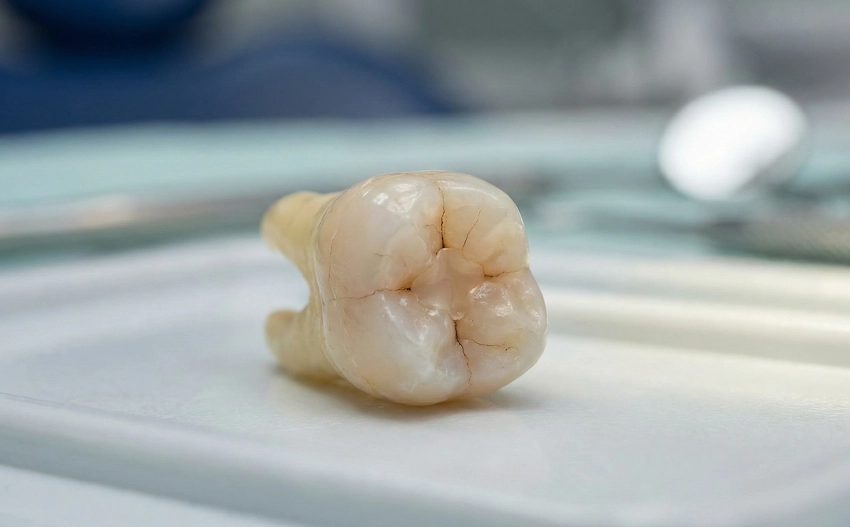
Trying to figure out why a root canal-treated tooth is prone to breakage, associate it with a tree. A living branch being full of sap is flexible and can tolerate the blow of wind (here, the huge pressure from chewing). If you bend it, it flexes.
Imagine now a dry, dead branch. Although externally it may resemble the living one, it is completely dried inside. If you put pressure on it, it doesn’t bend; it breaks.
When Dentist Polen Akkılıç and her team treat a tooth, they carry out a root canal to get rid of the pulp which includes nerve and blood vessels. With time, the dentin becomes dry. It loses its ability to stretch. Besides this, one of the reasons why the tooth is weakened after a root canal is the fact that usually a large cavity is drilled in order to reach the infection.
The Impact of Bite Force
The strength of the human jaw is amazing—up to 70 pounds per square inch on the cheek molars. Imagine having a heavy suitcase pressing on your tooth every time you chew a steak.
In case of a root canal-treated tooth, if what is left of the tooth after treatment is only a big filling without any reinforcement, the cusps (the sharp parts of the tooth) can separate under pressure. Eventually, the material becomes so weak that it finally breaks.
How We Make You Safe at Lema Dental Clinic
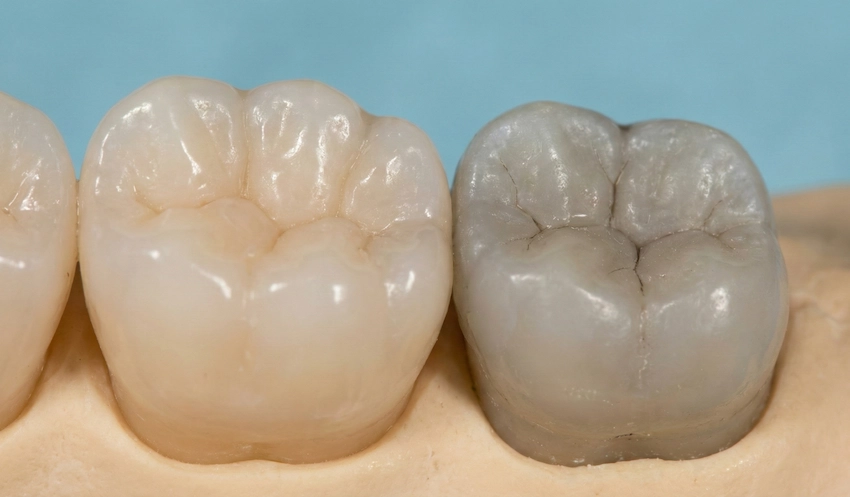
It is a fact that root canal therapy is just 50% of the treatment. Restoration is the other half.
Professor Doctor Coşkun Yıldız always emphasizes that the success of endodontic treatment basically depends on a good restoration. At our clinic in Turkey, it is generally our policy not to leave posterior teeth (molars, premolars) just with a simple filling after root canal. The risk of vertical root fracture which is the most common cause of tooth loss is just too high.
Hence, we are referring to “cuspal coverage”. This usually involves placing a Zirconium or E-Max Crown. The crown is sort of a protective cover for the tooth. It encloses and bonds the tooth in such a way that when you close your mouth, the biting pressure gets distributed over the crown rather than splitting the tooth.
Comparing Your Options: Filling vs. Crown
Here is a summary of features that we generally see in clinical performance of restoration:
| Feature | Root Canal + Large Filling Only | Root Canal + Dental Crown |
| Structural Integrity | Lower. The filling depends on the structurally weak tooth walls that are left. | Higher. The crown envelops the tooth and prevents the walls from flexing. |
| Chance of Fracture | Higher. Back teeth are particularly vulnerable. | Least possible. The tooth underneath is protected. |
| Duration | Failing is more or less a matter of time. Failures usually occur after 1–5 years due to leakage or cracking. | With proper maintenance, it can last 10–20 years or even longer. |
| Looks | Good at first, but the tooth will eventually darken or discolor. | Excellent. Zirconium or E-Max crowns provide natural translucency and remain white over time. |
| Value for Money | Lower upfront investment, but high long-term cost if the restoration breaks and an implant becomes necessary. | Higher initial cost, but the tooth is protected from extraction and future implant needs. |
When is it too late?
Sometimes, a fracture can be so insignificant that it can merely be a chip that one can just have polished or crowned. Still, the vertical root fracture clinical catastrophe, to which we always refer by the first letter V, is the one that we are totally committed to preventing at all costs. V is a crack that starts on the root and moves either upwards or from the crown down into the bone.
Once the lesion goes under the gum and includes the root system, the chances of saving the tooth become negligible. The microorganisms can get through the fracture without difficulty which results in bone loss and long-term infection. At such an event, our team, assisted by the surgical expertise of Professor Doctor Coşkun Yıldız, will extract the tooth and look at possible replacements such as implants.
Five Common Questions That Our Patients Ask
Nothing in medicine is absolute; however, getting a crown considerably decreases the chance. Think of it as a seatbelt. It will not avoid the accident, but it significantly reduces the damage that one suffers. With a crown of a high standard fitted by our team in Turkey, the chance that the tooth will break becomes very close to zero.
Immediately if you can. The root canal treatment can be followed by the tooth’s preparation for a crown immediately. If you wait for several months or years, it would be just like exposing your dead branch to the chewing forces of each day without any protection; the risk is doubled each time you eat.
There is a fair bit of speculation about it either way. However, once a root canal treatment is done and the nerve is severed, the patient will not be able to feel changes in temperature or nerve pain anymore. But if you bite down, the sensation of a sharp pain in your gums or bones might come to you and in addition, your tooth might feel loose. However, the pain is not coming from the tooth but from the tissues around the tooth area.
Only in extremely limited access holes used for the root canal that are very small and the tooth is very thick and strong as well (which will be mainly the case for the front ones), a filling will still work. Conversely, when we talk about a back tooth, a crown is always the best treatment option. We prefer the long-term security to short-run savings.
We would be very much against it if you do so. If the tooth were to break in a “favorable” manner (above the gum), then it would be able to be covered with a crown. On the other hand, if it breaks in an “unfavorable” way (down the root), then it is a lost tooth forever. This is a last throw of the dice that is not worth risking your smile.
- Aquilino, S. A., & Caplan, D. J. (2002). Relationship between crown placement and the survival of endodontically treated teeth. Journal of Prosthetic Dentistry, 87(3), 256-263.
- Tang, W., Wu, Y., & Smales, R. J. (2010). Identifying and reducing risks for potential fractures in endodontically treated teeth. Journal of Endodontics, 36(4), 609-617.
- Kishen, A. (2006). Mechanisms and risk factors for fracture predilection in endodontically treated teeth. Endodontic Topics, 13(1), 57-83.
- Torbjörner, A., & Fransson, B. (2004). Biomechanical aspects of prosthetic treatment of structurally compromised teeth. International Journal of Prosthodontics, 17(2), 135-141.
- Mamoun, J. S. (2014). Post and core build-ups in crown and bridge restorations: Bio-mechanical principles and clinical recommendations. European Journal of Dentistry, 8(3), 405-408.

