


Bone grafting is only needed when there is not enough healthy jawbone for implants.
Bone grafting for dental implants is not always the answer. There are some people who already have sufficient bone in their jaw to accommodate an implant without any modifications. Other patients might need extra bone either before or at the time of implantation.
In cases where the jawbone is too thin or too small for implant placement, bone grafting serves mainly to widen or increase the depth of the bone at that site. It will depend on the quantity and type of bone, the implant’s exact site, and, eventually, what kind of restoration one gets. Also, as an independent medical authority, the NHS official guidance states that bone grafting is only required in situations lacking the appropriate bone to hold an implant.
Lema Dental Clinic’s dentists, Polen Akkılıç and Professor Coşkun Yıldız, are skilled in assessing X-rays and 3D imaging techniques that reveal information about the bone that would otherwise not be detectable, and hence they are excellent in determining whether a graft is a necessity or other implant options might be a good alternate choice in the patient’s case.
When Is a Bone Graft Implant Actually Needed?
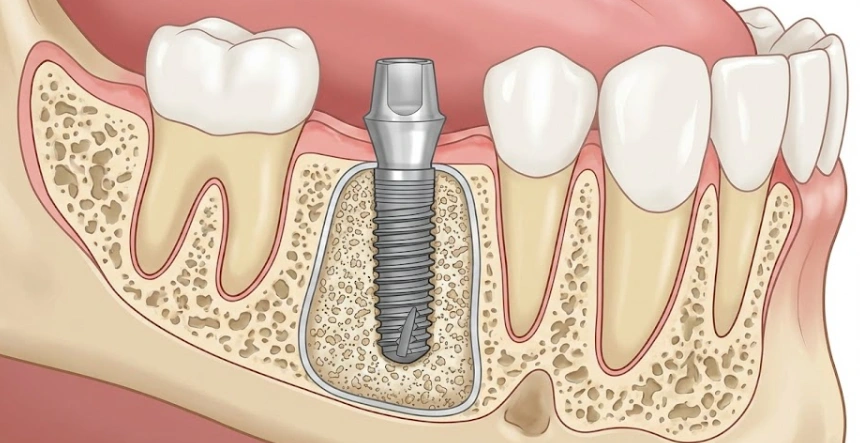
Dental implants are supposed to and need a sufficient amount of bone to provide support to and hold the implants. One way for the loss of jawbone is when a tooth has been absent for too long a time. Other causes, such as gum disease, infection, traumatic injuries, or even a tooth that has already been removed (and hence the bone there has deteriorated), can leave less bone.
In general, a bone graft would be suggested if there is inadequate bone width or height for the implant that is planned. The necessity for a bone graft might also be driven by a factor like the proximity of the planned implant to vital structures, including the maxillary sinus or the nerve pathways.
A minor bone defect does not always mean a separate procedure like bone grafting would be required. At times, the dentist may decide to do a minor grafting while putting in the implant. If bone grafting is necessary, the patient would require a healing phase which is separate from the time of implant placement.
| Clinical Condition | Do We Usually Need Bone Grafting? | Alternative Solution(s) |
| Well-developed bone volume | No | The implant can usually be placed directly |
| Small, localized bone defect | Sometimes | Minor bone grafting may be performed at the same time as implant placement |
| Significant bone loss | Frequently | Bone grafting may need to be completed before implant placement |
| Limited vertical bone with adequate width | Depends on the specific case | Short implants may be considered in selected cases |
| Severe jawbone deficiency | Very likely | Bone reconstruction may need to be carried out in several stages |
Types of Bone Grafts and Timing with Implants
Several ways can be used to rebuild bones. The method is determined by the quantity of the bone loss and the location of the planned implant.
Familiar procedures are guided bone regeneration, a small amount of local bone grafting, a piece bone grafting, and raising the bone with a special technique which is associated with a tooth sinus when the treatment is related to the upper posterior jaw area.
Bone graft source material can be either the patient’s own bone or human, animal, or man-made bone sources. The main purpose of the bone transplant is to act as a lattice that allows the body to form its own new bone.
It is important to get the timing just right. Sometimes the small bone transfer operation is done at the same time as the implant insertion. Otherwise, if the graft area needed is quite large, it may require healing for several months first. According to the NHS, most of the time the grafts are left to heal for about 3 to 6 months, implanting can then be done.
At Lema Dental Clinic, Dentist Polen Akkılıç and Prof. Dr. Coşkun Yıldız are able to assess if the implant placement and bone graft can be carried out at the same time or, in fact,t split into separate periods.
Options, Complications & Healing
Not in every circumstance is bone grafting the solution. If a person’s bone is receding, it doesn’t necessarily mean they require bone grafting.
A mouth with limited space can be an alternative to a short implant. It can avoid increasing the height of the bone by implant. Shortest implants could also reach survival rates comparable to those placed after height increase in certain clinical settings, according to a meta-analysis that looked into it. Nevertheless, this choice may be unsuitable for some patients, so they have to go with the bone augmentation anyway.
What other solutions are available may depend on how much the bone loss has affected the site in terms of its location and depth. The doctor must take into account the bite, implant location, bone availability, and the type of prosthesis to be made when deciding whether a more non-invasive option can be chosen.
The common side effects of a bone transplant operation are swelling, bruising, and some pain, which are of course short-lived and temporary. Still, a transplant can get infected; it might be exposed completely or only partially; bone formation may be inadequate; the transplant can even be lost.
In addition, smoking could play a role in preventing successful healing.
How long it will take for the patient to feel normal will vary based on the volume of the graft. If a small-sized graft was made, patients can return to normal activities more quickly, whereas if a larger-sized one was put in, more time will be needed before implant placement.
How the Decision Should be Made and What Follows.
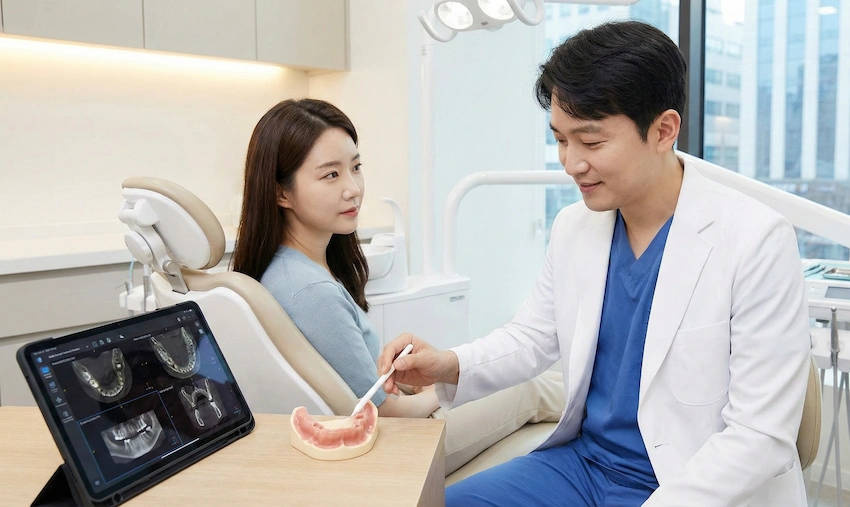
An evaluation of the situation through a comprehensive appointment is the first step for decision-making. Besides clinical inspection, radiology imaging such as X-ray and 3D imaging will inform how much bone exists and whether it is safe to place the proposed implant.
Things that the professional can look out for:
- Sufficient amount of bone height (vertical) and width ( horizontal)
- Status of the gum tissue
- The distance of nerve/sinus from the implant site
- The number and location of dental implants
- How much force is placed on the bite
- Smoking and general medical health condition
- Type & material of crown/bridge
Dentist Polen Akkılıç and Prof. Dr. Coşkun Yıldız of Lema Dental Clinic can evaluate these elements and recommend bone grafting to meet a specific case’s requirements.
If only the bone has the space for the implant to be placed, then the dentist needs to perform the graft. The idea is not to carry out a graft because we are planning for implants. Rather, the dentist wants the implant to succeed in an implant site with as much bone as clinically required.
FAQ
Must I necessarily require bone grafting for my dental implants?
Not necessarily. Many individuals already have enough natural bone to support the implant and will not need any form of grafting.
What if I don’t get a bone graft?
If your body has insufficient bone or grafting is necessary, placing an implant without first creating enough bone may lead to improper fitting or the instability of the implant. Alternatively, a different method of treatment may be recommended.
I want a dental implant without bone grafting. Can this be done?
Of course. When the quantity of native bone is adequate, the device can sometimes be installed without prior grafting. Furthermore, depending on the individual, shorter implants or even different placement could be the way to go.
Approximately what proportion of the dental implant cases demand a bone graft?
It has not been possible to provide a standard percentage figure, and the requirement will mainly vary from one situation to another, depending on, among other things, location of the missing tooth, duration the tooth has been lost, amount of bone lost, and unique anatomical features of the individual.
Are there any substitutes to bone grafting for dentistry?
Yes, but that really only works in specific circumstances. You might want to consider using short implants or different implant positions. Nevertheless, the best and safest choice should be the one that comes after a full clinical examination.
References
- NHS – Bone Grafting for Dental Implants
Guidance on why grafts are needed, graft materials, timing, recovery, and risks. (Cambridge University Hospitals) - NHS – Dental Implants
Information confirming that bone grafting is not necessary for every implant patient. (Guy’s and St Thomas NHS Trust) - PubMed – Short Implants Without Bone Augmentation vs. Long Implants With Bone Augmentation
Systematic review comparing short implants with graft-based treatment. (PubMed) - PubMed – Short vs. Long Dental Implants in Different Clinical Scenarios
Systematic review evaluating short implants as an alternative in selected cases. (PubMed)

