


No coffee, tea, or wine
You probably feel excited about your new, brighter smile after getting out of Lema Dental Clinic in Turkey. There is an instant boost in your self-esteem and you are more than willing to flaunt your new look. But hold your horses. Before you pour yourself a glass of red wine or have a cup of Turkish tea, we really need to talk about this.
What you do with your teeth in the next 48 hours could be the difference between success and failure.
Professor Doctor Coşkun Yıldız, explains this with a nice metaphor: freshly whitened teeth are like a dry sponge. The whitening gels we use will temporarily dehydrate your tooth in order to get deep-seated stains out. So when you are free to go, your tooth enamel is all “thirsty“. It will be closely associated with the first drink or color it sees. If, for instance, that drink is coffee, your teeth will take it up literally, and your effects will be at no more than the airport level.
The Science of the “Open Pore”
In fact, it’s not quite right to say it’s just about staining; it’s really part of the biology of your teeth. When our peroxide agents break down your enamel, microscopic pores (tubules) are opened up in your enamel. Your pores will be full of minerals after two days or so, and then they will be closed for good. Until that happens, your teeth will be at risk.
Dentist Polen Akkılıç, together with her staff, provide every patient with a golden rule that applies universally:“if it can stain a white T-shirt, then it will stain your teeth”.
The “Red List”: Foods You Absolutely Must Not Eat
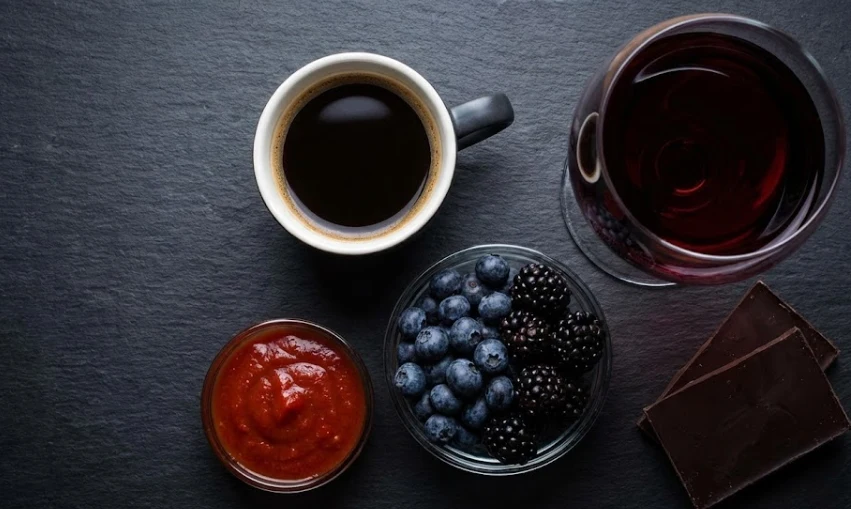
We totally get it that it’s a real struggle when you’re eating some of the best dishes in Turkey, but if you exercise strict discipline now, it will be worth it later. At our clinic, relapse treatment is by far the most frequent because of the following:
1. Dark Liquids (Regular Suspects)
Coffee and tea are the major factors of stains on teeth. In fact, even herbal tea could be quite damaging. Tannins present in the tea, in fact, do stain more than caffeine. Red wine and cola are no-nos, too.
- Exception: If you cleave to caffeine at all costs, then, after two days, only a clear energy drink or caffeine tablets will be safe for you.
Berry fruits such as blueberries, blackberries, and raspberries are rich sources of antioxidants yet they are pretty much like pigment bombs. Besides, do not eat citrus fruits such as lemons and oranges either. At the moment your enamel is super sensitive; acid will cause what is referred to as “zingers” or sharp pains.
3. The “Curry” Danger
Use of such spices as turmeric, paprika and saffron does not go well with fresh whitening. We have had the experience of patients becoming a bright neon yellow after just one curry meal.
4. Dark Sauces
Soy sauce, tomato paste, balsamic vinegar, and barbecue sauce – these are all concentrated pigments.
The “White List”: What Can You Eat?
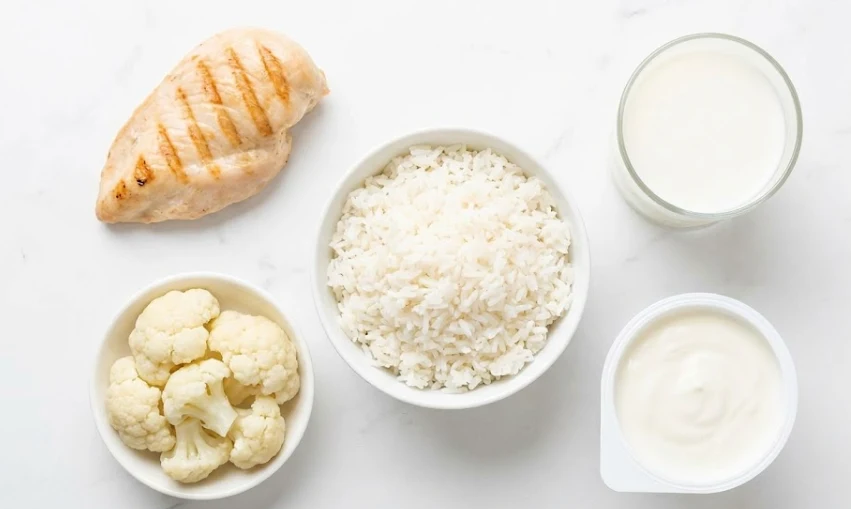
It’s not like the whole world is going to end for you. You don’t have to starve. The target is to consume colorless, less acidic foods. Here is what we suggest to our patients who are in Istanbul after the treatment:
- Proteins: Chicken, turkey, white fish (steamed or grilled, no paprika), egg whites.
- Carbs: White rice, white pasta (with white cream sauce), mashed potatoes(peeled), white bread.
- Vegetables: Cauliflower, white onions, peeled cucumbers.
- Dairy: Milk, plain yogurt, white cheese.
Staining Risk Assessment
To help you navigate your menu, we have categorized common foods by risk level based on our clinical observations.
| Food/Drink Category | Risk Level | Why? | Safe Alternative |
| Red Wine / Coffee | Critical | High tannins & dark pigment | Water, Milk, Gin & Tonic |
| Chocolate | High | Contains cocoa pigments | White Chocolate |
| Tomato Sauce | High | Acidic & bright red color | Alfredo / Cream Sauce |
| Green Tea | Moderate | Tannins cause yellowing | Hot water with mint leaf |
| Butter / Oil | Low | Generally safe | Coconut oil, Butter |
| Bananas | Low | Safe texture and color | Pears (peeled) |
The “Straw Technique” Myth
We get questions like, “Is it okay to drink coffee with a straw after using?”
The truth is that it is a gamble. A straw might help in avoiding the front teeth but the liquid still goes around the mouth before swallowing. It is more prudent to avoid altogether. However, if you really need coffee, use a straw, put it at the back of your tongue, and rinse with water after each sip. But do not forget that you are risking your outcome.
FAQ: Post-Whitening Survival Guide
The most critical window is the first 48 hours. After that, your enamel pores begin to close and remineralize. By day 3, you can slowly reintroduce normal foods, but we recommend brushing immediately after eating anything dark for the first week.
We strongly advise against it. Nicotine and tar are sticky. Because your teeth are dehydrated, they will absorb smoke faster than usual, leading to rapid yellowing. If you can, pause for 48 hours. If not, be prepared for diminished results.
Yes! It contains cocoa butter but not the dark cocoa solids. It is one of the few treats you can safely enjoy during your “White Diet” phase.
Don’t panic. Rinse your mouth vigorously with water immediately. Do not brush deeply right away as the enamel might be softened by the food’s acid; just rinse to wash away the pigment. Then, wait 30 minutes and brush gently.
This is temporary. The whitening agents penetrate the tooth to break up stain molecules, which can irritate the nerve. Stick to room-temperature foods (nothing too hot or too cold) for the first two days. The sensitivity usually vanishes within 48 hours.
- Joiner, A. (2006). The bleaching of teeth: A review of the literature. Journal of Dentistry, 34(7), 412-419.
- Attin, T., et al. (2009). Influence of bleaching on the susceptibility of enamel to acid erosion. Journal of Dental Research, 88(3), 263-268.
- Berger, S. B., et al. (2014). Effects of bleaching agents on the microhardness and surface roughness of enamel. Dental Materials, 30(2), 143-150.
- Dahl, J. E., & Pallesen, U. (2003). Tooth bleaching—a critical review of the biological aspects. Critical Reviews in Oral Biology & Medicine, 14(4), 292-304.
- Matis, B. A., et al. (2009). Review of the effectiveness of various tooth whitening systems. Operative Dentistry, 34(2), 230-235.

