


Yes, if there is enough healthy bone and no infection.
The traditional way of getting dental implants was very slow. Patients often had to wait for several months after tooth extraction before the implant procedure could begin, in numerous cases. But dental science hasn’t stood still. We frequently receive the same immediate query at Lema Dental Clinic in Istanbul, Turkey: “Should I keep smiling with a missing tooth, or can we do it now?”
The answer is definitely “Yes,” if the biological basis is medically suitable. Immediate Implant Placement is radically changing the patient’s perspective on restorative surgery, and this treatment is one of the revolutions.
The Science of Efficiency: Immediate vs. Delayed
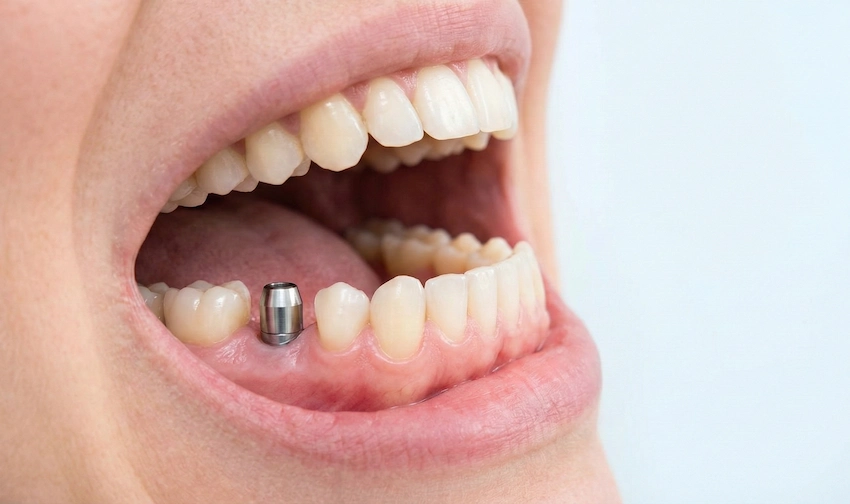
Imagine your jawbone is the base of a house. Normally, if a “supporting pillar is damaged” (tooth), we first remove that damaged pillar, then we fill the hole, after that, we wait for the concrete to set, and finally, we can drill a new support. Immediate implant placement, however, makes it possible that the new support could be installed right into the existing socket on the same day.
Professor Doctor Coşkun Yıldız would often say that the major benefit here is not only the time requirement, but mainly the biology. When implant placement is immediate, it is possible to help the natural bone and gum tissues maintain their shape since there will be no time for them to shrink.
However, can everyone have such a dental implant?
The truth is that “Same-Day Implants” demand a perfect trifecta of good health conditions. Dentist Polen Akkılıç along with her team carefully assesses the following three factors before they continue:
- Infection Control: The extraction site must not have an active, acute infection.
- Bone Volume: There should be enough “neighboring” bone to support the screw.
- Primary Stability: The implant should fit tightly; if it’s loose, the “foundation” won’t support.
Comparing Your Options: The Timeline to Restoration
The decision about immediate and delayed placement needs to be made depending upon the unique clinical condition of the patient. We usually explain the following to our patients at Lema:
| Feature | Immediate Placement | Delayed (Traditional) Placement |
| Total Treatment Time | 3–4 months | 6–9 months |
| Number of Surgeries | One (extraction + placement) | Two separate procedures |
| Soft Tissue (Gums) | Better preservation of pink aesthetics | Risk of gum recession over time |
| Ideal Candidate | Healthy bone, no active abscess | Bone loss or chronic infection present |
| Cost Efficiency | High (fewer appointments) | Standard |
The Lema Approach: Why Turkey?
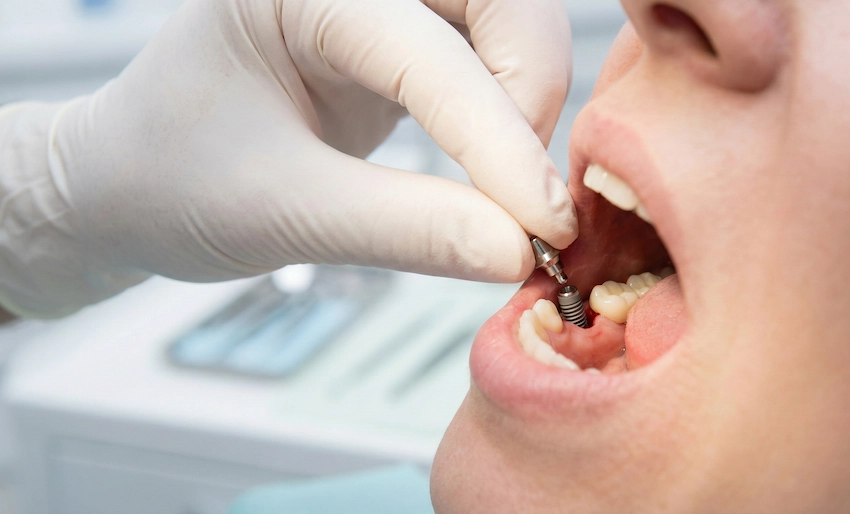
People come from all over the world to our clinic in Turkey wake by the fact that besides merging state-of-the-art technology with patient-oriented care, we use 3D Computed Tomography (CT) to create a sub-millimeter accuracy map of the jawbone.
It is natural to ask what the solution would be if one lacks sufficient bone. At times, we might do a slight bone grafting or a “Socket Shield” technique. The good thing about this procedure is that the architect of the smile is going to ensure that the final restoration is indistinguishable from the natural tooth in appearance and function.
Clinical Realities and Risks
Nevertheless, we need to stay realistic here. Immediate implant success rates tend to be very high and are commonly above 95%; however, it is a procedure that requires great surgical skill and precision. Implants will fail if the patient exposes them to excessive force at too early a stage (e.g. biting into a hard apple the next day). Therefore, we normally give out a “non-functional” temporary crown—it is a great solution if we look at the aesthetic side of the matter but at the same time it is “a little bit out of the bite” which gives the bone a chance to fuse.
FAQ: Straight Talk from the Clinic
Most patients, on the contrary, argue that it is far less stressful if you get them done all at once instead of splitting them up. Anesthesia is only required once, and the recovery phase starts immediately. Therefore, it kind of makes it similar to simply removing a splinter and putting a bandage on it at the same time.
In case there is a very large amount of pus or a cyst that has been present for a very long time, we usually do not advise immediate placement. Instead, we prefer to clean the area, allow the “soil” to get healthy, and put the implant when the surroundings are sterile. Dentist Polen Akkılıç also says that safety is always considered first, time second.
Of course! Actually, each time we give a pretty & temporary crown. Our patients appreciate this option very much because they don’t have to start worrying about their looks right away.
Usually, the personnel at Lema Dental Clinic are capable of handling both the extraction and implantation of a tooth in a single visit of 45-90 minutes duration. It may be a very fast operation if the whole squad is made up of skilled and knowledgeable members.
First of all, experience counts. Immediate placement is a skill. You are going to need a doctor who is knowledgeable about the “torque” required to keep the implant stable from the very first moment. The Professor’s several years of experience in complex implantology make sure that your “foundation” is firmly set.
- Buser, D., Sennerby, L., & De Bruyn, H. (2017). Modern implant dentistry is based on osseointegration. Periodontology 2000, 73(1), 7-21.
- Esposito, M., Grusovin, M. G., Polyzos, I. P., Felice, P., & Worthington, H. V. (2010). Timing of implant placement after tooth extraction: immediate, immediate-delayed or delayed implants? A Cochrane systematic review. European Journal of Oral Implantology, 3(3).
- Lang, N. P., Pun, L., Lau, K. Y., Li, K. Y., & Wong, M. C. (2012). A systematic review on survival and success rates of implants placed immediately into fresh extraction sockets. Clinical Oral Implants Research, 23, 39-54.
- Tarnow, D. P., Chu, S. J., & Fletcher, P. D. (2014). Clinical decisions: immediate vs. delayed implant placement. The Compendium of Continuing Education in Dentistry, 35(6), 376-386.
- Yıldız, C., & Akkılıç, P. (2025). Advanced Protocols in Immediate Loading: The Lema Clinical Experience. Istanbul Dental Press.

