


Flossing prevents cavities and gum disease.
Let’s take a moment and be honest. Most people feel like changing the past when a dentist asks, “Have you been flossing?” We admit that it is a step that most of us skip. It hardly ever gets us to think about it, and for an extra thirty seconds, the annoyance thoroughly outweighs the reward.
Flossing is not just about getting rid of the spinach piece between your teeth. It is the most potent weapon that one can use to break down the bacterial colonies that gradually and inevitably result in mouth diseases. If any that dentist Polen Akkılıç and her team have created for you, it is the interdental area that dictates how long that smile will last.
We have 10 compelling reasons that we have communicated to our patients on why they must floss.
1. Stopping the “Silent Killer” (Gum Disease)
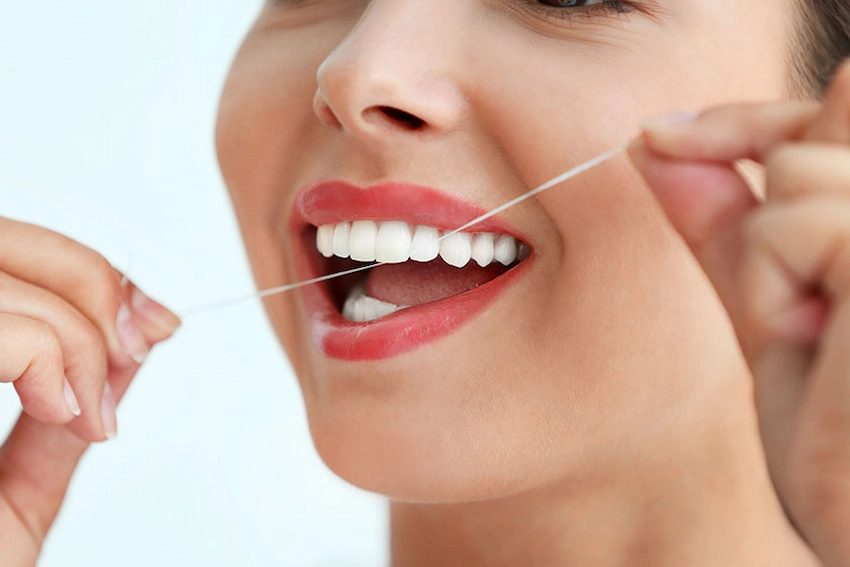
Plaque does not give up. It is a sticky layer of bacteria forming on our teeth continuously. When plaque settles between teeth, it irritates the gums and causes inflammation or gingivitis. If the owner of these inflammations keeps neglecting them, more damage will follow as a result of a dirty mouth, soft tissues will be infected, and bone resorption will take place. Flossing is your armor, the dagger that pieces these colonies so that they do not calcify into tartar.
2. Keeping Your Smile Intact (Veneers and Implants)
Many of our international patients come to Turkey for transformative procedures. Professor Doctor Coşkun Yıldız adroitly points out to the surgical patients that the implant is a masterpiece of engineering but to keep it healthy also requires a good foundation. Peri-implantitis is a disease similar to gum disease and it affects the gum tissues surrounding implants. Flossing your implants and veneers isn’t a choice; it is your smile insurance policy.
3. Avoiding Systemic Health Issues
The oral cavity is the gateway to the entire body. The past decades have raised shreds of evidence that periodontal disease might be associated with other systemic conditions such as heart disease, stroke, and diabetes. Mouth inflammation could be the first step in the inflammatory cascade through the entire vascular system. Therefore, you are not just saving a tooth by flossing, but you might also be protecting your heart.
4. Dealing with Bad Breath (Halitosis)
Mints basically cover up the odor whereas flossing actually removes the infection at its root. Most of the time bad breath comes from undigested food and the bacteria that break it down to release sulfur. These bacteria are located so deep in between your teeth that even your toothbrush bristles cannot access the area. A good daily routine of brushing your mouth thoroughly will keep your breath fresh.
5. Preservation of the Alveolar Bone
6. “Pink Aesthetics” Perfect!
Red, sore, and bleeding gums will ruin your smile no matter how perfect your veneers are. Dentist Polen Akkılıç draws attention to “Pink Aesthetics”-the health and beauty of the gums that makes 50 % of the beauty of your smile. Flossing is one of the best ways for your gums to stay healthy, pale pink, firm, and closely hug the teeth, thus making a perfect frame for your smile.
7. Prevention of Interproximal Caries
8. More Controlled Diabetes
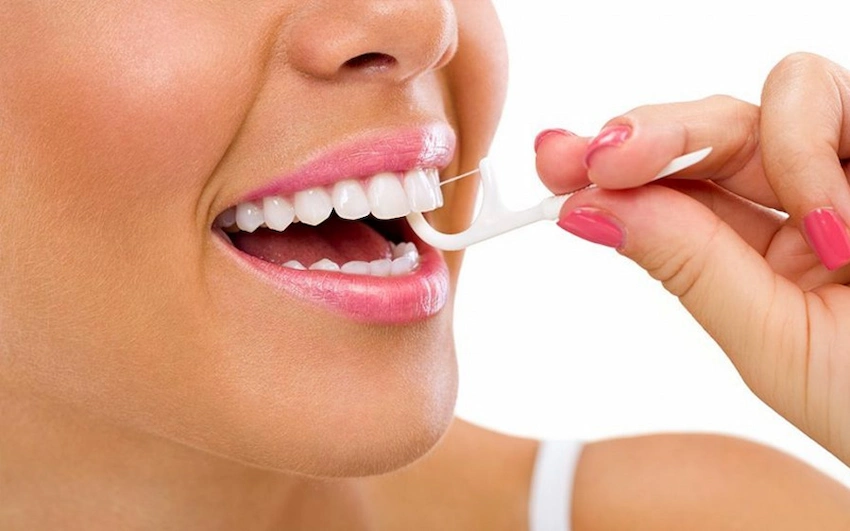
Diabetes and gum disease influence each other through a vicious circle. People with diabetes in most cases have a compromised immune response which makes them more vulnerable to infections. At the same time, there is evidence that severe gum disease can exacerbate the difficulties of controlling blood glucose levels. And thus, optimal oral hygiene which takes the middle ground of regular flossing actually can serve as a supportive therapy for glucose control.
9. The Lowering of the Risk of Respiratory Tract Diseases
It may sound weird, but your lungs are indeed among those affected by the risk factor. Our lungs take in the bacteria from the mouths of individuals who belong to the same species as us. In a case where the mouth of a person is a haven for harmful bacteria through the neglect of proper oral hygiene, this person might be inhaling into the lower respiratory tract the very pathogens that could potentially worsen the state of pneumonia or bronchitis.
10. Saving Coin
This is the practical side of the story. A spool of dental floss only costs a few dollars. However, the expenses that might be caused by your deep dental decay, root canal therapy, or periodontitis would be considerably higher than that. Of course, preventative care in any case is more financially savvy.
The Efficiency of Cleaning: A Comparison
Learning about how cleaning works helps you understand why we care a great deal about flossing.
| Feature | Brushing Alone | Brushing + Flossing |
| Surface Area Cleaned | Approx. 60% of tooth surfaces | Up to 100% of tooth surfaces |
| Sub-Gingival Cleaning | Minimal (Bristles rarely go deep enough) | High (Reaches 2–3 mm below gumline) |
| Plaque Removal | Removes plaque on outer/inner faces | Disrupts plaque colonies between teeth |
| Calculus (Tartar) Prevention | Moderate | High |
| Gingival Stimulation | Surface level | Deep stimulation promotes blood flow |
Frequently Asked Questions
We pretty much do that whenever we see patients because it’s such a misunderstanding that we have to keep repeating it. If your gums bleed after you floss, it’s an indication that you are developing gingivitis. You should not be avoiding flossing at all; on the contrary, it actually means that you have to definitely start flossing.
That’s right! Here at Lema, water flossers are great helpers, especially when you are dealing with a full arch of implants or bridges. The water is a very good surface cleaner, but it only rinses. However, string floss works like a squeegee; it removes the sticky biofilm from the tooth surface by scraping. If you can, you should use both. But, if you are only allowed to have one for the natural teeth, it is still string floss that should be your very first choice.
Most people think that you should floss before brushing. The reason is that after flossing and getting rid of the food pieces and plaque from between your teeth, brushing can very easily remove those residues and thus, the fluoride from your toothpaste will be able to penetrate those tight spaces more effectively.
If you are a brutal flosser who snaps the thread down hard, then you may get what is known as “floss clefts”. The point is that you do not cut the gum, but hug the tooth instead. Do a “‘C-shape’ motion”. The term means that you wrap the floss around the tooth and then move it up and down.
Without a doubt! The fact of the matter is that the Zirconium component will not get worn out but the enamel that is underneath it and the bone supporting the tooth will. When it comes to the edge or margin of the restoration, if bacteria are not kept under control, they will eventually find their way underneath the restoration and thus, the whole restoration will fail.
- American Dental Association (ADA). (2021). Anatomy of a tooth and the importance of interdental cleaning. JADA.
- Chapple, I. L. C., et al. (2018). Primary prevention of periodontitis: managing gingivitis. Journal of Clinical Periodontology, 42(S16), S71-S76.
- Graziani, F., et al. (2017). Interdental plaque reduction in the maintenance of gingival health. Journal of Periodontal Research, 52(3), 365-374.
- Sanz, M., et al. (2020). Treatment of stage I–III periodontitis—The EFP S3 level clinical practice guideline. Journal of Clinical Periodontology, 47(S22), 4-60.
- Worthington, H. V., et al. (2019). Home use of interdental cleaning devices, in addition to toothbrushing, for preventing and controlling periodontal diseases and dental caries. Cochrane Database of Systematic Reviews.

