


Denture adhesive rarely causes sinus problems, but irritation or poor denture fit may create discomfort.
In the dental chair, we see this scene almost daily. A weary and angry patient is telling us that their upper denture just can’t stay in. In a fit of desperation, they are applying more and more denture adhesive until, finally, behind the cheekbones, they develop a dull pain. It goes on without a pause. Their nose remains blocked, and facial discomfort continues.
The patient turns the question to us: Could the use of the denture glue actually be the trigger of my sinus problems?
This is a bit of a myth. The glue itself doesn’t travel directly into the sinus. Nevertheless, if we look carefully at the processes occurring under the gum, we can realize that the factors making you resort to using more paste are actually a major cause of your sinus problem.
In addition, the ingredients used in the paste will influence your health dramatically. The combination of factors – such as a thin layer of soft tissue and a very strong force of the denture to stay in – will all work towards the problem being created or worsened.
Understanding Why a Denture Keeps Coming Out
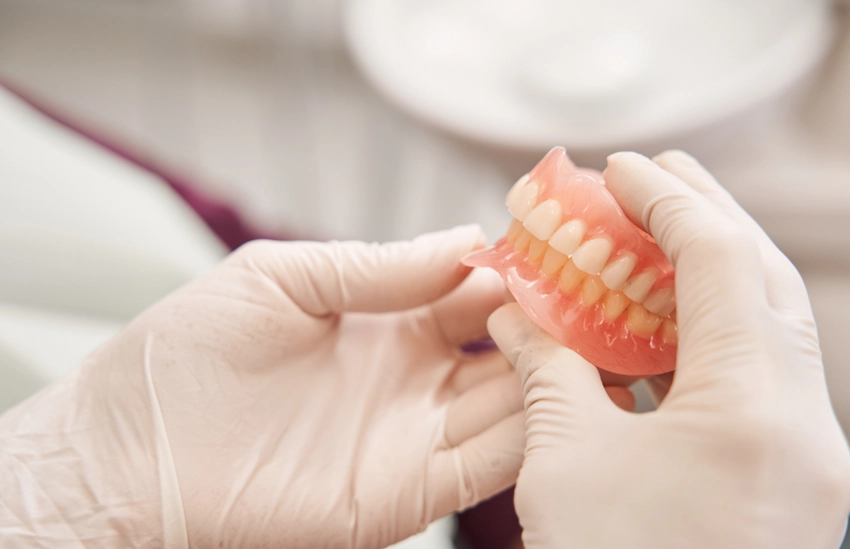
Imagine your upper jawbone forming a foundation for your whole face. Just as a foundation, the jaw will lose strength if you remove the teeth. Without the teeth biting down, the jawbone is not being stimulated, which leads to the bone turning into dust.
Over time, when the bone under the upper jaw is lost, the floor of the sinus also begins to sink.
Prof. Dr. Coşkun Yıldız usually draws attention to this detail. He says to our patients, “The upper jaw, as the foundation of the facial structure, shrinks with the bone loss, while the sinus floor drops. In time, the bone wall separating the sinus from the soft tissues of your mouth will get so thin that it will appear like an eggshell.”
Very weak or, in fact, almost non-existent bones supporting a loose denture force the denture to get stuck i, with the help of very large quantities of paste.
During eating, the soft tissues of the mouth are being damaged continuously because the denture does not fit. It results in long-lasting irritation and discomfort. Inflammation can even extend to the very sensitive lining of the maxillary sinuses.
A Hidden Danger: Zinc and Nerve Damage
If you are one of the people relying on the denture adhesive regularly, you are most likely aware of one of the common ingredients. The majority of the store denture glues on the market have been made with considerable amounts of zinc added in so that the grip power of the product is increased. However, when the denture does not fit, patients have to use a much larger dose of the product; therefore, they swallow it on a daily basis.
Excessive intake of zinc may deplete the copper in your body. In the long run, it is a copper deficiency that causes neurological symptoms like numbness, tingling, and headachiness. These are very subtle signs of nerve malfunction that very few realize is going on with themselves.
At times, the people affected think these are the symptoms of sinus pressure. It will only get a person very frustrated with his health condition and even delay him in getting the help that he needs.
It is very sad to see the number of people suffering this way and mistaking zinc deficiency for sinus congestion.
Beyond the Paste
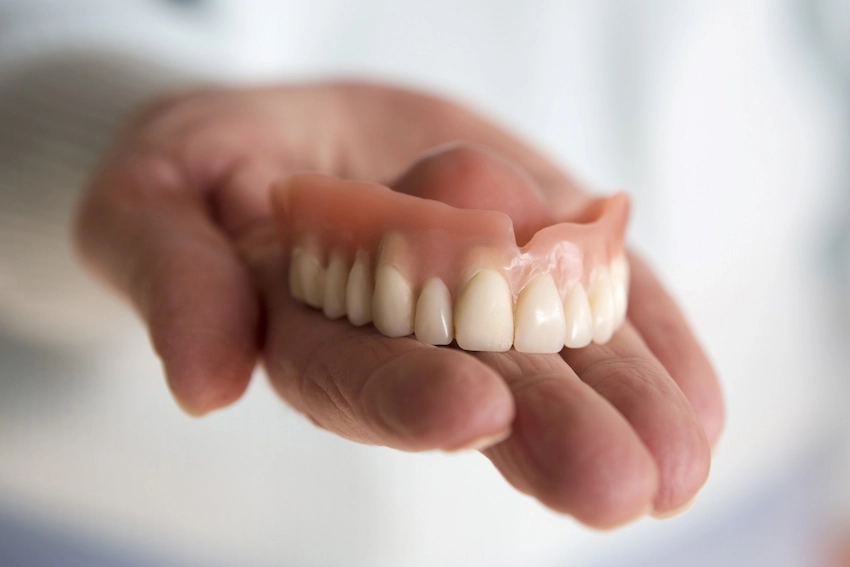
The big question is: How can this vicious cycle be broken? Using the paste is no more than hiding the fact that the jaw is getting smaller beneath our nose.
Dentist Polen Akkılıç at the Lema Dental Clinic in Istanbul, Turkey, and her team find a solution for many who get rid of the daily suffering of glue from these dental works. We do this with fixed, implant-supported, natural-looking teeth.
Sometimes,s due to the proximity of the sinus, standard implants are not a real option. When this happens, we use more innovative and safer methods to implant new teeth that will avoid coming into direct contact with the sinus.
By means of Zygomatic implants, one can totally ignore all about the fragile upper jawbone, so the implants just anchor into the hard cheekbone. This makes for international patients flying in for their implants to Turkey – permanent teeth that do not need bone grafting and also do not need any adhesive. It gives patients the chance to look younger and smile naturally without a day-to-day routine of pasting glue all over their mouth.
Fixed dental restoration through implants is not new to dentists, but what really stands out to people is the fact that it is an implant that can be a permanent fixture of their mouths without the presence of glue. Patients no longer worry about how long they can wear it before removing it for cleaning, nor do they have to think about how long it will last until they have to get rid of it again. With fixed restorations through implants, patients can enjoy a completely functional and aesthetic restoration that looks and feels like natural dentition and that the person hardly even needs to think about caring for.
The Denture Adhesive vs. Implant Alternatives Chart
| Solution | Sinus Risk Profile | Bone Preservation | Daily Care |
| Traditional Dentures + Paste | High (Irritation & Zinc) | Poor (Bone melts away) | Messy daily pasting |
| Sinus Lift + Standard Implants | Low (Rebuilds sinus floor) | Excellent | Normal brushing |
| Zygomatic Implants | Very Low (Bypasses sinus) | Excellent | Normal brushing |
| All-on-4 / All-on-6 Systems | Low (Avoids sinus cavity) | Excellent | Normal brushing |
By using specialized surgical approaches like Zygomatic implants, we bypass the fragile upper jaw completely. Instead, we anchor into the dense cheekbone. This gives international patients traveling to Turkey a permanent smile without bone grafting—and without a single drop of adhesive.
Frequently Asked Questions
Is it really so dangerous to swallow that small amount of paste from a denture daily?
In the case of my patients, a little bit of zinc-free paste accidentally ending up in the throat is not a problem on a medical level. On the other hand, multiple thick strips every single mouthful of food, however, is definitely risky. The body, after a prolonged time of chemical exposure, will suffer from serious mineral imbalance.
What causes upper jaw discomfort when one chews close to the eyes?
This is definitely an important signal from the body. There is hardly any physical presence of the jawbone under the upper part where it was previously present, so there is no physical resistance to stop the denture. The paper-thin layer of bone, which is left is under the sinus, becomes crushed, which is responsible for the acute pain throughout the cheekbones. The pain can be interpreted as an upper jaw problem, but in fact, it’s the toothless jaw that doesn’t hold the denture anymore,e and the denture keeps crushing the very small piece of bone beneath the sinuses.
Is a loose denture able to cause a direct bacterial infection of the sinus?
Not directly. The hard materials, like the denture acrylic or the adhesive itself, are unable to cause infection from the sinus. But indirectly, sure. The constant pressure from a loose denture will irritate sores on your gums that, very quickly, fill with bacteria, which are only millimeters away from your sinus membrane. Once the bacteria penetrate the sinus membrane, a full-blown, reactive inflammation of your sinuses is just around the corner.
How are Zygomatic implants protecting my sinuses?
We alter the direction when we perform Zygomatic implants at the clinic. Rather than placing the implants directly next to a soft area of the bone that is already very fragile due to the shrinkage of the jaw, we are using implants with an increased length, which completely avoids contact with the sinus and only reach the solid cheekbone. This is an absolutely safe solution.
Is there any time required for a person to switch from the traditional dentures to the implants?
Thanks to the development of the All-on-4 or All-on-6 techniques, it is indeed possible within the span of just a few days to extract old teeth, insert the implants, and finally, deliver a fixed dental prosthesis. Once you leave the dentist’s chair, you no longer have an uncovered area on the roof of your mouth, and you never have to open a container containing a single piece of denture adhesive again.
Academic References
- Al-Omiri, M. K., & Karasneh, J. (2010). Relationship between oral health-related quality of life, satisfaction, and personality in patients with prosthetic rehabilitation. Journal of Prosthodontic Research, 54(4), 166-171.
- Carlsson, G. E. (2014). Responses of jawbone to pressure. Gerodontology, 31(1), 2-7.
- Nations, S. P., Boyer, P. J., Love, L. A., Burritt, M. F., Butz, J. A., Wolfe, G. I., … & Trivedi, J. R. (2008). Denture cream: an unusual source of excess zinc, leading to hypocupremia and neurologic disease. Neurology, 71(9), 639-643.
- Sharma, A., & Rahul, G. R. (2013). Zygomatic implants—a literature review. Journal of Oral Implantology, 39(2), 215-224.
- Zarb, G. A., Hobkirk, J. A., Eckert, S. E., & Jacob, R. F. (2013). Prosthodontic treatment for edentulous patients: complete dentures and implant-supported prostheses (13th ed.). Elsevier Health Sciences.

