

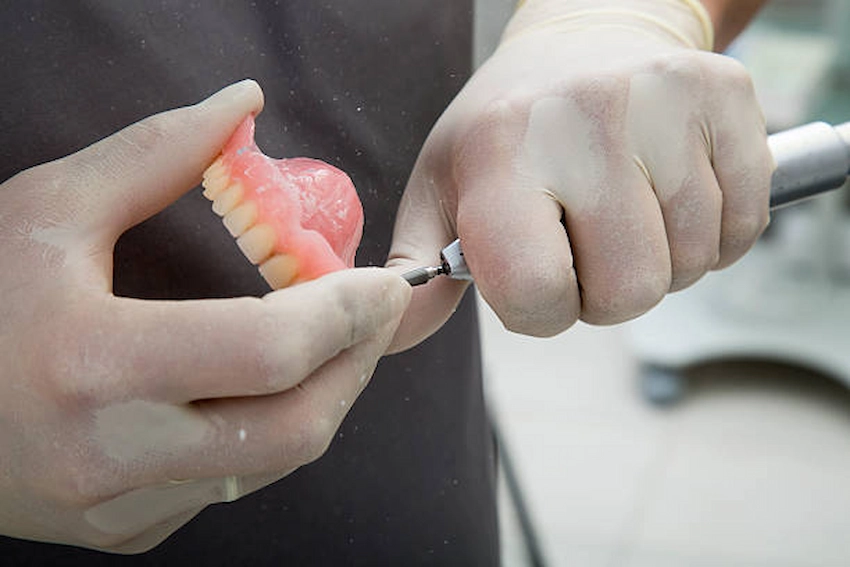
Kann Prothesenkleber Sinusprobleme verursachen?
Haftcreme für Zahnprothesen verursacht selten Sinusprobleme, aber Reizungen oder eine schlechte Passform der Prothese können Beschwerden verursachen.
Im Zahnarztstuhl erleben wir diese Szene fast täglich. Ein müder und verärgerter Patient erzählt uns, dass seine Oberkieferprothese einfach nicht hält. In einem Anflug von Verzweiflung tragen sie immer mehr Haftmittel für Zahnprothesen auf, bis sich schließlich hinter den Wangenknochen ein dumpfer Schmerz entwickelt. Dieser hält ohne Pause an. Ihre Nase bleibt verstopft, und die Gesichtsbeschwerden dauern an. Der Patient stellt uns die Frage: Könnte die Verwendung des Prothesenklebers tatsächlich der Auslöser meiner Sinusprobleme sein? Das ist ein Mythos. Der Kleber selbst gelangt nicht direkt in die Nasennebenhöhle. Wenn wir jedoch die Prozesse, die unter dem Zahnfleisch ablaufen, genau betrachten, können wir erkennen, dass die Faktoren, die Sie dazu veranlassen, mehr Paste zu verwenden, tatsächlich eine Hauptursache für Ihr Sinusproblem sind. Darüber hinaus beeinflussen die in der Paste verwendeten Inhaltsstoffe Ihre Gesundheit dramatisch. Die Kombination von Faktoren – wie eine dünne Schicht Weichgewebe und eine sehr starke Haltekraft der Prothese – trägt alles dazu bei, dass das Problem entsteht oder sich verschlimmert.Verstehen, warum eine Prothese immer wieder herausfällt
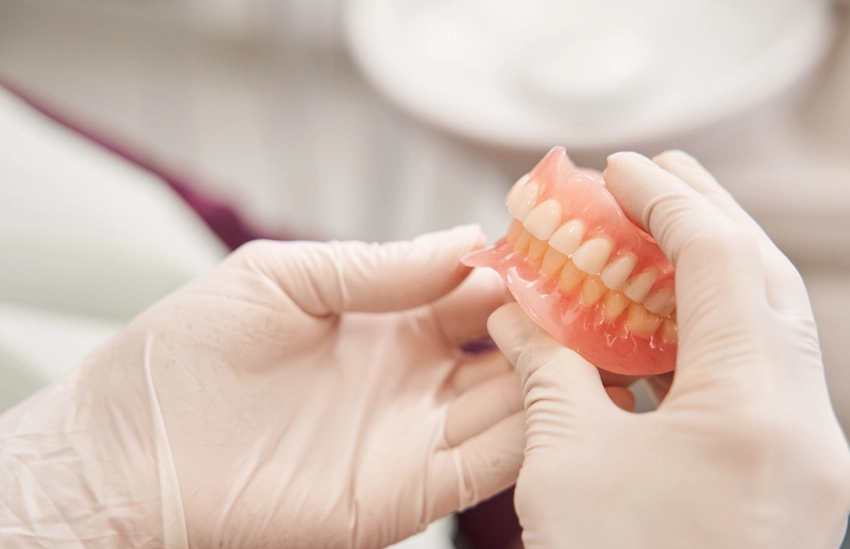
Eine versteckte Gefahr: Zink und Nervenschäden
Wenn Sie zu den Menschen gehören, die regelmäßig auf Haftcreme für Zahnprothesen angewiesen sind, kennen Sie höchstwahrscheinlich einen der häufigsten Inhaltsstoffe. Die Mehrheit der im Handel erhältlichen Prothesenkleber wurde mit erheblichen Mengen Zink hergestellt, um die Haftkraft des Produkts zu erhöhen. Wenn die Prothese jedoch nicht passt, müssen Patienten eine viel größere Dosis des Produkts verwenden; daher schlucken sie es täglich. Eine übermäßige Zinkaufnahme kann das Kupfer in Ihrem Körper aufbrauchen. Langfristig ist es ein Kupfermangel, der neurologische Symptome wie Taubheitsgefühle, Kribbeln und Kopfschmerzen verursacht. Dies sind sehr subtile Anzeichen einer Nervenfunktionsstörung, die nur sehr wenige bei sich selbst bemerken. Manchmal denken die Betroffenen, dies seien Symptome von Sinusdruck. Dies wird eine Person nur sehr frustriert über ihren Gesundheitszustand machen und sie sogar daran hindern, die benötigte Hilfe zu erhalten. Es ist sehr traurig zu sehen, wie viele Menschen auf diese Weise leiden und Zinkmangel mit einer Sinusverstopfung verwechseln.Jenseits der Paste
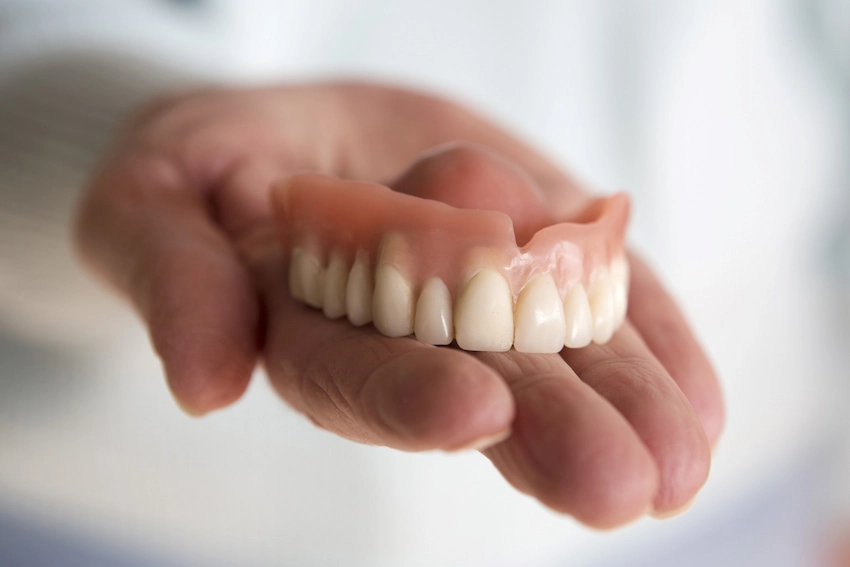
Tabelle: Haftcreme für Zahnprothesen vs. Implantatalternativen
| Lösung | Sinus-Risikoprofil | Knochenerhalt | Tägliche Pflege |
| Herkömmliche Prothesen + Paste | Hoch (Reizung & Zink) | Schlecht (Knochenabbau) | Unordentliches tägliches Kleben |
| Sinuslift + Standardimplantate | Niedrig (Baut Sinusboden wieder auf) | Ausgezeichnet | Normales Zähneputzen |
| Zygoma-Implantate | Sehr niedrig (Umgeht Sinus) | Ausgezeichnet | Normales Zähneputzen |
| All-on-4 / All-on-6 Systeme | Niedrig (Vermeidet Sinushöhle) | Ausgezeichnet | Normales Zähneputzen |
Häufig gestellte Fragen
Akademische Referenzen
- Al-Omiri, M. K., & Karasneh, J. (2010). Relationship between oral health-related quality of life, satisfaction, and personality in patients with prosthetic rehabilitation. Journal of Prosthodontic Research, 54(4), 166-171.
- Carlsson, G. E. (2014). Responses of jawbone to pressure. Gerodontology, 31(1), 2-7.
- Nations, S. P., Boyer, P. J., Love, L. A., Burritt, M. F., Butz, J. A., Wolfe, G. I., ... & Trivedi, J. R. (2008). Denture cream: an unusual source of excess zinc, leading to hypocupremia and neurologic disease. Neurology, 71(9), 639-643.
- Sharma, A., & Rahul, G. R. (2013). Zygomatic implants—a literature review. Journal of Oral Implantology, 39(2), 215-224.
- Zarb, G. A., Hobkirk, J. A., Eckert, S. E., & Jacob, R. F. (2013). Prosthodontic treatment for edentulous patients: complete dentures and implant-supported prostheses (13th ed.). Elsevier Health Sciences.
Häufige Fragen
Is it really so dangerous to swallow that small amount of paste from a denture daily?
In the case of my patients, a little bit of zinc-free paste accidentally ending up in the throat is not a problem on a medical level. On the other hand, multiple thick strips every single mouthful of food, however, is definitely risky. The body, after a prolonged time of chemical exposure, will suffer from serious mineral imbalance.
What causes upper jaw discomfort when one chews close to the eyes?
This is definitely an important signal from the body. There is hardly any physical presence of the jawbone under the upper part where it was previously present, so there is no physical resistance to stop the denture. The paper-thin layer of bone, which is left is under the sinus, becomes crushed, which is responsible for the acute pain throughout the cheekbones. The pain can be interpreted as an upper jaw problem, but in fact, it’s the toothless jaw that doesn’t hold the denture anymore,e and the denture keeps crushing the very small piece of bone beneath the sinuses.
Is a loose denture able to cause a direct bacterial infection of the sinus?
Not directly. The hard materials, like the denture acrylic or the adhesive itself, are unable to cause infection from the sinus. But indirectly, sure. The constant pressure from a loose denture will irritate sores on your gums that, very quickly, fill with bacteria, which are only millimeters away from your sinus membrane. Once the bacteria penetrate the sinus membrane, a full-blown, reactive inflammation of your sinuses is just around the corner.
How are Zygomatic implants protecting my sinuses?
We alter the direction when we perform Zygomatic implants at the clinic. Rather than placing the implants directly next to a soft area of the bone that is already very fragile due to the shrinkage of the jaw, we are using implants with an increased length, which completely avoids contact with the sinus and only reach the solid cheekbone. This is an absolutely safe solution.
Is there any time required for a person to switch from the traditional dentures to the implants?
Thanks to the development of the All-on-4 or All-on-6 techniques, it is indeed possible within the span of just a few days to extract old teeth, insert the implants, and finally, deliver a fixed dental prosthesis. Once you leave the dentist's chair, you no longer have an uncovered area on the roof of your mouth, and you never have to open a container containing a single piece of denture adhesive again.