

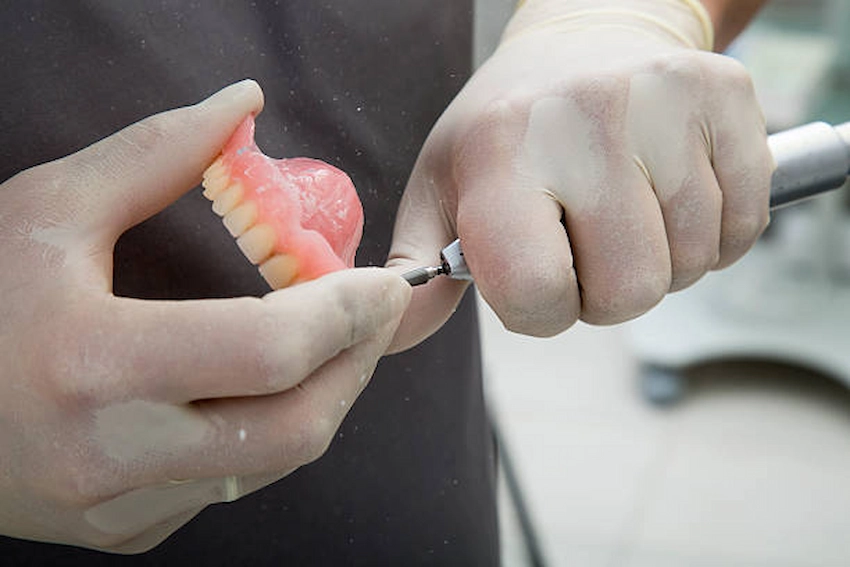
Den skjulte koblingen: Kan proteselim forårsake bihuleproblemer?
Gebisslim forårsaker sjelden bihuleproblemer, men irritasjon eller dårlig passform på gebisset kan skape ubehag.
I tannlegestolen ser vi denne scenen nesten daglig. En sliten og frustrert pasient forteller oss at deres overkjeveprotese rett og slett ikke vil sitte fast. I ren desperasjon påfører de mer og mer proteselim helt til de, bak kinnbeina, utvikler en dump smerte. Det fortsetter uten pause. Nesen forblir blokkert, og ansiktsubehaget vedvarer. Pasienten vender spørsmålet til oss: Kan bruken av gebisslimet faktisk være årsaken til mine bihuleproblemer? Dette er litt av en myte. Selve limet reiser ikke direkte inn i bihulene. Likevel, hvis vi ser nøye på prosessene som skjer under tannkjøttet, kan vi innse at faktorene som får deg til å ty til mer lim, faktisk er en hovedårsak til bihuleproblemet ditt. I tillegg vil ingrediensene som brukes i limet påvirke helsen din dramatisk. Kombinasjonen av faktorer – som et tynt lag bløtvev og en svært sterk kraft fra gebisset for å holde det på plass – vil alle bidra til at problemet oppstår eller forverres.Forstå hvorfor et gebiss stadig løsner
En skjult fare: Sink og nerveskade
Hvis du er en av dem som regelmessig er avhengig av gebisslim, er du mest sannsynlig klar over en av de vanlige ingrediensene. Flertallet av gebisslimene på markedet er laget med betydelige mengder sink for å øke produktets festeevne. Men når gebisset ikke passer, må pasientene bruke en mye større dose av produktet; derfor svelger de det daglig. Overdrevent inntak av sink kan tømme kroppen for kobber. På lang sikt er det kobbermangel som forårsaker nevrologiske symptomer som nummenhet, prikking og hodepine. Dette er svært subtile tegn på nervefeil som svært få innser at de selv opplever. Noen ganger tror de berørte at dette er symptomer på bihulepress. Det vil bare gjøre en person svært frustrert med sin helsetilstand og til og med forsinke dem i å få den hjelpen de trenger. Det er veldig trist å se hvor mange mennesker som lider på denne måten og forveksler sinkmangel med bihulebetennelse.Utover limet
Gebisslim vs. implantatalternativer – tabell
| Løsning | Bihulerisikoprofil | Beinbevaring | Daglig pleie |
| Tradisjonelle gebiss + lim | Høy (irritasjon & sink) | Dårlig (bein forsvinner) | Klinete daglig liming |
| Sinusløft + standardimplantater | Lav (gjenoppbygger bihulegulvet) | Utmerket | Normal tannpuss |
| Zigomatiske implantater | Svært lav (omgår bihulene) | Utmerket | Normal tannpuss |
| All-on-4 / All-on-6-systemer | Lav (unngår bihulehulen) | Utmerket | Normal tannpuss |
Ofte stilte spørsmål
Akademiske referanser
- Al-Omiri, M. K., & Karasneh, J. (2010). Relationship between oral health-related quality of life, satisfaction, and personality in patients with prosthetic rehabilitation. Journal of Prosthodontic Research, 54(4), 166-171.
- Carlsson, G. E. (2014). Responses of jawbone to pressure. Gerodontology, 31(1), 2-7.
- Nations, S. P., Boyer, P. J., Love, L. A., Burritt, M. F., Butz, J. A., Wolfe, G. I., ... & Trivedi, J. R. (2008). Denture cream: an unusual source of excess zinc, leading to hypocupremia and neurologic disease. Neurology, 71(9), 639-643.
- Sharma, A., & Rahul, G. R. (2013). Zygomatic implants—a literature review. Journal of Oral Implantology, 39(2), 215-224.
- Zarb, G. A., Hobkirk, J. A., Eckert, S. E., & Jacob, R. F. (2013). Prosthodontic treatment for edentulous patients: complete dentures and implant-supported prostheses (13th ed.). Elsevier Health Sciences.
Ofte stilte spørsmål
Is it really so dangerous to swallow that small amount of paste from a denture daily?
In the case of my patients, a little bit of zinc-free paste accidentally ending up in the throat is not a problem on a medical level. On the other hand, multiple thick strips every single mouthful of food, however, is definitely risky. The body, after a prolonged time of chemical exposure, will suffer from serious mineral imbalance.
What causes upper jaw discomfort when one chews close to the eyes?
This is definitely an important signal from the body. There is hardly any physical presence of the jawbone under the upper part where it was previously present, so there is no physical resistance to stop the denture. The paper-thin layer of bone, which is left is under the sinus, becomes crushed, which is responsible for the acute pain throughout the cheekbones. The pain can be interpreted as an upper jaw problem, but in fact, it’s the toothless jaw that doesn’t hold the denture anymore,e and the denture keeps crushing the very small piece of bone beneath the sinuses.
Is a loose denture able to cause a direct bacterial infection of the sinus?
Not directly. The hard materials, like the denture acrylic or the adhesive itself, are unable to cause infection from the sinus. But indirectly, sure. The constant pressure from a loose denture will irritate sores on your gums that, very quickly, fill with bacteria, which are only millimeters away from your sinus membrane. Once the bacteria penetrate the sinus membrane, a full-blown, reactive inflammation of your sinuses is just around the corner.
How are Zygomatic implants protecting my sinuses?
We alter the direction when we perform Zygomatic implants at the clinic. Rather than placing the implants directly next to a soft area of the bone that is already very fragile due to the shrinkage of the jaw, we are using implants with an increased length, which completely avoids contact with the sinus and only reach the solid cheekbone. This is an absolutely safe solution.
Is there any time required for a person to switch from the traditional dentures to the implants?
Thanks to the development of the All-on-4 or All-on-6 techniques, it is indeed possible within the span of just a few days to extract old teeth, insert the implants, and finally, deliver a fixed dental prosthesis. Once you leave the dentist's chair, you no longer have an uncovered area on the roof of your mouth, and you never have to open a container containing a single piece of denture adhesive again.