


No, it’s only needed when there isn’t enough upper jaw bone for implants.
It is a conversation we have almost daily at Lema Dental Clinic. You come to Turkey with a dream of getting a new smile, and maybe implants are just right for you to replace the missing upper teeth. Then during the consultation, someone drops a scary bomb: Sinus Lift.
Suddenly the plan expanded to a saga. Is this extra step really necessary? Just a “sales move”? Or the most important bridge between an implant that works and the one that fails?
The straightforward answer is: A sinus lift is not necessary for every patient. However, for those who require it, the procedure is comparable to the difference in building your house on a solid rock versus on sand.
We can analyze the anatomy, the decision-making process led by Professor Doctor Coşkun Yıldız, and the alternatives we could consider to spare you the surgery and time.
Upper Jaw Anatomy: Using a “Tent” as an Analogy
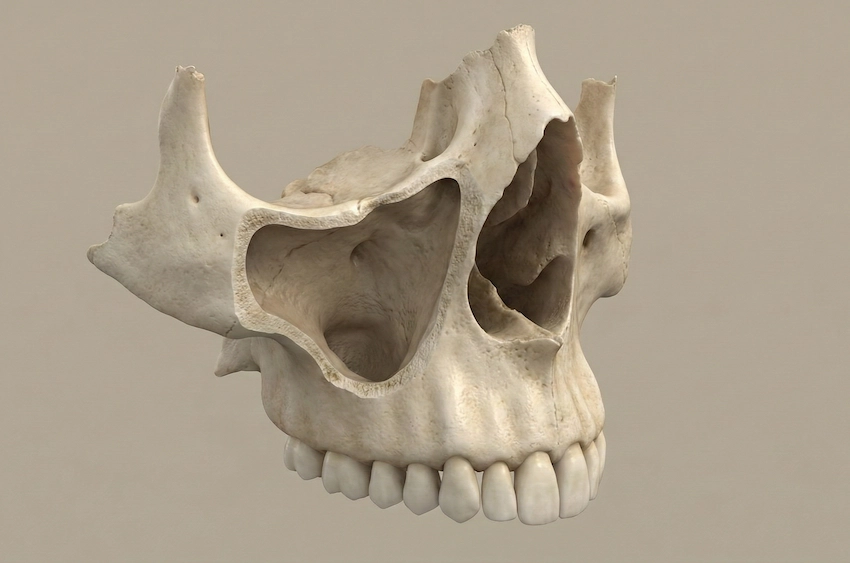
Before understanding the reason behind such an operation, we should glance at the topographical map of your upper jaw (maxilla).
Almost next to the roots of your upper molars are your maxillary sinuses – cavities in the bone that connect to your nose through tiny openings. Think of the lining of the sinus as the fabric of a tent, and your jawbone the floor on which the tent poles (implants) must be secured.
When a tooth falls out, the body thinks that there is no need for bone in that place anymore. So it starts resorbing, or the bone is gradually melting away. Due to the bone becoming thinner, the sinus floor is getting lower. If a dental implant were inserted there without any preparatory work, it would lack sufficient “soil” to achieve a stable fixation. Moreover, the implant might pierce that delicate tent floor and the sinus cavity could be entered.
Nevertheless, the situation is this:
If your teeth are gone for a few years, or if you have naturally big sinuses, you probably won’t have enough vertical bone height to stabilize a standard implant (usually 8mm to 10mm long).
When Is the Lift Absolutely Needed?
Lema Dental Clinic treatments are based on the least trauma possible. We do not perform surgery only if a longer-term result is guaranteed. Dentist Polen Akkılıç and her crew usually suggest a sinus lift (sinus augmentation) when there is less than 4-5mm of native bone height.
In such a case, the “tent floor” (the Schnederian membrane) must be lifted carefully, and the space thus formed filled with bone graft material. It is like adding new cement to an old foundation. Over the next 5-6 months, the body will change this graft material into real, living bone, which will be able to fix an implant tightly.
Main Two Approaches:
- Lateral Window Technique: In situations when a considerable amount of bone needs to be added. We make an opening to the sinus by creating a small window on the gum’s side.
- Internal (Crestal) Approach: When a millimeter or two is enough, we knock (through the implant site) the sinus floor to a higher position.
What About Avoiding a Sinus Lift (The “Lema” Way)?
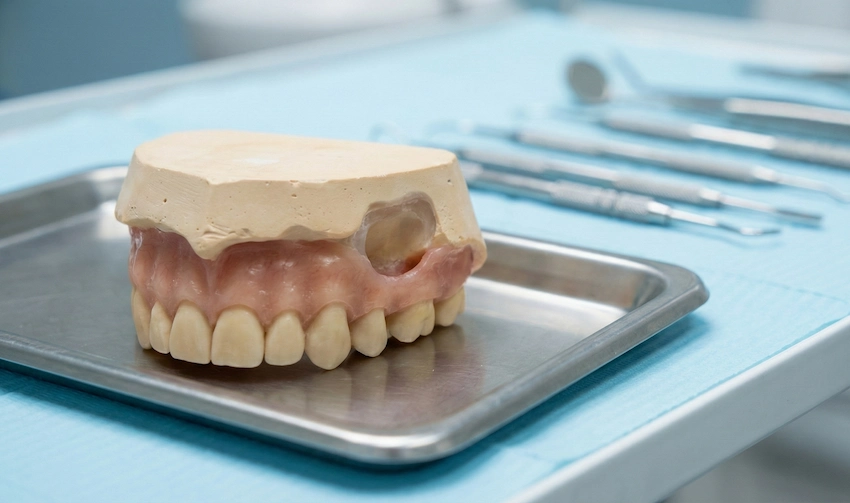
That is when a surgeon like Professor Doctor Coşkun Yıldız who has a deep knowledge of every corner of the mouth, makes a real difference. While a general dentist who notices that the bone volume is very low and schedules a graft right away, a specialist surgeon is fascinated by looking at architectural options to overlook the problem.
The truth is that thanks to the development of modern implantology, we can in most cases entirely avoid the sinus.
- Short Implants: Nowadays, due to the increased strength of the material, implants that have a smaller height but a bigger diameter and are not only shorter but also wider can be used.
- Tilted Implants (All-on-4): We place the implants at around 45 degrees and thus anchor them in the dense bone at the front of the jaw, totally avoiding the sinus in the back.
- Zygomatic Implants: A patient who has been told that he/she is “out of the bone” is the one with whom we can place the long implants in the cheekbone (zygoma). We are talking about an extremely stable solution that neither touches the sinus floor nor requires a couple of months for a graft to heal.
Comparing the Surgical Treatment Options You Have
What follows is a comparison of these treatment options as we see them ourselves here in our Turkish clinic:
| Feature | Standard Implant + Sinus Lift | Short Implants | All-on-4 / Tilted Implants |
| Bone Required | High (need graft) | Low, vertical height | Moderate (anterior bone used) |
| Treatment Duration | 6–9 months (healing time) | 3–6 months | Immediate loading is possible |
| Surgical Trauma | Moderate to high | Low | Moderate |
| Success Rate | Extremely high (>95%) | High (case-dependent) | Very high (>98%) |
| Ideal For | Patients want teeth one by one | Minor vertical bone loss | Complete arch restoration |
| Summary | Traditional and reliable, but a longer process | Faster with less surgery | Full-mouth solution with immediate function |
It is not that Dentist Polen Akkılıç and Professor Doctor Coşkun Yıldız want to make your surgeries more complicated if they suggest a sinus lift. They are simply saying that the physics of your jaw demand that this be done to have a result that will last for decades rather than for years.
On the other hand, we are always on the lookout for the path of least resistance. We will, if possible use your native bone by tilting the implant, or using another size, etc.
FAQ: Doctor Gives You Your Answers
The majority of patients are taken aback as to how little discomfort there actually is. You don’t feel anything during the operation because you are either locally anesthetized or sedated. You may experience some pressure in your sinuses, reminiscent of when you suffer from a head cold, and some swelling post-operative; however, severe pain is rarely experienced and the pain medication we prescribe is usually enough to relieve it.
We advise you to wait at least 48 hours up to 72 hours before flying. The pressure changes in the pressure-controlled cabin can have some impact on the sinus membrane when it is still in the process of healing. We intend to get the wound clot stable enough before you start your journey.
It can be, however, nowadays, it is a rare case when we take a graft from your hip or jaw. Most of the time, the material we use comes from cow bone or it is a synthetic one. They are all perfectly safe, sterile, and biologically coexist with the human body, serving as a good scaffold for new bone formation.
You are absolutely right with your question. We ask you not to blow your nose and try to not sneeze with your mouth closed for the first two weeks only. This is to prevent a scenario where the pressure in your sinus gets so high that it ends up displacing the graft material.
In the case where you have enough natural bone to which the implant can be immediately fixed, it is possible that the lift and implant can be done at the same time. On the other hand, in situations where the bone is very thin, we do the lift first, allow 4 to 6 months for the bone to harden, and then put the implant in. It goes without saying that physiologically bone grows at a certain pace and it is impossible to go faster than that.
- Tatum, H. (1986). Maxillary and sinus implant reconstructions. Dental Clinics of North America, 30(2), 207-229.
- Misch, C. E. (2008). Contemporary Implant Dentistry. Mosby Elsevier.
- Summers, R. B. (1994). A new concept in maxillary implant surgery: The osteotome technique. Compendium of Continuing Education in Dentistry, 15(2), 152-158.
- Esposito, M., Felice, P., & Worthington, H. V. (2014). Interventions for replacing missing teeth: Augmentation procedures of the maxillary sinus. Cochrane Database of Systematic Reviews, (5).
- Testori, T., et al. (2019). Maxillary Sinus Surgery and Alternatives in Treatment. Quintessence Publishing.

