


Fluoride strengthens enamel and prevents cavities safely when used correctly.
One can find “Fluoride-Free” toothpaste being promoted as some kind of revolution just by walking down the dental care section of a supermarket. The subject really is a riddle, isn’t it? We, like everyone else, are at a loss to understand how common fluoride, one of the mainstays of dental care for a very long time, can be turned around to appear as a threat.
At Lema Dental Clinic in Turkey, we frequently witness such fear. Patients come to us trembling with fear that it may be the very thing that is supposed to protect their teeth, that is at the same time worrying their whole body. However, the reality is far from simple. It is not a “poison” against a “miracle cure” case. Instead, it is a matter of dosage, mode of use, and individual biology.
Let us take a non-sensational look at what the clinical facts at the very basic level reveal.
The Chemistry of Your Smile
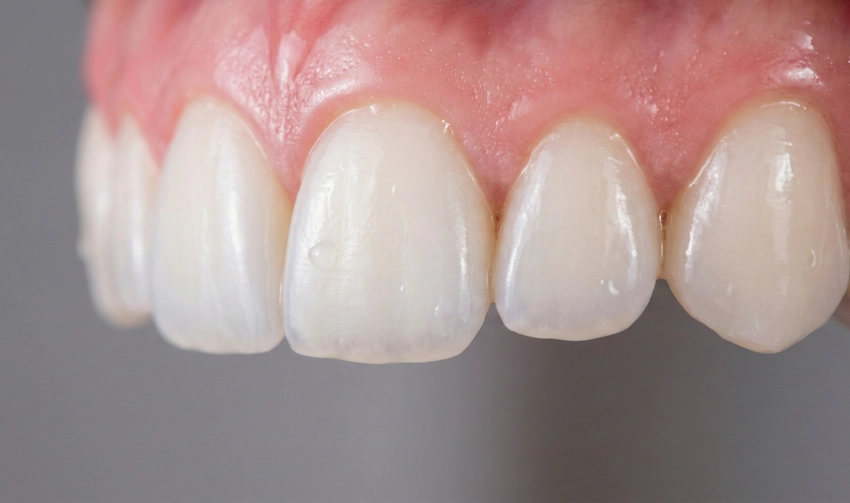
Picture tooth enamel as a limestone fortress wall. Whenever you eat sugary foods or drink acidulated beverages, the bacteria that live naturally on the wall will come out of the ‘mouth’ and attack it with acid. The process of demineralization is the loss of the very minerals that keep the wall strong. If the wall is not secured, it will fall – that is a cavity.
Fluoride is like a master mason. It not only patches the damage, but it also changes the very nature of the enamel crystals, making them more acid-resistant and stronger than the native ones.
Dentist Polen Akkılıç and her team usually give such explanations to our foreign patients as follows: We are not merely cleaning the surface; we are actually upgrading the teeth’s armor to a material that acid has a hard time penetrating.
The “Harmful” Narrative: Where Does It Come From?
You have probably read or heard about “fluoride toxicity” online. Should it scare you? Yes, but only partially.
In addition to that, drinking too much water can also be harmful, for instance, if you drink six liters in an hour. Most of the problems associated with fluoride are hypothesized to arise from Dental Fluorosis or systemic toxicity. Fluorosis is a condition where there are very light colored lines or spots on the teeth which only happens when a small child gets a lot of fluoride by swallowing it that is, too much fluoride while their permanent teeth are forming under the gums.
After your teeth have cut through the gums, you are not susceptible to getting fluorosis anymore. Adult smile makeover patients visiting us in Istanbul have a completely different risk profile compared to toddlers, obviously.
What We See in the Clinic
The disparity between a patient who has been using fluoride regularly and one who has not is quite visible.
“During preparations for a veneer or an examination of an implant scan, the bone density as well as the enamel quality speak volumes. Those patients twhohave been shy of fluoride most of the time had ‘soft’ decay—fast spreading cavities because the enamel was missing that strong crystal structure.”
— Clinical Note from the Lema Dental Team
Professional Fluoride vs. Daily Toothpaste
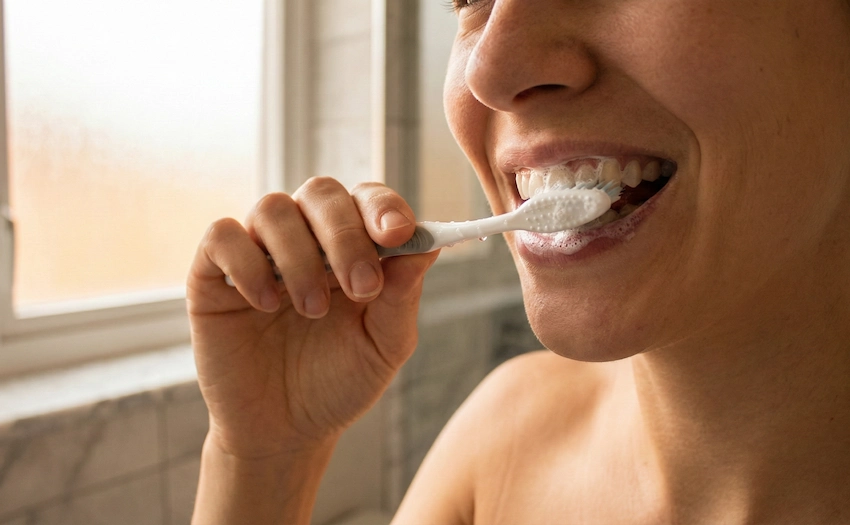
The fluoride content in your morning toothpaste is nowhere near that in the professional varnish we might apply after a cleaning.
Professional fluoride treatments have a greater amount of fluoride, but they are done in a controlled environment where you cannot ingest the fluoride. It quickly bonds with the tooth and gives you protection that lasts for a few months.
Below is a comparison of the different fluoride exposure levels:
| Type of Exposure | Concentration (approx.) | Primary Benefit | Risk Level |
| Water Fluoridation | 0.7 ppm | Systemic protection for developing teeth | Very Low (Safe) |
| Daily Toothpaste | 1,000 – 1,500 ppm | Daily remineralization of enamel | Low (If not swallowed) |
| Mouth Rinse | 225 ppm | Reaching areas brushing misses | Low |
| Clinic Varnish (Lema) | 22,600 ppm | Rapid, deep enamel fortification | Controlled (Professional use only) |
The “Natural” Alternative Trap
Many patients avail themselves of the possibility of using coconut oil pulling or charcoal instead. Although they may help kill bacteria or remove surface stains, these methods do not have the molecular power necessary to re-mineralize the tooth structure. Charcoal without fluoride is similar to sanding a floor but not sealing it; you can make it look smooth for a moment, but you are leaving it vulnerable to decay.
If you are having top-notch dental work in Turkey—either Hollywood Smile veneers or implants—then protecting that investment is a must. It’s not a good idea to buy a Ferrari and then wash it with sandpaper.
Frequently Asked Questions
One of the fears that the media has blown up from the news about the extremely high and unregulated levels of fluoride in groundwater in remote areas is the rumor that fluoride lowers IQ. However, it has nothing to do with the tiny fluoride levels in dental products which are regulated and safe. As a matter of fact, no credible scientific research has demonstrated that topical fluoride (toothpaste or varnish) in the concentration used for dental health leads to neurotoxicity in children or adults.
Of course! Dentist Polen Akkılıç is entirely on the same page. Porcelain veneers, unlike natural teeth, do not decay and thus the teeth under the veneers and the areas of the gums are still vulnerable to decay. Fluoride treatment is a good idea after getting veneers, the fluoride will protect the part of the tooth where the veneer and tooth meet thus decay cannot attack the edges of the veneers that are breaking down.
Fluoride is safe and even highly advised during pregnancy. Pregnancy hormones affect the gums which leads to pregnancy gingivitis, thus an increased risk for dental caries. Besides benefiting you, your baby will also benefit from your having strong teeth because oral bacteria can cause systemic diseases.
We will always put patients’ wishes first. We will, of course, be able to use fluoride-free polishing pastes and other alternatives during your hygiene sessions if you are strongly against the idea of using fluoride. However, we will always carry out our duty of informing you honestly about the medical risks you are taking by declining.
As a normal, healthy oral case, there is no need to do it more than twice a year and that is every 6 months interval during a cleaning. If you have a high risk for caries, suffer from dry mouth, or have a lot of restorations such as bridges or crowns, then it would be more beneficial to have a 3 to 4-month interval.
- American Dental Association. (2018). Fluoridation Facts. American Dental Association Council on Access, Prevention and Interprofessional Relations.
- Carey, C. M. (2014). Focus on fluorides: Update on the use of fluoride for the prevention of dental caries. Journal of Evidence-Based Dental Practice, 14, 95-102.
- Guth, S., Hüser, S., Roth, A., Degen, G., Diel, P., Edlund, K., … & Hengstler, J. G. (2020). Toxicity of fluoride: critical evaluation of evidence for human developmental neurotoxicity in epidemiological studies, animal experiments and in vitro analyses. Archives of Toxicology, 94(5), 1375-1415.
- Marinho, V. C., Higgins, J. P., Logan, S., & Sheiham, A. (2003). Fluoride varnishes for preventing dental caries in children and adolescents. Cochrane Database of Systematic Reviews, (1).
- World Health Organization. (2019). Inadequate or excess fluoride: a major public health concern. Public Health and Environment.

