


Sugar turns into acid that damages enamel and causes cavities.
Don’t we all remember this admonition from our early years? ‘Eating too many sweets will make your teeth decay.’ The link between sugar and cavities appears quite straightforward. However, the actual biological process that takes place at the microscopic level inside your enamel is very complicated – and even beautiful.
Lema Dental Clinic in Turkey witnesses this kind of situation every day. Our patients frequently arrive with a puzzled expression on their faces because they believe their hygiene is good since they brush their teeth twice a day and yet they still have decay. The key to the secret is that simply cutting sugar is not the only mistake made. It is that chemical battle-attempt that takes place right after the first bite.
The Invisible Ecosystem: Plaque and Biofilm
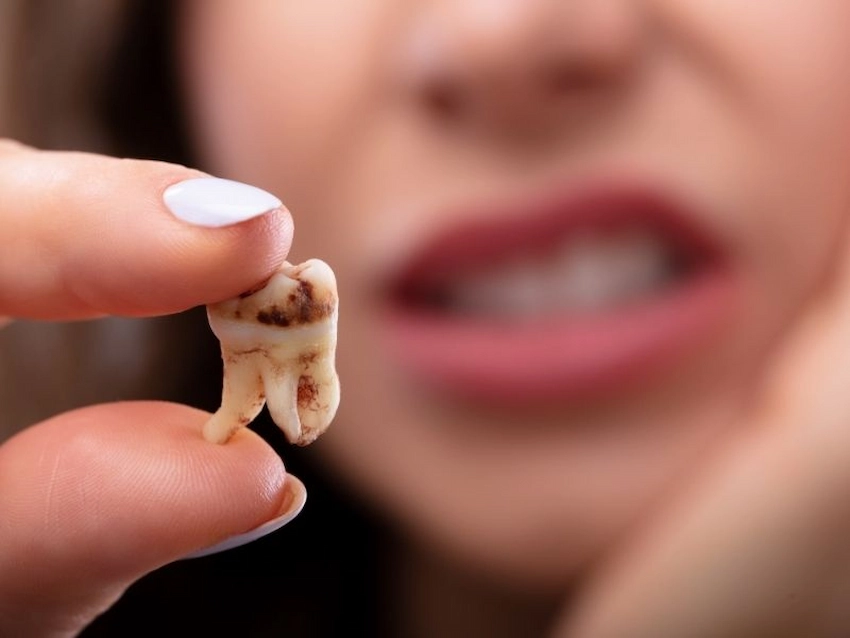
Your mouth is never empty at any time. It is a biological ecosystem that houses hundreds of bacterial species. Most of them are harmlessly there but a couple, like Streptococcus mutans, can be labeled “decay architects“.
Consider your teeth like a wooden pier in the ocean. It is something that is inevitable, the wood will get covered with barnacles and seaweeds every year. In the same way, bacteria cling to the surface of your teeth and they form a sticky, colorless film called plaque. This is the plaque where the bacteria perform the harmful activities of which they are capable.
The Acid Attack: A Chemical Reaction
This is when sugar enters the scene of the story. Each time you take in sucrose (table sugar) or fructose (fruit sugar), the bacteria that reside in the plaque get fired up and active all of a sudden. They break down these carbs and give off energy at a very high speed.
Like all living organisms, bacteria produce waste. The waste product of these bacteria is lactic acid.
Doctor Coşkun Yıldız, professor. Let’s break it down to really easy ones for patients like this: Basically, the enamel of your teeth is like a marble statue. It is gorgeous, robust, and extremely hard. But suppose you continue to pour acid rain on it, then little by little, the intricate features of the sculpture will be less and less . The surface will be worn out and after a while, the statue will have been broken down.”
The acid does an extremely important job as it makes the pH level in your mouth go down very significantly. A normal pH of saliva is around 7. When it goes down to below 5.5, then it is really damaging although it is still risky at higher levels.
Demineralization vs. Remineralization: The Tug-of-War
Your teeth are actually continually changing. tooth condition is not something given in advance:
- Demineralization: Acid dissolves the calcium and phosphate minerals that enamel consists of.
- Remineralization: The calcium and phosphate that are already present in our saliva (and fluoride from toothpaste) can actually help to bring back the damaged areas.
If the amount of sugar intake is consistent and over a long period, then this is where the problem arises.
What if you only have a few sips of a sugary soda in four hours? In this case, you are making your mouth stay in the ‘acid zone’ for a period far longer than your saliva is capable of neutralizing it. You are harming the tooth enamel faster than the repair team is able to fix it.
Clinical Insight: When Prevention Is Still Not Enough
Yet, there might be cases where a person has done everything right, but the tooth is so damaged that it is structurally weakened. The entire team, including Dr. Polen Akkılıç from Turkey, is very keen on dedicating that consultation, which is so valuable, to thoroughly checking the “mineral balance” with the patient. Dr. Polen Akkılıç and the whole team from Turkey are very committed to spending invaluable consultation time to thoroughly check the “mineral balance” with the patient.
Dt. Akkılıç adds, “It is not just a question of cavities; very often when we examine tooth surfaces, we notice ‘white spots’ – the early stages of enamel damage before the actual cavity is formed. If we catch it early enough, we can sometimes prevent the drill and cure.”
The Sugar Spectrum: Not All Sweets Are Equal
We generally blame candy bars only when, in fact, the texture of the sugar is just as important as the quantity of it.
| Sugar Source | Retention Time (Stickiness) | Caries Risk Level | Clinical Note |
| Liquid Sugars (Soda, Juice) | Low (Gets washed away quickly) | High | Instantly covers the whole mouth; frequent sipping increases acid attacks. |
| Sticky Sweets (Caramel, Dried Fruit) | Very High (Sticks deep into grooves) | Severe | Remains on enamel for hours, giving bacteria a constant food source. |
| Starchy Carbs (Chips, Crackers) | High (Particles trapped between teeth) | Moderate–High | Enzymes convert starch into sugar; can cause cavities despite not tasting sweet. |
| Fresh Fruit (Apples, Berries) | Moderate | Low | Fiber stimulates saliva, which helps neutralize acids and protect enamel. |
The “Point of No Return”
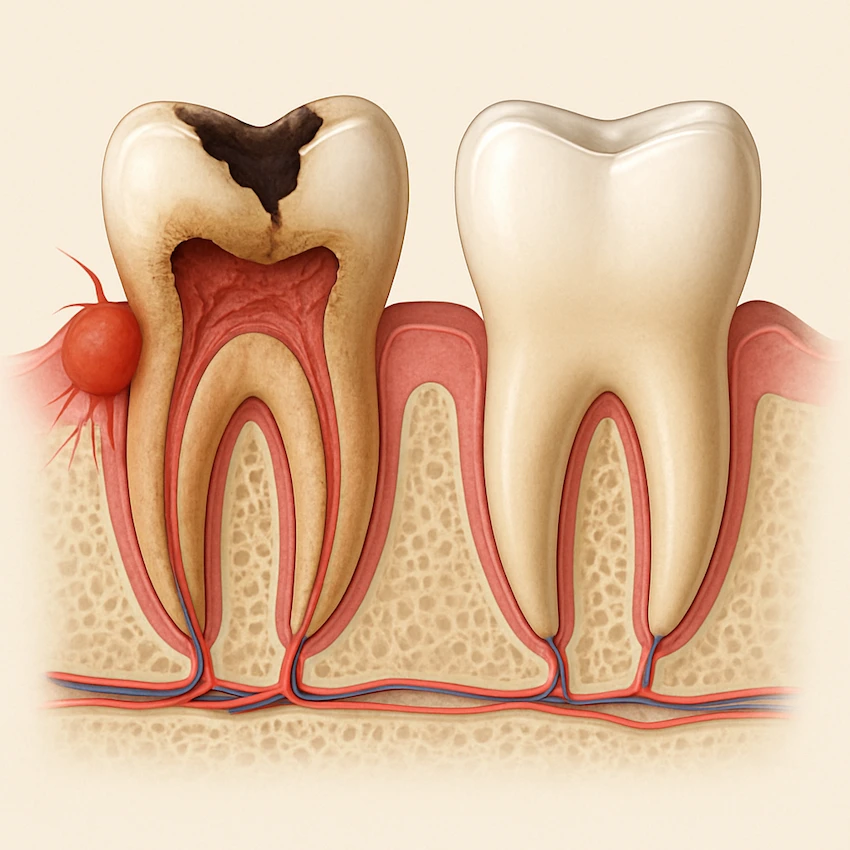
After repeated acid attacks which have not been treated, the enamel ultimately breaks down. That is the cavity. The bacteria break down the enamel and the dentin, the layer that is less dense, the sensitive layer of the tooth, is the place where the bacteria finally go inside. At this stage, the result of the opening of the nerve to the external temperature changes becomes the sudden pain you feel.
As bacteria have now reached the pulp of the tooth, it is impossible to “brush away” the infection at this point. They have thus found a safe place where the toothbrush can not reach and they will multiply and move freely toward the nerve.
The Lema Approach to Restoration
When a patient brings such a matter to our attention, we try biomimetic dentistry which is actually a natural healing method, the most natural healing approach by far. The kind of restoration that we have in mind does not depend on the size of the smallest hole whether it reveals a composite filling or a full zirconia veneer covers the larger area; in fact, the two could not be further apart. We make the tooth, and the smile, look and work just like they did originally, and on top of that, we also make sure that bacteria won’t be able to get in the tooth again.’
Frequently Asked Questions
The single most important factor is probably how frequently you consume it. Take for instance the case where you finish a chocolate bar all at once within 5 minutes; your teeth are exposed to acid for 20 minutes this way. However, if you split the chocolate bar into small pieces and eat them one by one throughout the day, with every new bite you will “restart” the 20-minute “acid clock” thus constantly “resetting” it. Your saliva will therefore not have sufficient time to heal and rebalance the pH.”
After eating sugary foods or drinking sugary drinks, acids will soften your tooth enamel temporarily, so it would be more prone to wear if you brush immediately while still in that softened state, you could even remove a thin layer of enamel; therefore, what you should do first is rinse your mouth with water, then wait for about 30 minutes while your saliva naturally remineralizes and reharden the enamel, and only then brushing your teeth properly would be the way to secure long-term dental health.
Bacteria give no preference to any type of sugar molecule, chemically speaking, whether it is honey, sucrose, or fructose, because they will break all these sugars with the same level of enthusiasm. However, honey possesses some antimicrobial properties at a certain level even though its stickiness almost completely negates that and therefore has a dental health effect that is opposite to what one might expect as it stays on the teeth for a longer time.
Assuming the very first stage of decay is supposed to be painful might mislead one to a considerable extent as it is not necessarily the case. Potentially, there can be a white spot or even just some discoloration that is visible on a tooth. Sweet sensitivity is very frequently a clear symptom. When the pain becomes so unbearable that you cannot focus on anything else, it is mostly the case that the decay has already reached the nerve. Therefore, having regular dental check-ups is strongly advised particularly if you are in Turkey so that the signs of the disease are detected before the patient actually feels them.
Sure, if it is sugar-free! Chewing gum can cause salivation to increase up to 10 times the normal level. In most cases, this is very good because the larger amount of saliva can help to wash away food particles and bacteria, and acids can also be neutralized quite efficiently. If possible, choose a chewing gum with Xylitol, which is a very efficient substance that can destroy cavities-causing bacteria at their growing stage.
- Featherstone, J. D. B. (2008). Dental caries: A dynamic disease process. Australian Dental Journal, 53(3), 286–291.
- Giacaman, R. A. (2018). Sugars and beyond: The role of sugars and the other nutrients and their potential impact on caries. Oral Diseases, 24(7), 1185–1197.
- Marsh, P. D. (2006). Dental plaque as a biofilm and a microbial community—implications for health and disease. BMC Oral Health, 6(Suppl 1), S14.
- Moynihan, P., & Petersen, P. E. (2004). Diet, nutrition and the prevention of dental diseases. Public Health Nutrition, 7(1A), 201–226.
- Pitts, N. B., et al. (2017). Dental caries. Nature Reviews Disease Primers, 3, 17030.

