


Implants fail from infection or poor healing and may need replacement.
Everyone loves to quote the comforting statistic: dental implants have a success rate of around 95% to 98%. However, this figure hardly provides comfort to those who fall into the 2% to 5% bracket. Maybe you suspect something is off or are experiencing pain, and the “permanent” tooth feels loose.
Here at Lema Dental Clinic, Turkey, we ensure that we fully attend to and give the attention these kinds of cases deserve. A failing implant is not only a dental issue; it is a huge letdown as well. You have invested your time, money, and hope in getting a new smile, and the thought of facing a revision might be like going back to the starting point.
However, implant failure is mostly explainable in terms of biology and mechanics. And, more importantly, these causes have solutions.
The Foundation: Understanding Osseointegration
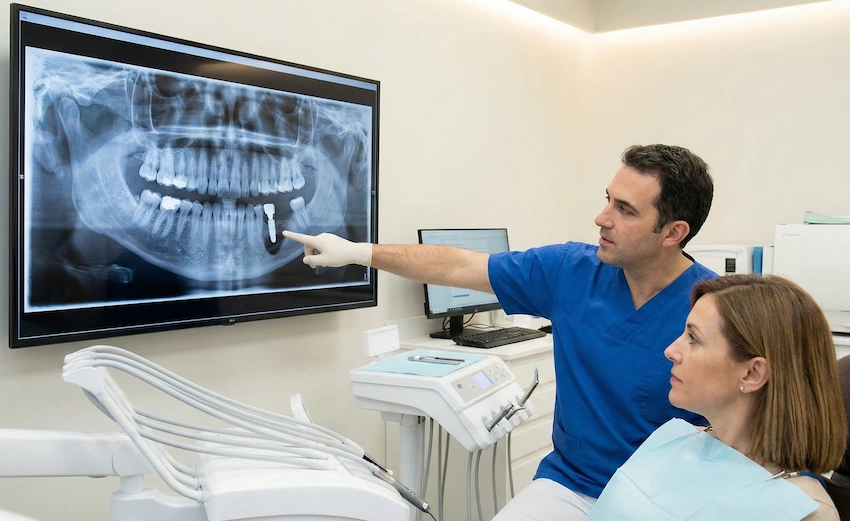
It is quite hard to talk about failure without at least referring to success, Professor Doctor Coşkun Yıldız is not simply putting a metal piece into a piece of wood when he is placing an implant. A biocompatible titanium post is surgically inserted into the living bone to obtain the state of osseointegration.
Just suppose for a moment that your jawbone is like a concrete basement floor, and an implant is a steel column going down inside a concrete slab. For the house to be stable the wet concrete has to dry and become so hard tightly around the pillar that even the pillar is locked in place. If the “concrete” (the bone) is too soft, or the infection is disturbing the setting, the pillar will never be stable. We say that an implant fails when the bonding does not take place, or if it does take place and then the breakdown occurs.
The Primary Culprits: Why Does It Happen?
Lema Dental Clinic’s clinical experience shows that implant failure in general can be divided into two categories: Early Failure (within a few months after placement) and Late Failure (after several years).
1. Peri-Implantitis (The Silent Enemy)
As a matter of fact, this is the most frequent cause of late failure. Essentially, this is gum disease around the implants. The bacteria attack the tissue and the bone is gradually lost. Therefore, the gum tissue becomes inflamed.
It is painless most of the time. At the same time, this is very dangerous. When you get the pain or the implant moves, it means the bone loss has been very advanced already.
2. Failed Osseointegration
Sometimes no matter how hard the body tries it just won’t act in our favor. These moments are typically when we are healing. Pockets that are actually defects in the healing process can be:
- Poor Bone Quality: If the bone is too “soft” (like balsa wood compared to oak), the implant can’t get initial stability.
- Uncontrolled Diabetes: Elevated blood sugar levels prevent the body from healing and fighting bacteria effectively.
- Smoking: Here is a major non-negotiable. Nicotine tightens the blood vessels, and the surgical area is deprived of oxygen and nutrients necessary for healing.
3. Mechanical Overload
In theory, a tiny nail that holds a big heavy painting can only be subjected to so much weight. At some point, the nail will either bend or pull out from the wall. If an implant is being subjected to an excessive amount of pressure for instance, from bruxism or an improperly balanced prosthesis, the interface between metal and bone can get damaged.
Dentist Polen Akkılıç and her team have some very close monitoring of your “occlusion” (how your teeth bite together) to prevent such a scenario from happening.
Revision Surgery: The Path to Redemption
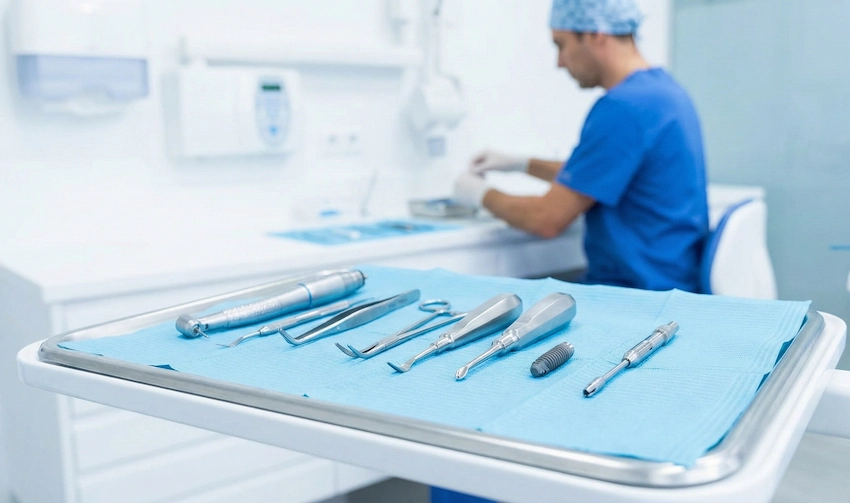
Hearing your dental implant has failed can be quite a shock but it is not the end of the world. Revision surgery is actually a very good option where we find the cause of the problem and, in most cases, even put back the tooth that was lost).
Generally, the procedure consists of the removal of the failed implant. A lot of patients are surprised to find that this is typically less difficult and traumatic than the first time around because the bone has already separated from the metal to some extent. Once the implant is taken out, the area is thoroughly disinfected to get rid of the infection.
When the bone is damaged, we don’t just leave a gap. Instead, we rebuild the whole thing. The void is filled with bone grafting materials, and a fresh, solid base is formed.
You can think of it as a drywall repair before painting-if you want to start over, you need a clean and solid surface. There are times when we can install a new implant right away; other times, we prefer to let the area “rest” for a few months to be sure the new “foundation” is very strong.
Comparing the Scenarios: A Clinical Breakdown
Below is an outline of our routine clinic cases and how we successfully deal with them:
| Conditions | Signs and Symptoms | Common Causes | Treatment Methods |
| Peri-Mucositis | Pink, swollen gums without bone loss | Bacterial plaque accumulation | Deep scaling, professional cleaning, and antibiotics (reversible condition) |
| Peri-Implantitis | Bleeding gums, pus discharge, and bone loss are visible on X-ray | Advanced bacterial infection | Flap surgery, surface decontamination, bone grafting, and possible implant removal in advanced stages |
| Loose Implant | Implant mobility, pain during chewing | Failed osseointegration or implant fracture | Mandatory removal, site grafting, delayed replacement |
| Nerve Impingement | Numbness or tingling in the lip or chin | Implant positioned too close to the nerve | Immediate implant removal or repositioning during placement |
Frequently Asked Questions
Most patients are surprised to find that removing a failed implant is often less painful than a natural tooth extraction. Since the implant has likely lost its bond with the bone, the process is less invasive. We use local anesthesia (and sedation if requested) to ensure you are completely comfortable, and post-op recovery is typically mild, requiring only standard over-the-counter painkillers.
If the situation allows it, certainly, but if not? We never hurry. If an infection is severe and there is a significant bone loss, the safest option would be to clean the wound, place a bone graft, and allow it to heal for 3-4 months. The second time we want to be the last because the result is what really matters.
Not only aesthetics but Lema Dental Clinic also cares a lot about the patient’s comfort and thus we always provide you with a temporary tooth whether it is a flipper or a temporary bridge. This way, the healing can be an invisible phase in your life.
Although the revision is more complex than the original placement, the cost in Turkey is still enormously lower—mainly around 70%—than it would be in the UK or US. The exact number depends on whether bone grafting or a sinus lift is necessary. We provide these costs before starting the work.
Everything is maintenance. Brushing and flossing twice a day is essential for dental implant care, just like for natural teeth. To avoid this situation in the future we recommend that you wear a nightguard if you grind your teeth (bruxism) which can be detected and treated by Dr. Polen Akkılıç through regular visits.
- Derks, J., & Tomasi, C. (2015). Peri-implantitis: Biological complications. Journal of Clinical Periodontology, 42(S16), S158–S171.
- Albrektsson, T., Buser, D., & Sennerby, L. (2012). Crestal bone loss and oral implants. Clinical Implant Dentistry and Related Research, 14(6), 783-791.
- Esposito, M., Grusovin, M. G., & Worthington, H. V. (2012). Treatment of peri-implantitis: what interventions are effective? A Cochrane systematic review. European Journal of Oral Implantology, 5, S21-41.
- Heitz-Mayfield, L. J. A. (2008). Peri-implant diseases: diagnosis and risk indicators. Journal of Clinical Periodontology, 35(s8), 292–304.
- Renvert, S., & Polyzois, I. (2018). Treatment of pathologic peri-implant pockets. Periodontology 2000, 76(1), 180-190.

