


Dark liquids, berries, and acids cause yellowing.
At Lema Dental Clinic in Turkey, one of the things that keep surprising us is the fact that a beautifully white smile can basically double a person’s self-confidence. On the other hand, we totally get the feeling of disappointment when the light is slowly fading.
Tooth enamel is said to be the hardest substance in the human body, but it still can get worn out. Picture your enamel as fine china. To the naked eye, it seems perfect. Nevertheless, under a microscope, it can be seen that the surface has small pores and unevenness. The molecules of the brightly colored food that is consumed – called chromogens – gradually get caught in these extremely tiny cracks, which leads to the discoloration of your teeth.
Professor Doctor Coşkun Yıldız frequently emphasizes during our sessions that the problem is not only the color; it is also about acidity. Acidic foods damage the enamel surface by making it rough, this way the pigments get even easier into the enamel.
If you want to keep up the whitening effects of the professional treatment or if you want to defend your natural smile, then it is essential for you to recognize those foods that harm your teeth the most. Here is what we find the most common culprits in our clinic’s practice.
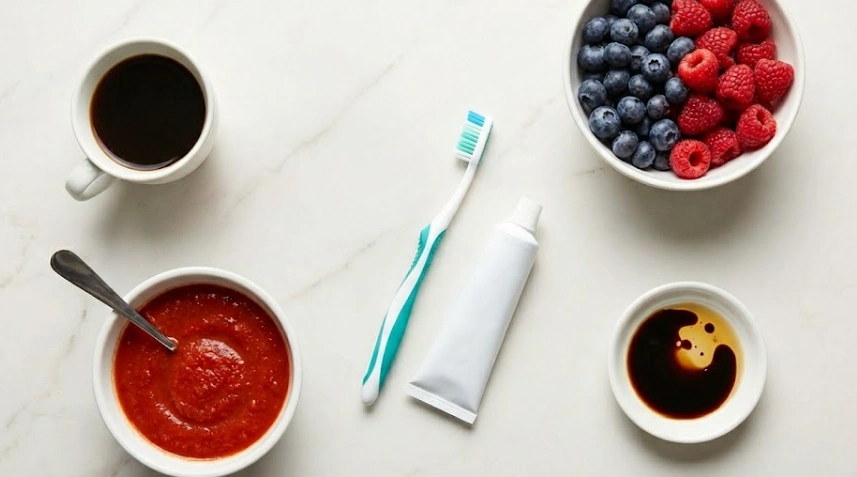
The “Staining Agents” Unmasked
Before we get into the list of foods, it’s useful to know the three elements that work together to fade your smile:
- Chromogens: Powerful color molecules that get attached to the dental enamel.
- Tannins: Chemical compounds from plants that increase the effect of chromogens to stick to the tooth surface.
- Acids: Substances that weaken and wear down enamel, thus making it easier to get stained.
If a food has all three elements, then it is a sure way to have a yellowing smile.
1. Coffee and Tea: The Morning Rituals That Stain Your Teeth
People take coffee as the largest culprit of tooth discoloration, and that’s quite understandable. It contains plentiful chromogens and is a highly acidic drink. The acid and coloring slowly penetrate the teeth, turning them darker one sip at a time.
However, this time let’s consider tea; some patients think that if they change to tea, it will be a “safer” option. Black tea, which is rich in tannins, is capable of staining your teeth even more than coffee. Besides, if you keep consuming lighter herbal teas, they will also result in enamel erosion later on.
2. Red Wine: The Elegant Offender
A glass of Bordeaux is simply delicious, but red wine is a serious enemy to white teeth. It is loaded with deeply pigmented chromogens, is highly acidic, and has a considerable amount of tannins.
We at Lema Dental Clinic have seen a particular pattern of wine staining on the front teeth of regular wine addicts. The acid on one hand, etches the enamel and then on the other hand, the deep red color attaches instantly to the roughened surfaced.
3. Tomato-Based Sauces: The Acidic Trap
Pasta sauce, curry, and even ketchup are major stain-causers. Tomatoes are acidic and brightly colored by nature.
After having some delicious marinara sauce, the acid just momentarily dissolves the protective enamel, so the carotenoid pigments can be absorbed further into the tooth.
4. Berries: Nature’s Intense Dye
The best antioxidant sources for your body are blueberries, blackberries, raspberries, and pomegranates. But, these fruits can be that kind of corrosive stuff to your teeth.
Dentist Polen Akkılıç and her staff adopt an easy-to-remember method: a particular food will certainly discolor your teeth if it leaves a hard-to-remove stain on a white cotton t-shirt. The dark and intense pigments of these fruits adhere to the teeth much more than we think.
5. Balsamic Vinegar and Soy Sauce: The Dark Liquids
Both these dark and sticky dressings were originally introduced as part of a healthy diet and are the staples of many people’s repertoire for salads and stir-fries. However, their deep pigmentation and acidic nature make them notorious for causing discoloration.
Because they are often used as dressings or dips, they coat the surfaces of the teeth thoroughly, leaving behind a yellowish or brownish residue that can build up over months.
The Clinical Defense Strategy
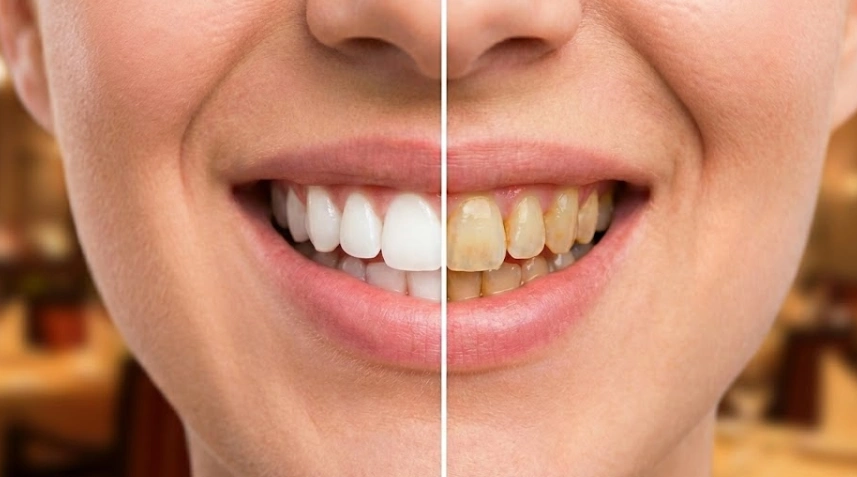
Knowing these foods doesn’t mean you have to ban them from your life. It means you need a strategy. Here is a breakdown of how different culprits work and how to defend against them.
| Food Category | The Mechanism of Action | Clinical Defense Tip |
| The Tannin Titans (Coffee, Red Wine, Black Tea) | Tannins act like “super-glue” for pigments, helping them adhere to enamel. | Swish with plain water immediately after finishing your drink to dislodge tannins. |
| The Acidic Attackers (Tomato Sauce, Citrus, Vinegar) | Acid erodes enamel, making it porous like a sponge, ready to absorb color. | Do not brush immediately. Wait 30 minutes for saliva to neutralize the acid, then brush. |
| The Pigment Powerhouses (Berries, Curry, Soy Sauce) | Intense chromogens attach directly to the enamel surface crevices. | Pair these foods with crunchy vegetables (like celery or carrots) which act as natural scrubbers. |
FAQ: Direct Advice from the Lema Team
We would never ask you to give up your morning joy! The goal is management, not total avoidance. Try drinking through a straw to bypass the front teeth, and always follow your coffee with a glass of water to rinse away the residue.
It can help with extrinsic (surface) stains caused by these foods. However, whitening toothpastes are often highly abrasive. If used too enthusiastically, they can wear down enamel, revealing the yellowish dentin underneath, which actually makes your teeth look darker in the long run.
This is one of the great advantages of modern restorations. High-quality dental ceramics, like zirconia used by Professor Doctor Coşkun Yıldız, are non-porous and highly resistant to staining. They will maintain their brightness much longer than natural enamel against coffee or wine.
Staining is only one cause of yellowing. The other is aging. As you get older, the outer white enamel naturally thins, and the inner layer of the tooth, called dentin (which is naturally yellow), starts to show through more clearly.
They are healthy. They are healthy for your body, but often dangerous for your teeth. Green smoothies often contain highly acidic fruits (like lemon or pineapple) and are sometimes sipped slowly over an hour. This subjects your teeth to a prolonged acid attack. Drink them quickly and rinse afterward.
- Joiner, A. (2006). The bleaching of teeth: A review of the literature. Journal of Dentistry, 34(7), 412-419.
- Addy, M., & Moran, J. (1995). Mechanisms of stain formation on teeth, in particular associated with chlorhexidine. Advances in Dental Research, 9(4), 450-456.
- Watts, A., & Addy, M. (2001). Tooth discolouration and staining: a review of the literature. British Dental Journal, 190(6), 309-316.
- Nathoo, S. A. (1997). The chemistry and mechanisms of extrinsic and intrinsic discoloration. Journal of the American Dental Association, 128, 6S-10S.
- Shellis, R. P., Barbour, M. E., Jones, S. B., & Addy, M. (2010). Effects of acid challenge on enamel and dentine erosion. Journal of Dentistry, 38, S13-S17.

