


Remove adhesive dentures gently by rinsing with warm water and slowly loosening them with care.
Many individuals who have dental prostheses resort to dental glue to keep their prostheses securely in place. Naturally, you want to be able to eat and smile without worry. Nevertheless, nighttime removal of your dental prosthesis might be the most difficult part for you. Actually, a quick pull on the prosthesis may injure your soft gums. It can cause microscopic cuts and make your mouth sore.
At Lema Dental Clinic in Turkey, we frequently come across patients who are in a hurry to perform this step. Consider your adhesive as a strong suction cup on a glass window. If you pull it hard, the glass may break. But if you lift the edge smoothly, the air comes in. Then, the cup easily comes off. Your gums will need that same tender treatment. They are the very living foundation of your smile.
Step-by-Step: How to Break the Seal Safely
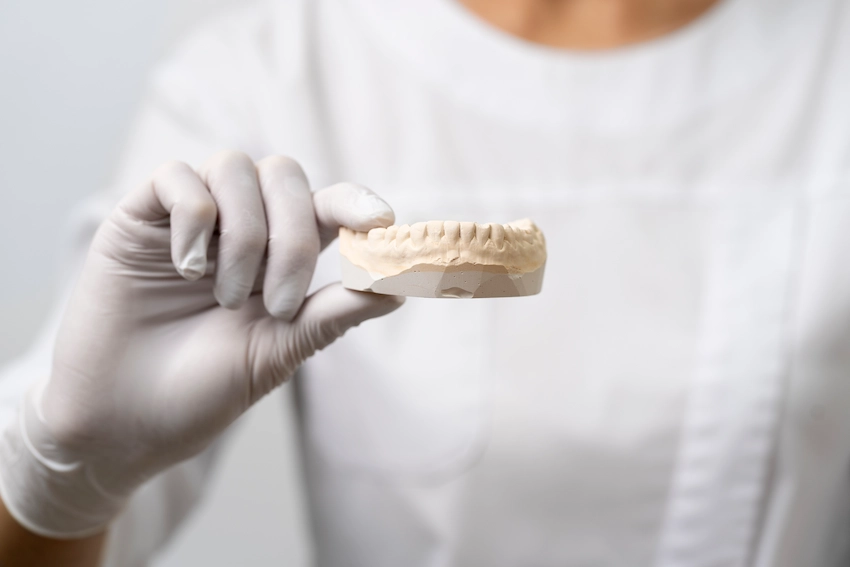
Professor Doctor Coşkun Yıldız, a renowned dental specialist, always advises us not to panic. He says if you rush, then you will definitely hurt your mouth. Here is a safe night plan that we take our patients through:
- The Heat Swish: Do not get yourself straight away for the pull. Just take some warm water into your mouth. Swish it around your mouth for about a minute. The heat will loosen the strong adhesive that is firmly fixed to your teeth. It will turn into a gel again.
- The Slight Rock: Put your thumb on your front teeth. Now rock them slowly and gently. Do not pull down with a great force. It is just for the air to get under the base.
- The Final Let-Go: Little by little, you will feel the suction start to come to an end. The teeth will part without any trouble. Also, your sensitive gums will be spared the pain.
Cleaning the Canvas: Caring for Your Gums
Let’s focus on that step a little more. Removing the teeth is just the beginning. Besides, you also need to clean the glue off your gums. Dr. Polen Akkılıç and her colleague always recommend that clients should not leave the glue on their gums since it promotes bacteria. Therefore, be cautious when you decide to remove the glue, as the best way is not to use a hard toothbrush or nails, which are sharp. However, you can wrap a warm, damp cloth around your finger and rub your gums with slight pressure. This way, not only do you remove the glue, but you also support gum health.
Bad Habits vs. Safe Choices
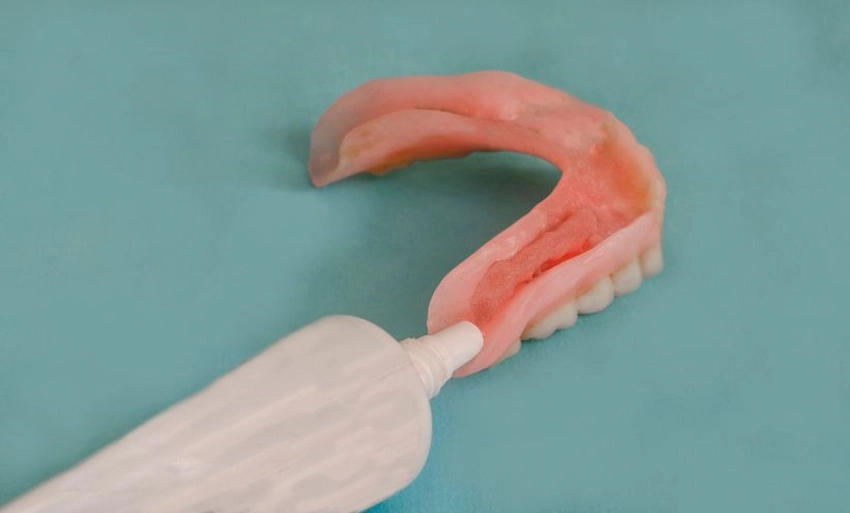
The question is still on the table: how bad can it really get with a rushed routine? Here you go – a simple chart to show you what is best to avoid.
| Method | Time Needed | What could go wrong | The Lema Way (Best Choice) |
| Dry Pulling | Really fast | Gums might get torn, really hurt, and plastic teeth might break. | Always start by using warm water to soften the glue. |
| Hard Scraping | Depends | Gums being cut and getting infected seriously. | Use a warm, wet cloth to gently wipe the gums. |
| Too Much Glue | Whole day | Night removal will be very difficult. The glue might also leak out. | Just use 3 small dots of glue on dry teeth in the morning. |
Frequently Asked Questions
Don’t let your panic take over, or try to force the denture loose. Take a mouthful of warm water. Keep the water in your mouth for a full minute. If it is still stuck, take a bite of a crisp apple. The slight force helps break the seal.
Definitely not. Gums are extremely delicate,e just like a peach skin. The sharp tool can cut the gums very easily. The best methods are wet soft cotton or an extremely soft baby brush.
We do not advise that. Gums are heavily engaged in their functions during the day, and at night, they are in need of rest and recovery. Keeping the teeth in while sleeping can cause mouth fungus.
This is because of overdosing on the glue. On the other hand, it might be that the tooth was not completely dry when the glue was put on. Apply a little stick by little. Also, make sure the tooth is completely dry before putting on the glue.
Most certainly! We share the results of our experience in the clinic. Patients with implant-supported replacement teeth do not resort to glue at all. Their teeth have been bonded directly to the jawbone. They will be free from the bother of glue.
- Felton, D., Cooper, L., Duqum, I., Minsley, G., Guckes, A., Haug, S., … & American College of Prosthodontists. (2011). Evidence-based guidelines for the care and maintenance of complete dentures: a publication of the American College of Prosthodontists. Journal of Prosthodontics, 20(s1), S1-S12.
- Bartlett, D. W., & Carter, H. A. (2013). Advanced prosthodontics: Clinical strategies for managing complete denture adhesives. International Journal of Prosthodontics, 26(2), 125-131.
- Coates, A. J. (2000). Usage of denture adhesives. Journal of Dentistry, 28(2), 137-140.
- Grasso, J. E. (2004). Denture adhesives: changing attitudes. Journal of the American Dental Association, 135(1), 81-86.
- Zarb, G. A., Hobkirk, J. A., Eckert, S. E., & Jacob, R. F. (2013). Prosthodontic treatment for edentulous patients: complete dentures and implant-supported prostheses (13th ed.). Elsevier Health Sciences.

