


Secure waterproof denture adhesive can help with hold, but fit and gum comfort matter more.
Let’s not beat around the bush. Dentures that move around are a daily nightmare. They control what food you can have. They alter your speech, too. And they can even take away your confidence in a crowded room. Probably, on top of all that stuff, you’ve tried those regular drugstore pastes, right? Unfortunately, most of these seem to melt away halfway through a nice hot cup of coffee.
So the question is still open… is a secure, waterproof denture adhesive the perfect solution?
This is what we experience in our dental office. Patients come in complaining that they are so fed up with the constant reapplication. No doubt, waterproof adhesives do give a much tighter and longer-lasting hold compared to their water-soluble counterparts. But essentially, how do these work? Besides this, why is it that they might only be a temporary protection against a much more fundamental problem?
The Science Behind Waterproof Adhesives
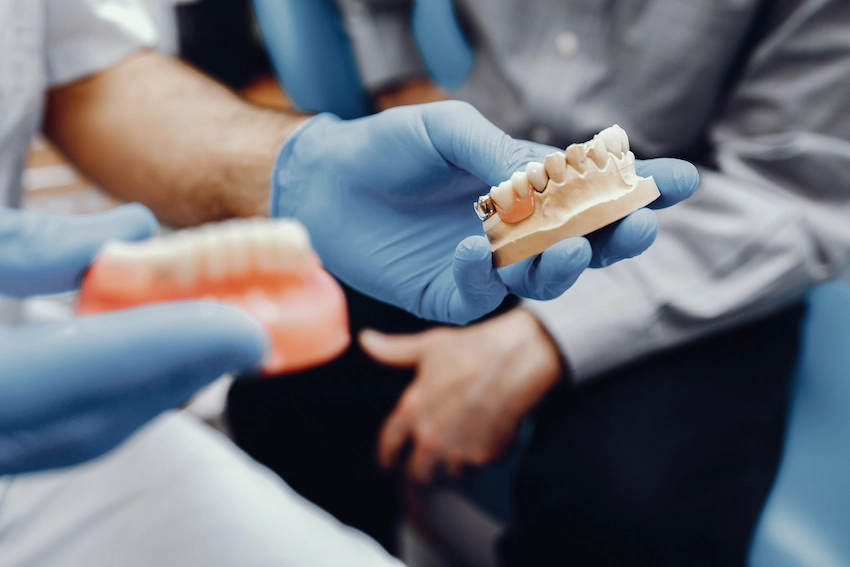
Imagine your mouth as a very lively, wet area. Regular adhesives are like watercolors. They look good until it rains. From there, the natural flow of saliva gradually breaks down their chemical bonds. Besides that, hot drinks accelerate this process.
Waterproof adhesives, on the other hand, are more comparable to marine-grade sealant. They are non-water-soluble,e which basically means that they can withstand the dissolving action of saliva, hot teas, and soups. So you end up with a resealing that might last even 12
hours. For many dentists, this seems to be a total paradigm switch.
The Pros, Cons, and the Messy Ones
Based on our experience in clinical practice at Lema Dental Clinic, waterproof adhesives deliver exactly what they state. What they do is to hold firmly. However, that strong grip results in a few less obvious facts being:
- Hard to Remove: No, you are not just going to rinse your mouth and call it a day. You have to physically remove the gummy glue from your gums as well as from the denture base.
- Gum Inflammation: Scrubbing the gums during removal daily is no wonder that it can eventually lead to the gums becoming irritated, red, and sore.
- Ignore the Real Problem: A very strong glue seal can conceal the major problem. On top of everything, it makes you ignore the fact that your denture base no longer fits your changing gums.
The Real Problem: A Melting Foundation
The fact is that no waterproof glue, no matter how good,d is going to stop the biological clock of your jawbone.
As per Professor Doctor Coşkun Yıldız, wearing conventional dentures is similar to leaving a car on a driveway made of sand. Your jawbone remains strong only if it is supported by natural tooth roots. Without them, the bone starts to shrink. The more the bone flattens, the more the denture loses its natural resting place. It starts to float.
You will reach a point where larger amounts of adhesives are needed just to fill in the
increasing gap between the denture base and your gum line that is receding.
Comparison of Waterproof Adhesive and Other Solutions
How does a waterproof paste level up against regular options and permanent clinical solutions?
| Feature | Standard Water-Soluble Adhesive | Secure Waterproof Adhesive | Implant-Supported Dentures (All-on-4/6) |
| Hold Duration | 3 to 6 hours | 8 to 12 hours | Permanent (24/7) |
| Liquid Resistance | Poor (dissolves easily) | High (resists hot liquids) | Absolute (fixed structure) |
| Removal Process | Easy, rinses away | Difficult, requires scrubbing | N/A (stays in the mouth) |
| Prevents Bone Loss? | No | No | Yes, stimulate the jawbone |
| Biting Force | Weak | Moderate | Strong (Functions like natural teeth) |
The Way Out of Using Glue in Turkey
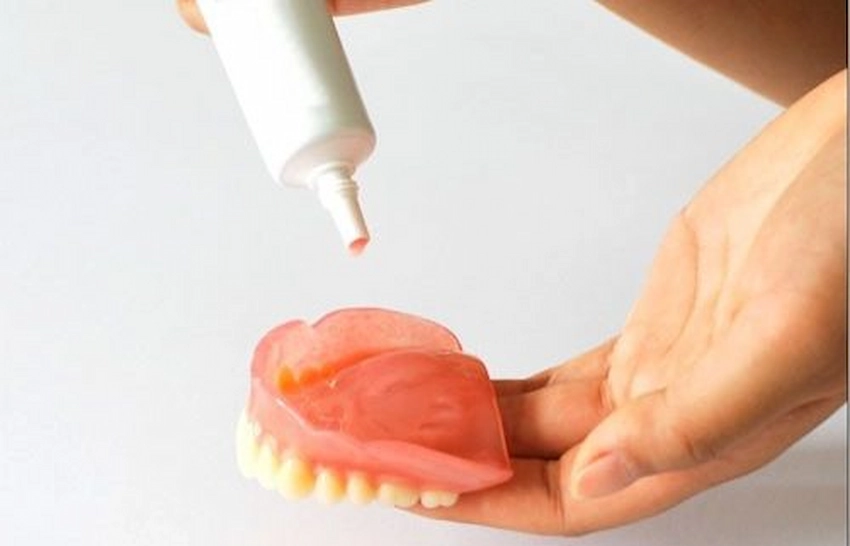
Using adhesive every single morning means you are only dealing with the symptom. You are still not addressing the real cause.
At our clinic located in Istanbul, Turkey, Dr. Polen Akkılıç, together with her staff, helps people on a regular basis to completely give up the use of pastes. The use of modern implantology techniques, including All-on-4 or Zygomatic implants,s leads to anchoring the teeth directly to the jawbone. The outcome? A permanent smile with no movement that does not require the use of any adhesive.
Frequently Asked Questions (FAQ)
Not necessarily if you do a good job of cleaning them. On the other hand, accumulated residues that you neglect to remove can throw the fitting off after a while,e besides providing a nice breeding ground for bad bacteria. Make sure you always rely on a denture brush specially designed for this purpose while cleaning the base.
If you look at it that way, that is the main advantage. Unlike the usual ones, the heat is not going to break the bond right away. So, you are not going to have to suffer your lower plate lifting off from your gums while drinking your coffee in the morning.
A soft toothbrush that has been dipped in warm water will work wonders, but you will need some time and effort to get the job done. Besides that, wiping your gums with a warm, damp washcloth will also do the trick quite easily.
Most adhesives on the market are non-toxic. However, you still don’t want to swallow these materials. In the case of waterproof ones, because they are not going to dissolve easily, the piece that is swallowed can cause some discomfort or mild tummy upset. You should always limit the amount you are applying.
Should you have to apply a thick layer of paste just to be able to finish your lunch, then the bone loss in your jaw has already been very substantial. It is a major sign that you should be taking a look at permanent options before the bone loss becomes irreversible.
- Carlsson, G. E. (2014). Responses of the jawbone to amputations and dental implants. Journal of Dental Research, 93(11), 1080-1084.
- Felton, D., Cooper, L., Duqum, I., Minsley, G., Guckes, A., Haug, S., … & Sweitzer, B. (2011). Evidence-based guidelines for the care and maintenance of complete dentures. The Journal of the American Dental Association, 142(2), 1S-20S.
- Grasso, J. E. (2004). Denture adhesives: changing attitudes. The Journal of the American Dental Association, 135(1), 81-86.
- Polyzois, G. L., Lagouvardos, P. E., & Frangou, M. J. (2006). Efficacy of denture adhesives in improving retention of complete dentures: a systematic review. Journal of Prosthodontic Research, 50(4), 213-219.
- Zarb, G. A., Hobkirk, J., Eckert, S., & Jacob, R. (2012). Prosthodontic treatment for edentulous patients: complete dentures and implant-supported prostheses. Elsevier Health Sciences.

