


Post-root canal pain is usually due to temporary inflammation during healing.
When you first went into the dental clinic, you were in so much pain that you thought a root canal would instantly alleviate your pain, just like turning off a switch. In general, it is. However, once the anesthesia wears off, a dull, aching pain takes over. It is very irritating. It’s scary . You start to think, “Was there a mistake?”
Typically, the actuality is much less dramatic. One of our dentists at Lema Dental Clinic in Turkey, after examining several cases, says that postoperative sensitivity is not only a normal thing but that in quite a few cases, it is a physiological necessity. Imagine a tooth as if it were an arm that has been broken and just put in a cast. The bone is set, the alignment is perfect, but the soft tissue around it is still bruised and angry . The infection went out by the procedure, but the body’s ‘clean-up crew’ – the inflammation – is still working.
We will analyze the reasons for this and identify the differences between the ‘good pain’ of healing and the warning signs that need doctors’ attention.
The “Bruise” Inside the Bone: Understanding Periapical Inflammation
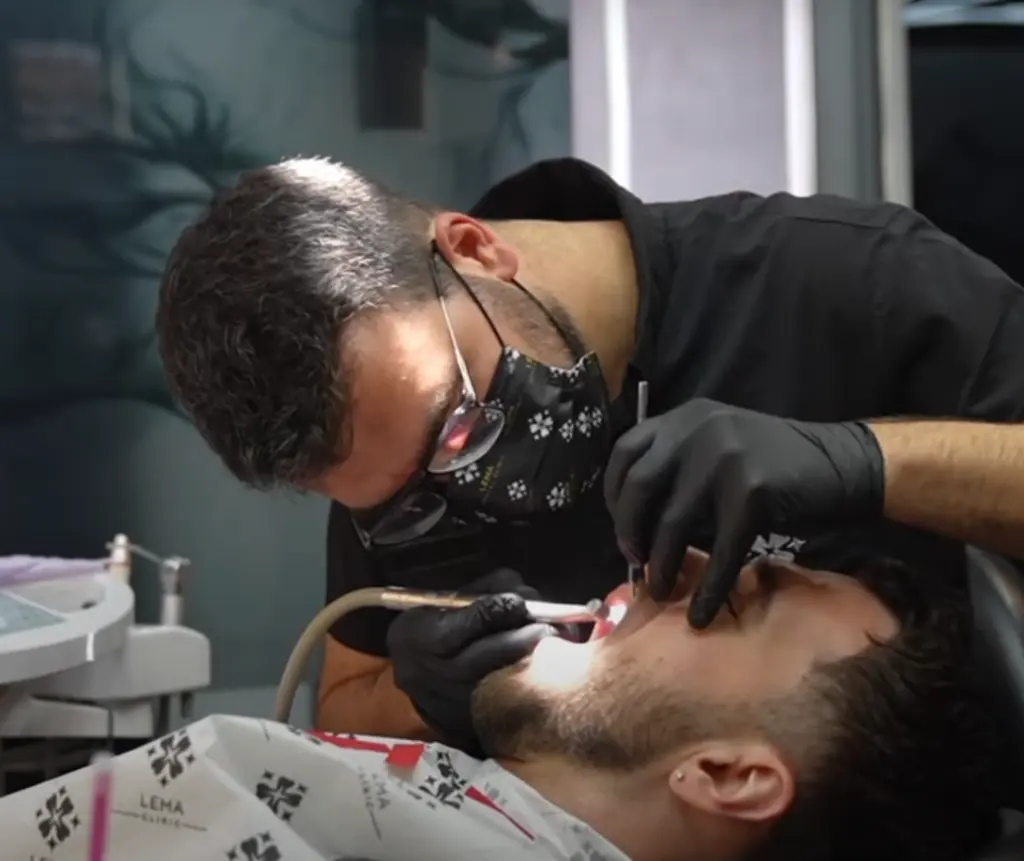
Polen Akkılıç is a dentist and she and her team remove a nerve inside the tooth when they do a root canal. Still, one might naturally ask, “If the nerve is taken out, then how is it that I still feel pain?”
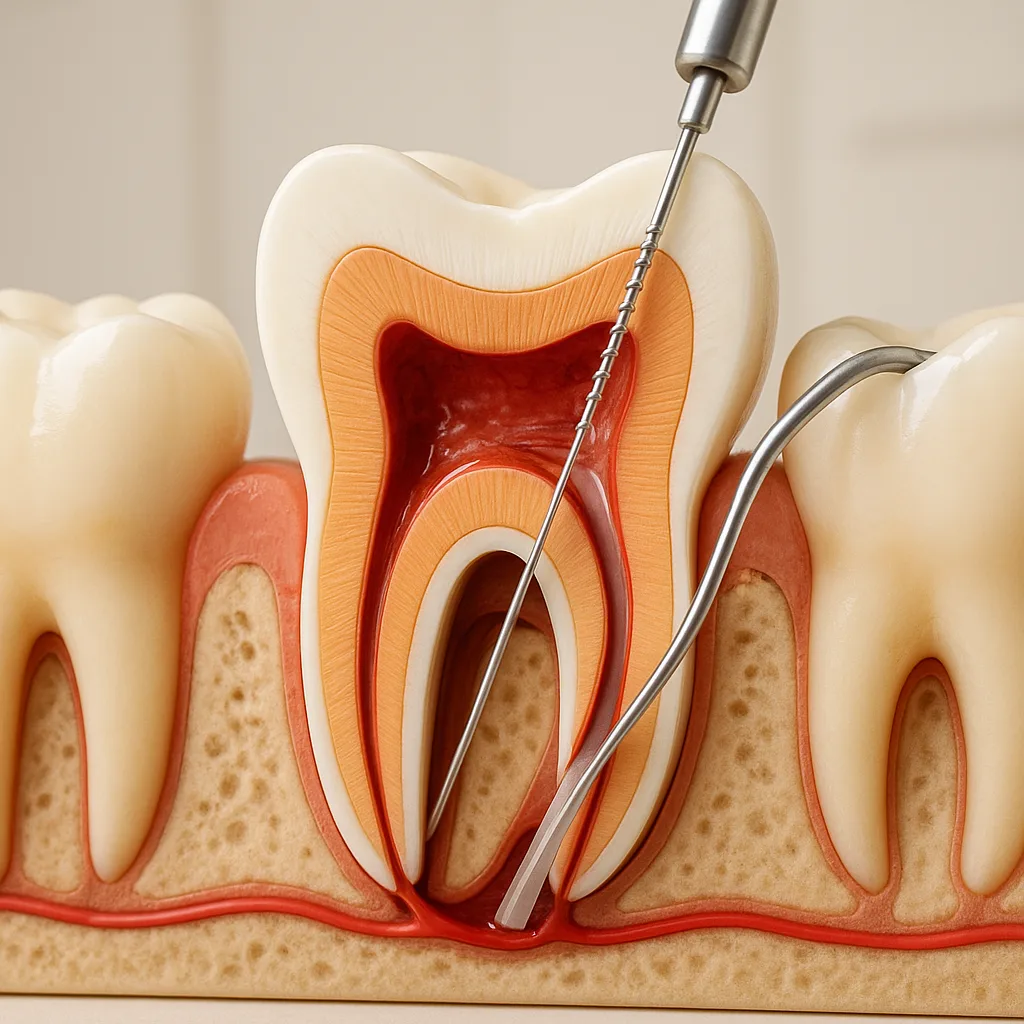
The explanation is this. The nerve inside the tooth has been taken out, but the bundle of nerves and ligaments that surround the root of the tooth are still alive. In the course of the operation, we mechanically clean the infected pulp with small instruments. At times, it is merely the vibration of such tools or a tiny bit of sealing material going beyond the root tip that can lead to the irritation of this tissue.
When you pull out a deep splinter from your finger, the skin will be red and sore to the touch for a few days even after the splinter is gone. Your tooth is going through the same thing. The ligament that secures the tooth in the jawbone is swollen. That is the reason why it hurts like you have a bruise when you bite down.
The Hidden Culprits: Why Discomfort Persists
Mild inflammation being a simple physiological reaction, we have cases of people presenting pain that is more penetrating and/ or lasting. Professor Doctor Coşkun Yıldız states that in root canal therapy, if it goes well, there is a kind of game where the spatial scale is measured in microns. If the error is of the size of the hair thickness, then that is going to be the patient’s perception.
1. “High Spot” (Occlusal Trauma)
This is the post-operative pain that occurs most often, and we see it here in Istanbul. If, after sealing the tooth and placing a temporary filling or crown, the filling is just a fraction of a millimeter too high, it will be the first thing that the opposing tooth will hit while the rest of your jaw is still coming together.
Every time you close your mouth you are hitting that one, overworked tooth. It is the same as walking on a sprained ankle. Yet, the problem can be fixed fairly quickly: a brief modification to the bite often results in instant pain relief.
2. The Hidden Canal
Tubular structures are the last thing teeth resemble; rather, they are complicated river deltas. Normally, a molar has three canals but sometimes there is a fourth tiny canal that nobody knows about. If bacteria are left in the little “tributary” that has been missed in the therapy, the infection will persist. At Lema Dental Clinic, we are equipped with the latest imaging technology to identify these inconspicuous paths, but even then, the anatomy can be quite deceiving.
3. Extrusion of Debris
Particulate matter at a microscopic scale as well as irrigating solutions are sometimes forced a little through the root tip and enter the bone during the cleansing phase. This provokes a sudden flare-up. It is a natural response of the body to foreign matter. What is more, this condition is very rare, and the immune system will most likely get over it by itself with some time and help from anti-inflammatory drugs.
Is It Healing or Failing? (A Quick Comparison)
The patients are often looking for a sort of guide from us. How can you tell whether it is best to be patient or book a flight to Turkey?
| Symptom | Normal Healing (The “Bruise”) | Potential Complication (The Red Flag) |
| Pain Type | Dull throbbing, aching, soreness, or a bruised feeling | Sharp, stabbing pain or intense throbbing that wakes you up |
| Causation | Pain occurs only when biting or tapping the tooth | Spontaneous pain, even without touching the tooth |
| Time | Peaks within 24–48 hours and gradually fades over a week | Persists beyond 3–5 days or progressively worsens |
| Swelling | No swelling or only mild gum tenderness | Noticeable swelling in the jaw, cheek, or neck (seek care immediately) |
| Effect of Medication | Well controlled with ibuprofen or paracetamol | Painkillers provide little or no relief |
Frequently Asked Questions
Most patients have significantly less pain within 3 to 5 days. The sensation of ‘awareness’ of the tooth—that it is the different one among the others—may last for a couple of weeks. It is not supposed that you will be in such a terrible state after a week.
It is best not to use the tooth until the permanent crown is put on. In a nutshell, the tooth has been hollowed and is now brittle just the same as a dried-up twig. If you decide to eat hard foods, you will likely produce a crack in the tooth, in which case you are not supposed to just save the tooth but get it extracted instead. So, please, chew with the other side of your mouth.
Hardly ever. Pain in the initial days is mostly due to inflammation. That is why it can be compared to a construction site where, after the work is done, the dust is still there. The real failure usually manifests when the patient experiences pain after many months or even years, and in most cases, there is also a pimple on the gum (fistula).
If the mouth is kept open for a long time during the procedure, the temporomandibular joint (TMJ)will be strained. You may think that you have tooth pain but actually, what you are feeling aretired and overworked muscles. Usually, the pain goes away pretty soon after a combination of warm compresses and jaw relaxation.
Not necessarily. Antibiotics can only kill bacteria but they can’t relieve pain. We usually prefer to manage the inflammation with the regular painkillers if there are no signs of systemic infection such as swelling, fever, or other symptoms. We try to be prudent with the prescription so that you can stay healthy for a long time.
- Siqueira, J. F., & Rôças, I. N. (2021). Clinical implications and microbiology of bacterial persistence after treatment procedures. Journal of Endodontics, 34(11), 1291-1301. e3.
- Polycarpou, N., Ng, Y. L., Canavan, D., Moles, D. R., & Gulabivala, K. (2019). Prevalence of persistent pain after endodontic treatment and factors affecting its occurrence. International Endodontic Journal, 38(1), 16-28.
- Nixdorf, D. R., Moana-Filho, E. J., Law, A. S., McGuire, L. A., Hodges, J. S., & John, M. T. (2020). Frequency of persistent tooth pain after root canal therapy: a systematic review and meta-analysis. Journal of Endodontics, 36(2), 224-230.
- Figini, L., Lodi, G., Gorni, F., & Gagliani, M. (2021). Single versus multiple visits for endodontic treatment of permanent teeth. Cochrane Database of Systematic Reviews, (10).
- Hargreaves, K. M., & Berman, L. H. (2020). Cohen’s Pathways of the Pulp (12th ed.). Elsevier.

