


Braces usually start at 11–13, but children should see an orthodontist by age 7.
Maybe you notice it in a school picture or during a candid shot at dinner. The slight overcrowding of the lower jaw that you barely notice or the upper front teeth that seem to stick out just a little bit more. A parent seeing their child’s teeth crooked is a common cause of a sudden flood of questions. Are we too early? Should we wait until the child loses all the baby teeth? Will it go away?
Here at Lema Dental Clinic in Istanbul, we get to see this kind of anxiety every day. For instance, parents come from different parts of the world to combine a Turkish family holiday with a consultation, asking the doctor for a treatment schedule. The truth is there is no one “magic birthday” for braces but there is an ideal time to start deligently monitoring, which you should not let pass unnoticed.
“Wait and See” Fallacy

A majority of people thought for a long time that one should only start thinking of seeing an orthodontist once the child was 12 or 13, when the permanent dentition was fully established.
Such thinking is no longer appropriate.
Waiting till adolescence to solve the problems caused by the baby’s skeletal structure is like waiting for the concrete to dry before you smooth it out. It’s possible but much more challenging and requires a lot more energy. At our center, we strictly follow the recommendation of major orthodontic associations that a child must be at LEAST 7 years old when he/she becomes scheduled for his/her first orthodontic assessment.
When a child reaches 7 years, they mostly have a mix of primary and permanent teeth. The so-called “mixed dentition” stage helps us to assess not only the teeth but also how the child’s bone structure will develop. It doesn’t mean we will put brackets on the teeth on that very day. We are spotting the signs of problems—such as crossbites, severe crowding, or protrusion—that will require us to take immediate action.
Sapling or Oak Tree
Compare your child’s jawbone to a sapling. When the tree is still young, you can direct its growth by simply putting a stick next to it and tying a piece of string. It is flexible, ready to grow, and responds well to being directed.
When a child is in his/her late teens, the jawbone resembles a solid oak tree. Relocating the “tree” by then means heavy labor—sometimes even surgery. Prof. Dr. Coşkun Yıldız constantly reminds parents that it is exponentially less complicated to correct skeletal (bone) imbalances while the child is still growing. We risk losing our most powerful tool (nature) if we miss that growth spurt.
Is Your Child a Candidate? Signs That Demand Early Orthodontic Intervention
Not all kids will require braces at 8. Actually, the majority of kids won’t. On the other hand, some issues are so severe that they cannot be left untreated. In such cases, we do Phase 1 Treatment. By means of this procedure, we make sure the adult teeth have sufficient room to come out normally.
Dr. Polen Akkılıç and her associates diagnose these occasions during a check-up:
NAP baby teeth fall out too early or too late: The prematurely falling teeth create a space which can be taken by the neighboring teeth thus blocking the permanent tooth.
- Mouth breathing: As a matter of fact, this can cause the upper jaw to narrow over a period of time.
- Thumb sucking: If it is continued beyond the age of 5, it can change the shape of the palate.
- Pronounced (protruding) teeth: These teeth are more likely to be chipped or hang injuries while playing.
If these issues are detected, palatal expanders or partial braces will be used. We are not targeting your child’s smile to be perfect now, but rather to be setting it up well so that in the future when the permanent teeth come, they will be naturally positioned.
Phase vs Phase
It is not very clear for a layperson to differentiate between early intervention and braces/being on. The following is the information we convey to our patients in Turkey about this issue.
| Feature | Phase 1 Treatment (Early Interceptive) | Phase 2 Treatment (Comprehensive) |
| Typical Age | 7 – 10 years old | 11 – 15 years old |
| Primary Goal | Correct jaw growth and create space | Straighten permanent teeth and correct bite |
| Duration | 6 – 12 months | 18 – 24 months |
| Appliance Used | Expanders, partial braces, retainers | Full braces (metal or ceramic) or clear aligners |
| Analogy | Building the foundation of a house | Painting the walls and decorating |
| Necessity | Required only for specific growth or structural problems | Required for final alignment and aesthetic correction |
How Lema Does Pediatric Dentistry
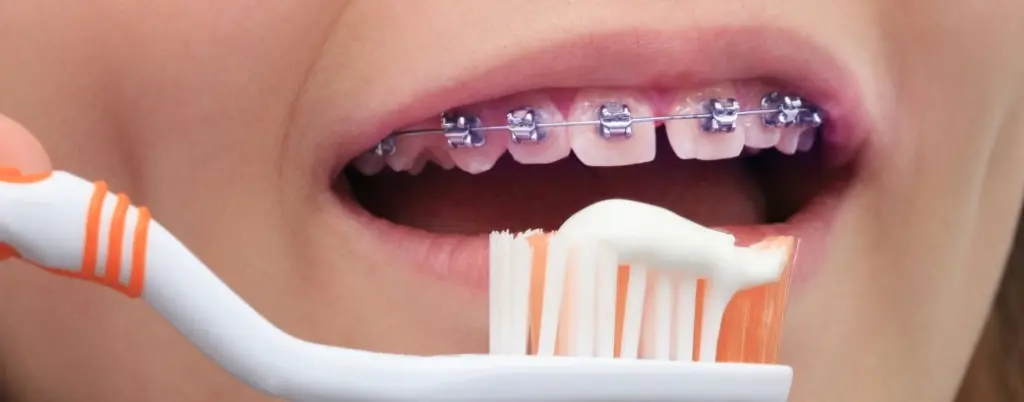
One kind of fear that we frequently hear is “I don’t want to scare my kid by taking him/her to the dentist.” We understand it. This is why both a friendly environment and a top level of clinical accuracy are equally important.
Lema Dental Clinic is the type of place where one would hardly feel like visiting a factory making cold, clinical goods. Regardless of whether it is a simple consultation or a more complicated one involving Professor Doctor Coşkun Yıldız, the method is gentle. To spare children from the discomfort of having to endure impression molds that will definitely make them gag, we employ digital scanning technology (iTero scanners) as much as possible.
Furthermore, Turkey is a center not only for cheap but also high-standard dental care owing to the sheer number of cases that come to us. Our teams are constantly exposed to completely different types of cases—from complicated skeletal discrepancies to simple aesthetic tuning—which, in turn, enables them to deliver sharply honed diagnostic performances. We are perfectly able to tell parents when it is the time to act and, even more importantly, when one should simply say to the parents: “Relax, let’s keep an eye on this for 6 months”.
FAQ: A Doctor’s Candid Opinion
On the bright side, probably yes. The first phase treatment addresses jaw and space issues whereasin phase 2 teenagers will get their teeth alignment just right. Still doing the initial phase of work early will make the whole second phase shorter and easier. This way you will get Phase 2 as your final touch after the heavy liftingiss already done by Phase 1.
We shun the word “pain” and opt for “pressure” instead. The feeling of a child undergoing the use of an expander or partial braces in the 24 to48-hourr period after the procedure would be “pressure”. This discomfort can be minimized by simply taking soft food and using over-the-counter painkillers (and of course, ice cream is the best doctor here). Also, children have remarkable resilience—quite often more than adults!
On holiday lots of families drop in for a consultation with us. Besides being able to see some of the best experts including Dentist Polen Akkılıç without having to endure years of waitlists as they do in the UK or parts of Europe, your visit here also gets you access to the latest diagnostic equipment which can instantaneously reveal what is happening beneath the gum line.
If they are doing that when the permanent teeth start to come through, that is a problem. Because it flattens the front teeth and narrows the palate. Wecano provide letting appliances that break the habit by simply changing the sensation in the mouth rather than through shame or scolding.
Yes, of course, for teenagers. For Phase 1 kids, however, we sometimes resort to clear aligners (for example Invisalign First), but it frequently happens that fixed appliances (expanders) are more effective because they do not require a 7-year-old to remember to put them back in after lunch. We use the tool thatwill definitelyl give the desired outcome.
- American Association of Orthodontists. (2023). The Right Time for an Orthodontic Check-Up. AAO Clinical Guidelines.
- Bishara, S. E. (2001). Textbook of Orthodontics. W.B. Saunders Company.
- Fleming, P. S. (2017). Timing of orthodontic treatment: early or late? Australian Dental Journal, 62(S1), 11-19.
- Proffit, W. R., Fields, H. W., & Sarver, D. M. (2018). Contemporary Orthodontics (6th ed.). Elsevier.
- World Dental Federation (FDI). (2022). Malocclusion in Children: Detection and Management. FDI Policy Statement.

