


Secure dentures better with proper fit, adjustments, soft liners, or implants.
For many, the ongoing use of denture glue is a silent annoyance that they put up with for far too long. You spread the adhesive, pray it stays on till you finish eating, then at night you clean the gummy paste off your gums. In fact, today’s dental practices have advanced beyond mere temporary adhesives.
Here at Lema Dental Clinic in Turkey, we have seen through our clinical work that patients giving up adhesive find not only a stronger bite but also a higher level of self-esteem. Nevertheless, first let’s see what causes denture slipping and then the ways that clinical treatments can give you real safety.
Why Dentures Slip
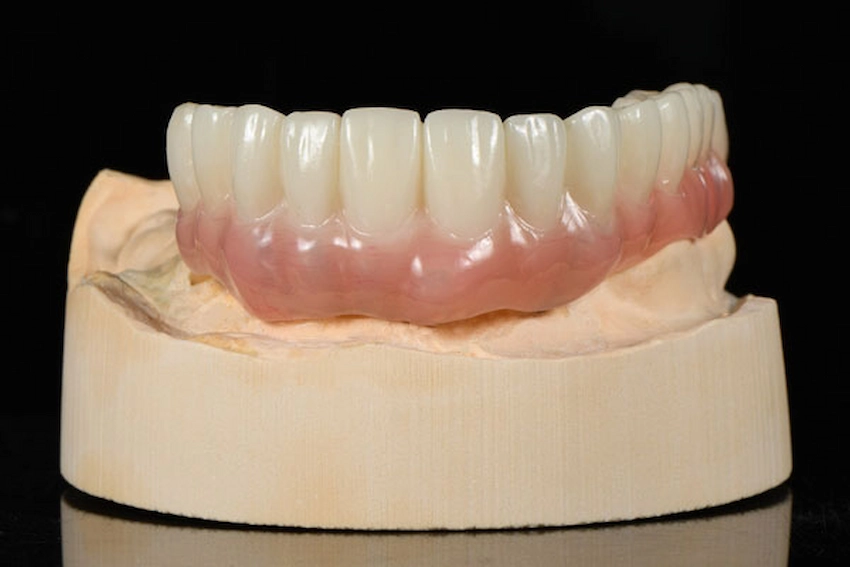
Your jawbone is like the foundation of a house; it’s the support, and without it, the whole structure falls. Teeth are the main pillars that keep the foundation strong and stable. When teeth are lost, the bone is no longer stimulated, and this leads to the bone shrinking over time – the process is called bone resorption.
The more your jawbone shrinks, the more your gums get altered. That denture of yours, which used to fit like a glove,e now slips here and there simply because the “topography” of your mouth has changed. No matter how strong the adhesive is, it cannot repair a foundation problem.
Actual Clinical Methods
Based on the state of your bone and what you want, there are several ways through which you can lock your smile without using sticky glues.
-
Hard Reline
Hard reline is a common initial treatment if you have a perfect denture, es but some minor fitting problems. The surface of your denture is modified to closely follow the shape of your gums.
- Pros: It is a fast, non-invasive method, and the suction gets better straight away.
- Cons: Bone loss cannot be prevented. You will most likely be forced to have more adjustments later because your jaw is continually changing.
-
Implant-Supported Overdentures (The “Snap-On” Solution)
Patients end up with a complete transformation in their lives with this method. We place two to four titanium implants into the jaw to establish permanent anchor points. The denture is then simply and securely “snapped” onto these implants.
Professor Doctor Coşkun Yıldız points out that this is the perfect compromise. It provides very good stabilization for the lower jaw,w which is the most difficult one to f, but still allows you to take out your teeth for cleaning.
-
All-on-4 / All-on-6 Fixed Implants
If you want to completely forget that you ever had natural teeth, then this is the perfect choice. A full arch of teeth is connected to four or six titanium implants. The teeth will not be taken out at night. In the same way as natural teeth, you will brush and care for them.
Dentist Polen Akkılıç and her team make use of this technique very frequently. It is actually the strongest bite force, and it can even halt the loss of bone altogether since it works like artificial tooth roots.
Quick Comparison: Which One Should You Go For?
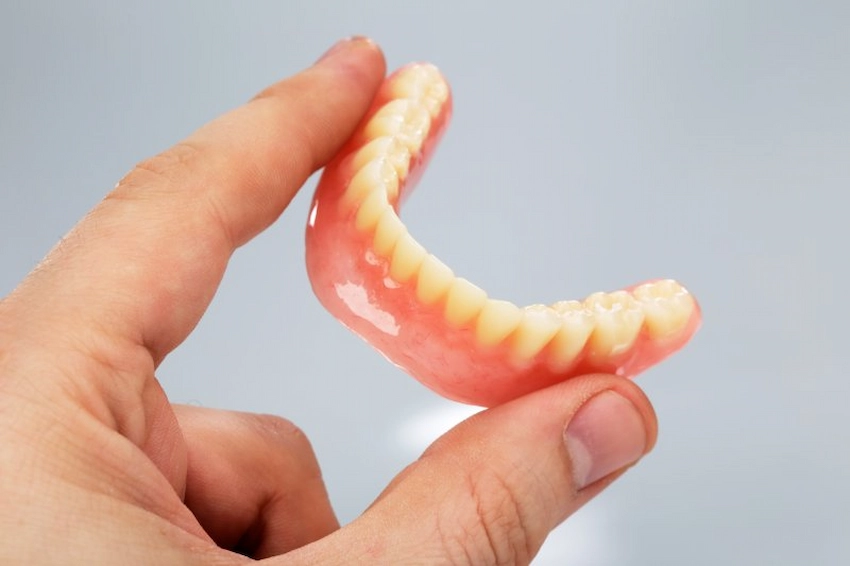
| Treatment Option | Stability | Prevents Bone Loss? | Convenience |
| Denture + Glue | Low | No | High Maintenance |
| Denture Reline | Moderate | No | Regular Adjustments |
| Snap-On Overdenture | High | Yes (around implants) | Removable/Secure |
| All-on-4/6 | Maximum | Yes (Full) | Permanent/Fixed |
Most Asked Questions in Our Clinic
Do implants cause pain?
Being comfortable is the most important thing for us. The bone of the jaw has, in fact,t quite a small number of nerve endings. We do this surgery with only local anesthesia or sedation, and recovery for most patients is even easier than tooth extraction.
How long will All-on-4 implants last?
These titanium implants are intended as a lifelong solution. They integrate with your jaw in a permanent manner. On top of them are the teeth, which are strong and long-lasting; however, after about 10 years, they may require a little bit of professional care.
Are snap-on dentures nice-looking?
The answer is affirmative. Every single pair is meticulously designed to harmonize perfectly with each individual’s facial features and gum line. Besides being visually blended with the surrounding teeth, they also carry the charm of a natural and delightful smile.
Will implants allow me to eat anything I want?
That’s probably the highlight for many people. While traditional dentures only restore about 20% of normal bite force, implant-assisted dentures give you the feeling of nearly 100% different bite strength. You will feel free to eat an apple, juicy steak, and corn on the cob without even thinking about it.
Is bone grafting mandatory?
It is not mandatory always. Even with some bone loss, the All-on-4 system is capable of using your existing bone because the implants are placed at particular angles. We will assess this for you at your 3D scan.
Academic References
- Carlsson, G. E. (2014). Responses of the jawbone to pressure. Gerodontology, 31(1), 2-7.
- Feine, J. S., et al. (2002). The McGill consensus statement on overdentures. International Journal of Prosthodontics, 15(4), 413-414.
- Goodacre, C. J., et al. (2003). Clinical complications with implants and implant prostheses. The Journal of Prosthetic Dentistry, 90(2), 121-132.
- Maló, P., et al. (2011). A longitudinal study of the survival of All-on-4 implants in the mandible with up to 10 years of follow-up. The Journal of the American Dental Association, 142(3), 310-320.
- Thomason, J. M., et al. (2012). Two implant retained overdentures—A review of the literature supporting the McGill and York consensus statements. Journal of Dentistry, 40(1), 22-34.

