


Proper Care Prevents Veneer Decay
It is perhaps the most common whisper of anxiety we hear during initial consultations at Lema Dental Clinic in Istanbul. A patient looks at the gleaming digital mock-up of their future smile, then pauses and asks: ‘But doctor, what is going to happen to my natural teeth underneath? Won’t they decay under the porcelain?
Such a concern is very reasonable indeed. Since you are making an effort to change how you look permanently, the last thing you would want is some hidden problem that can affect your investment. The gist of the answer is that, yes, it is indeed possible for a tooth to develop a caries under a veneer, but it is absolutely not something that will happen for sure.
When we talk about our practice in Turkey, we rarely see that a tooth becomes decayed underneath a veneer because of the material that the veneer is made of. In most cases, it’s more of an execution or maintenance failure. You should also think of a veneer as an aesthetically beautiful cover and also as a kind of bio-engineered shield. If that shield is perfectly fitted with no flaws, the tooth will be safe. But, if there is a leak in the armor, even if it is extremely small, then the problems will start.
The Biology of the Problem: The “Micro-Gap”
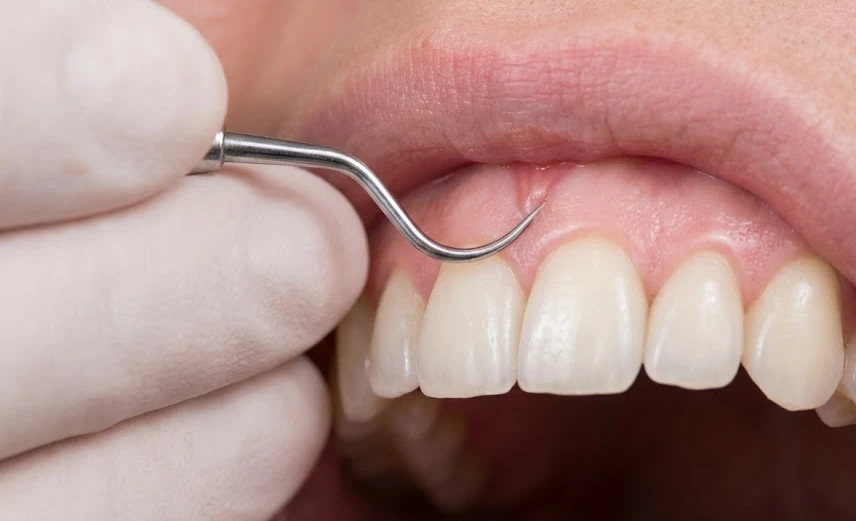
Apart from the tooth, it is necessary to cut a veneer into two in order to figure out how decay occurs. Dental porcelain is made up of non-organic matter; basically, it is a glass-ceramic of some sort. Bacteria do not have the ability to eat it. On the contrary, your natural and organic tooth is very vulnerable to acid attacks from bacteria.
The most important point of susceptibility is the boundary—the extremely small line where the porcelain veneer is connected to your natural tooth structure, and which is typically right at or slightly below the gumline.
Professor Doctor Coşkun Yıldız is a good example of how he uses this illustration when explaining the concept to patients at our clinic: Let’s say your tooth is a house, and the veneer is a newly installed window that has been perfectly sealed. The only time rain can get in and damage the walls is if the seal around the window frame is not tight. Similarly, if the seal around your window is not properly put in place or it wears away after years of a lack of care, the window still looks nice, but the wood behind the window gets damp and begins to rot without anyone noticing.
The Lema Difference: Precision as Prevention
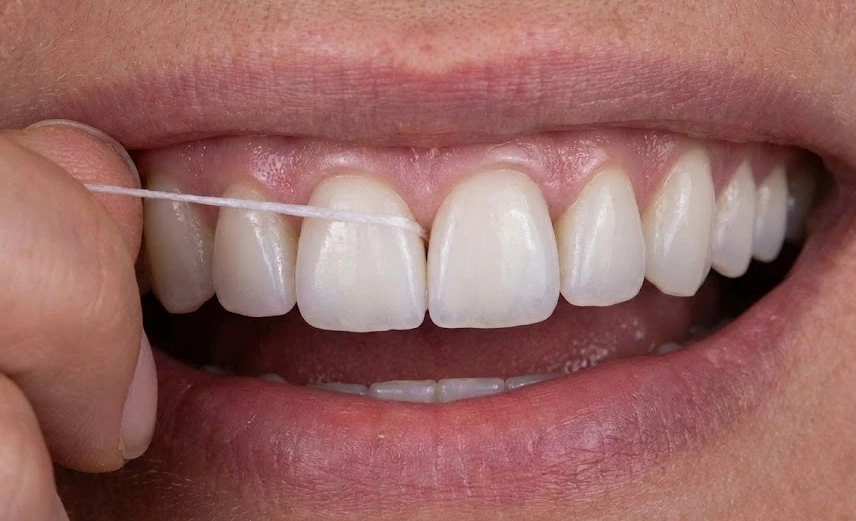
The key reason why a person has to get their tooth decay treated at a professional dental office after receiving the treatment of having a veneer put on is improperly fitting of that veneer during its first placement. At times, a dental practitioner might inadvertently leave a “ledge” or a tiny gap at the place where two surfaces meet, but everyday oral hygiene will only make it worse as the bacteria will, in time, build up in such places.
At Lema Dental Clinic, Dentist Polen Akkılıç, along with her staff, is highly concerned about the marginal sealing. To us, putting a veneer on is not simply “sticking something on.” The micrometric seal is our engineering product.
We witness the following issues at our clinic that could easily be the deciding factor between success and failure:
- Various aspects of the work preparation are examined under a microscope, where the tooth is prepared to have smooth borders.
- The most advanced scanning technology in Turkey helps us design veneers that perfectly align with your teeth and look like a natural extension of your teeth rather than a dental cap.
- We utilize the best resin cements which, in addition to securing the veneer firmly on the tooth, due to their chemical composition, can actually interact with the tooth structure thus sealing the dentinal tubules.
When these measures are taken faultlessly, the veneer not only decorates the tooth but also serves as a protective layer.
Your Role in the Partnership
We might be able to manufacture an almost impeccable seal but then it is left up to you to take care of it. The question is – what measures can you take to protect that margin?
Be aware that a veneer only covers the front and the biting edge of the tooth, whereas the backside of the tooth and along the gumline is still natural enamel exposed. If flossing is not done properly, the junction where the veneer overlaps the tooth will be the very first place where the plaque starts collecting.
Comparing the Risks: When Does Decay Happen?
We believe in transparency. Decay isn’t random; it occurs under specific conditions. Here is a breakdown of risk scenarios we discuss with patients.
| Scenario | Risk Level for Undercarriage Decay | The “Why” |
| Precision Fit + Excellent Hygiene | Very Low | The marginal seal is intact, and bacteria are regularly removed from the gumline. |
| Precision Fit + Poor Hygiene | Moderate | The seal is good initially, but constant acid attack from plaque at the gumline can eventually break down the bonding cement. |
| Poor (“Bulky”) Fit | High | A microscopic gap exists from day one. It is an open door for bacteria that you cannot clean. |
| Old Veneers (15+ Years) | Moderate to High | Even great work has a lifespan. Bonding materials can degrade over decades, necessitating replacement before decay starts. |
FAQ: Direct Insights from Our Doctors
No. Porcelain is a ceramic and inorganic. Bacteria cannot digest it. Any decay that occurs will always be in the natural tooth structure remaining underneath or around the veneer.
This is tricky because the veneer hides the visual evidence. You need to watch for new sensitivity to hot or cold, tenderness in the gums around just one tooth, or a dark line beginning to form at the gumline. Regular X-rays are crucial here, as they allow us to see “through” the veneer to the tooth structure below.
In modern dentistry, especially with the techniques we use in Turkey, the preparation is minimal. We remain mostly in the enamel layer. While removing any structure technically weakens a tooth, bonding the porcelain veneer to it actually restores much of that original rigidity. It doesn’t make it more prone to rot unless the seal fails.
Usually, bleeding gums indicate gingivitis (gum inflammation), not necessarily tooth decay. It often means the veneers might be slightly too “bulky” near the gums, making it hard for you to clean, or your flossing technique needs adjustment. You should have this checked by us immediately to prevent future decay.
Rarely. If caught early, we can sometimes repair the decay with a small filling at the margin. However, if the decay has spread deep underneath, we usually have to carefully remove the veneer, clean out the decay, and place a brand new veneer.
- Beier, U. S., Kapferer, I., Burtscher, D., & Dumfahrt, H. (2012). Clinical performance of porcelain laminate veneers for up to 20 years. The International Journal of Prosthodontics, 25(1), 79–85.
- Friedman, M. J. (1998). A 15-year review of porcelain veneer failure—a clinician’s observations. Compendium of Continuing Education in Dentistry, 19(6), 625-630.
- Gurel, G., Morimoto, S., Calamita, M. A., Coachman, C., & Sesma, N. (2012). Clinical performance of porcelain laminate veneers: Outcomes of the aesthetic pre-evaluative temporary (APT) technique. The International Journal of Periodontics & Restorative Dentistry, 32(6), 625.
- Magne, P., & Belser, U. (2002). Bonded porcelain restorations in the anterior dentition: A biomimetic approach. Quintessence Publishing Company.
- Peumans, M., Van Meerbeek, B., Lambrechts, P., & Vanherle, G. (2000). Porcelain veneers: a review of the literature. Journal of Dentistry, 28(3), 163-177.

