


Painless wisdom teeth may still need removal if they pose future risks.
Painless Wisdom Teeth: Keep Them or Extract Them?
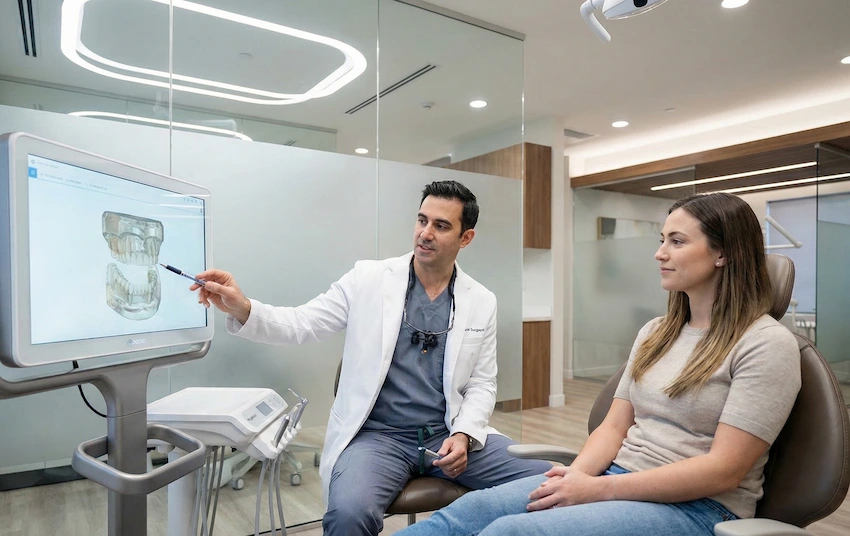
One of the most common questions we get at the start of a consultation is “If it’s not hurting, why do I have to mess with it?”
It’s a good question. If the pain is not there, most people wouldn’t touch the problem. Setting up a surgery appointment makes no sense if you don’t have a swollen jaw or if you’re not waking up in pain. However, Lema Dental Clinic in Istanbul, Turkey, often finds itself in the position of telling their patients a hard truth: pain absence does not equal disease absence.
The Biology of the “Late Arrivals”
Imagine the jawbone as a street of townhouses that are completely and perfectly occupied. Then, the wisdom teeth are the uninvited guests who are trying to cram a full block. Even if they do not make you feel pain, the overcrowding is obviously going to cause pressure.
Professor Doctor Coşkun Yıldız likes to show the impact of tree roots on a building`s foundation. The cracks remain invisible for a while, but when the wall finally gives way, it becomes a costly and complicated job to fix. In a similar vein, the pressure from an impacted third molar can cause a resorption of the healthy molar’s roots without the person being aware of it until the situation is critical.
Why “Painless” Can Be Deceptive?
In cases, Dentist Polen Akkılıç and her team go through panoramic X-rays with the patients to identify three specific silent warning signs that might be present:
- Cyst Development: The crown of a tooth can be surrounded by a cyst even if the tooth hasn’t erupted yet. The cyst gradually enlarges applying pressure to the jawbone, making it hollow and pressing on the nerves in the area.
- Pericoronitis (The Bacteria Trap): A partially erupted tooth can cause the formation of a pocket which, in this case, acts like a trap for bacteria. It is just like having a deep gum pocket that you can never clean because even though you floss, the bacteria can multiply there.
- Crowding Forces: Although in some orthodontic circles the topic is controversial, it is generally accepted that the third molars’ eruption can exert pressure on the surrounding teeth, causing misalignment.
Note from the clinic: Our recommendation is generally for a review to take place between the period between 17 and 25 years. At this stage, the roots are still immature – think about pulling out a carrot from fresh soil versus an oak tree from cement. In the first case, the roots are shorter and less anchored, which is why, after extraction at our clinic in Turkey, the patient experiences fewer complications.
Decision Matrix: Surveillance vs. Extraction
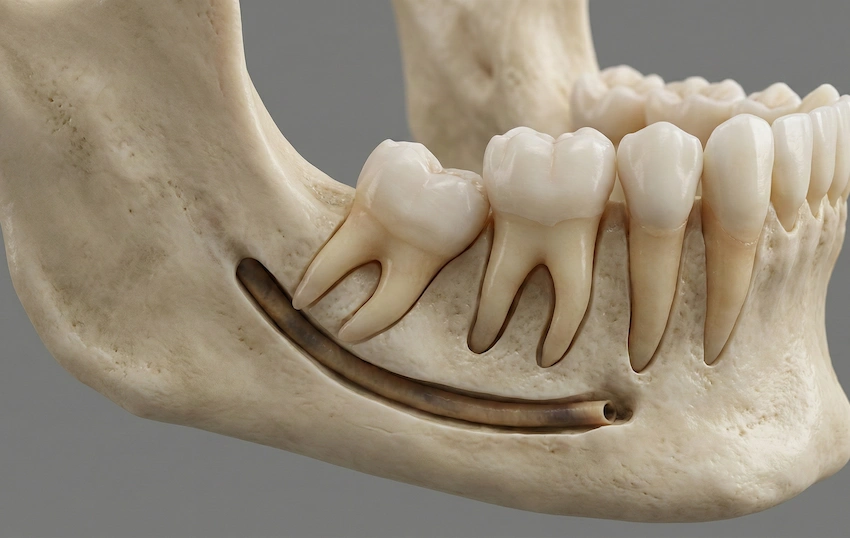
Each wisdom tooth does not necessarily require removal. In the case that they are fully erupted, functioning well, and you can clean them, we might even keep them. However, we permit ourselves to be very stringent with the criteria when making the decisions.
Here at Lema Dental Clinic, we consider the following factors to decide on whether to monitor the situation or to go in for surgery:
| Characteristic | Active Monitoring (Keeping) | Prophylactic Removal (Extracting) |
| Typical Candidate | Teeth fully erupted; sufficient jaw space; easy flossing and brushing | Impacted or partially impacted teeth; prior cysts; overcrowded jaw |
| Risk of Infection | Moderate to high over time due to plaque accumulation in hard-to-clean areas | Almost none after recovery, as the infection source is removed |
| Bone Density | Bone density is maintained, which can make later extraction more difficult | Bone regenerates post-extraction rapidly, especially in individuals under the age of 25 |
| Nerve Proximity | Risk increases as roots grow around the alveolar nerve | Lower risk when extraction is done before root maturation |
| Recovery Time | N/A unless infection develops, often requiring emergency care | 3–5 days with planned surgery and optimized recovery |
The “Turkey Advantage” in Oral Surgery
We empathize with you when you say the word “operation” about something quite intimidating. Only a few dental clinics have entertainment programs. With us, the dentist sedates you and a piezosurgery (ultrasonic bone surgery) device is used, which is an advanced and less invasive form of surgery than the drill.
A lot of foreign patients can mix this mandatory health step with their trip to Istanbul. Wisdom teeth healing is pretty fast compared to major implant surgery, so it can be scheduled within a short medical trip.
FAQ: Your Questions Answered by the Experts
Most of the time, pain does indeed indicate that the infection has been present for a while or the neighboring tooth has been damaged. When a tooth “is hot” (infected), it is significantly more difficult to remove it because a local anesthetic does not work as well in acidic infected tissue. We prefer to do the operation in a “healthy and cool” area.”
Supposedly, yes. But not every situation is identical. According to the dentist Polen Akkılıç, it is still not feasible for many people to clean the third molar completely on the back side even if they use an electric toothbrush because the cheek muscles prevent the brush head from getting there.
You might not experience a single problem. However, scientific publications indicate that third molars which are partly impacted are highly likely to develop pathologies later on. The cases we see at our clinic in Istanbul are mostly of patients in their sixties who are still being forced to undergo third molar removal because of a cyst that has developed. What is really unfortunate is that a recovery at 60 is nowhere near as smooth as it is at 20.
You seem to be fairly unconscious during the surgery because the operating room is so convincing. The team gives you a local anesthetic. However, if you are nervous and scared, there is also an option for intravenous sedation (mild sedation) to relax you. Immediately following the surgery, most patients have reported that they felt a “pressure” sensation or slight discomfort and this only lasted for a few days. Also, it can be easily controlled by basic medications that are given out to the patients.
There are 2 main components in this equation: technology and experience. The former is represented by the 3D CBCT imaging done before every surgery. It is a 3D map of the jaw, providing Professor Doctor Coşkun Yıldız with all the information he might need to avoid nerve complications and thus operate with great accuracy.
- Ghaeminia, H., Nienhuijs, M. E., Toedtling, V., Perry, J., Tummers, M., Hoppenreijs, T. J., & Van der Sanden, W. J. (2016). Surgical removal versus retention for the management of asymptomatic disease-free impacted wisdom teeth. Cochrane Database of Systematic Reviews, (8).
- Phillips, C., White, R. P., Shugars, D. A., & Zhou, X. (2003). Risk factors associated with prolonged recovery and delayed healing after third molar surgery. Journal of Oral and Maxillofacial Surgery, 61(12), 1436-1448.
- Marciani, R. D. (2007). Third molar removal: an overview of indications, imaging, evaluation, and assessment of risk. Oral and Maxillofacial Surgery Clinics, 19(1), 1-13.
- Bouloux, G. F., Steed, M. B., & Perciaccante, V. J. (2007). Complications of third molar surgery. Oral and Maxillofacial Surgery Clinics, 19(1), 117-128.
- Pogrel, M. A. (2012). What is the effect of the timing of removal of impacted mandibular third molars on the incidence of neurosensory deficit?. Journal of Oral and Maxillofacial Surgery, 70(1), 15-20.

