


White spots or sugar sensitivity.
It is a common belief that if teeth are not painful, they must be healthy. However, the present belief is one of the most fatal myths in the field of dentistry. When you experience a sudden pain or a dull ache, the “rot” (clinical decay) has probably already penetrated your enamel and is very close to the nerve.
In our clinical practice at Lema Dental Clinic, we encounter patients every week who have come to Istanbul in shock after seeing the results of their X-rays, which show widespread decay. The phrase we hear most often is: “But it never hurt!”
The fact is that tooth decay is like a silent killer. It doesn’t make a big fuss about its presence; rather, it quietly sneaks up on you. If you are aware of what to look for, you can even catch it when it is only a small one, thus avoiding a big treatment.
The following are some of the ways Professor Doctor Coşkun Yıldız, our diagnostic team, and I identify the very first signs of decay, and also how you can discover them at home.
1. Visual inspection: the “chalky” clue
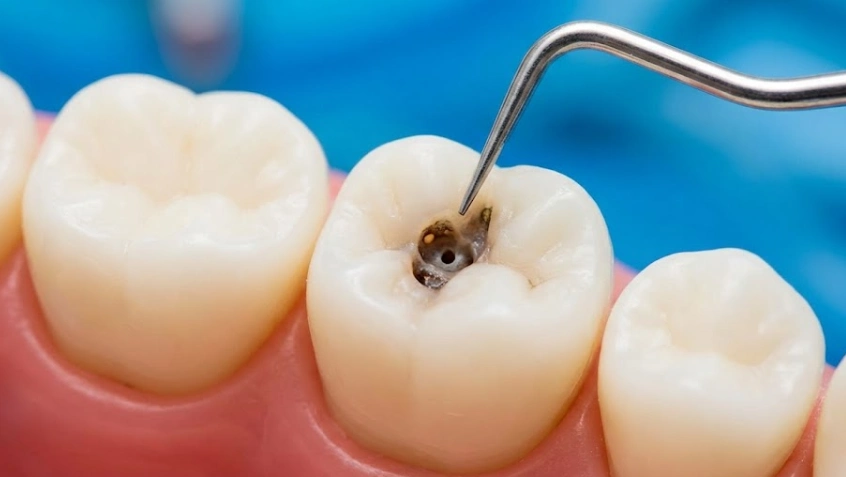
Let’s put the big black holes aside for now as they represent the final stage of the process. The very beginning of the decay may be figuratively and literally deceitfully dirty in appearance.
The bacteria in the mouth consume sugar and as a result of this process, they produce acid. This acid removes the minerals (calcium and phosphate) from the enamel. Before the formation of a hole in the enamel, the surface becomes porous and dry.
Detect: A faint, clear, chalky white spot is the point at which you locate the bacterial activity. Quite often, it is witnessed at the gum margin or between the teeth. Picture: You should imagine a healthy enamel being like a piece of translucent, polished glass. When you think about early rot, think of a frosted window or a piece of chalk. If you come across a white spot on the tooth that cannot be cleaned off, it basically means that your tooth is “soft” at the given place.
2. Flossing Test: The “Stick.”
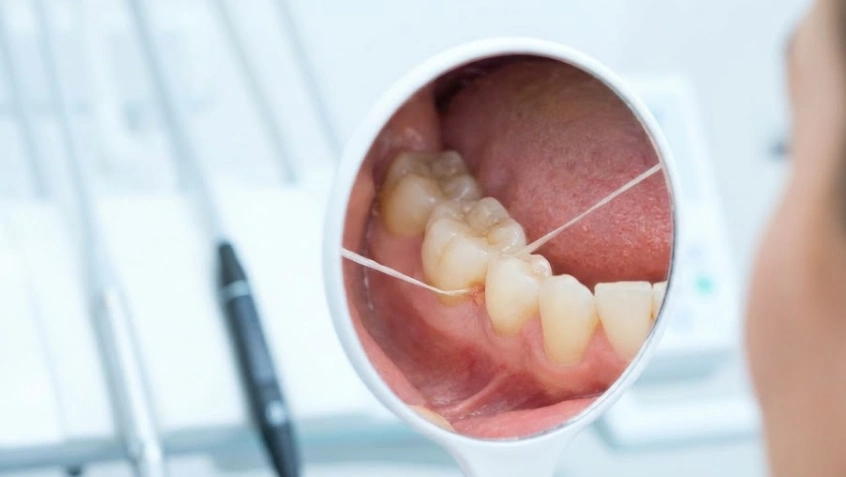
Apart from the different observation levels, the greatest level of decay can be found at the places where a toothbrush can’t reach simply the areas between the teeth (interproximal decay). You can’t view this through the mirror, but your floss can find it.
So, if it tears, shreds, or gets “caught” on a particular tooth each time you use it, please notice it. That “snag” is probably something like a cavity edge that is catching the floss thread somewhere, causing it to tear, unless of course, you have a rough filling there.
3. The “Sweet Tooth” Sensation
Is there a sharp and quick pain that you feel when you eat chocolate or sticky pastries, or when you drink soda?
Dentist Polen Akkılıç describes the process in the following words: “Healthy enamel is a perfect shield that shelters and protects the sensitive nerves inside. If that protective shield gets damaged via rot, then sugar will be able to get to the dentin through the microscopic pores.”
If the cold water causes pain, it can be due to gum recession. However, if pain is caused by sugar, it is most likely that the decay is still progressing.
4. The Feel of the Surface
Normally, teeth are smooth and slippery. In this case, the tongue would be expected to slide over the surfaces quite easily.
However, a rough patch, a hole, or some form of “stickiness” can be felt when the browsing finger goes over the tooth surface (this sensation is not attributable to food but to the tooth structure itself), which signifies that the enamel layer has given way. The decayed surface becomes pit-like as a result of the decay process.
Comparison: Is it Staining or Active Rot?
It is easy to confuse a coffee stain with a cavity. Here is the breakdown used by our diagnostic team in Turkey.
| Feature | Surface Stain | Active Decay (Rot) |
| Color | Yellow, brown, or black | Chalky white (early) to dark black (late) |
| Texture | Smooth and glass-like | Rough, pitted, or soft |
| Sensation | Painless | Sensitive to sweets or cold |
| Location | Usually widespread across teeth | Localized to one spot or crevice |
| Cleanability | Can be polished off | Cannot be brushed away |
| Progression | Stable over time | Grows larger/deeper over weeks |
The “phantom” Bad Taste
Have you ever had a metallic or sour taste in your mouth that kept coming back no matter how many times you rinse with mouthwash?
A cavity is essentially the process of organic matter decomposition of the tooth. When the bacteria (lactobacillus and streptococcus mutans) present in the mouth release their waste products, they give off sulfur compounds. Presence of a constant bad taste or localized bad breath coming from one specific area of your mouth is a very good clue that an active biological process—decay—is going on without being noticed.
The Turkey Protocol: Why Waiting is the Wrong Move
If you see any of these signs, the very last thing you should do is the “wait and see” approach. Your enamel will never regenerate. The body is powerless to repair the damage once there is a hole.
Our Lema Dental Clinic is equipped with a high-definition 3D tomography device, which allows us to “peek” between the layers of the tooth.
- When we first notice a “Chalky White” spot, We have the possibility to reverse it at least partially with professional fluoride varnishes on the assumption that you are willing to and able to improve your home care. We won’t drill.
- Once the cavity has gone through, minimally invasive dentistry will be the first option. Dentist Polen Akkılıç is a specialist of applying high-grade composite bonding or E-max inlays which replicate the natural tooth structure, thus the tooth is saved before it even gets to the stage of a root canal.
Critical Questions on Detecting Dental Decay
Only at the very first stage. If you see the “chalky white spot” (demineralization), you can sometimes remineralize it with fluoride toothpaste and cutting out sugar. However, once the surface breaks and a physical cavity (hole) forms, no amount of oil pulling or brushing can fix it. It requires a filling.
This is a “false flag” of safety. If you had a tooth that was throbbing and then suddenly stopped hurting entirely, it usually doesn’t mean the tooth healed. It means the nerve has died. The infection is still there, spreading into the jawbone, often leading to an abscess. This is a dental emergency.
Not always, but often. As decay advances, food gets trapped in the cavity hole and ferments. Combined with the bacteria eating the tooth structure, this produces a distinct necrotic smell. If you floss a specific tooth and the floss smells terrible, that is a red flag for interproximal decay.
Absolutely. This is called “recurrent decay.” Over years, old metal or composite fillings can pull away from the tooth, creating a microscopic gap. Bacteria slip into this gap and rot the tooth from the inside out. You won’t see this in the mirror; only an X-ray at a clinic can detect it.
Not always. Cold sensitivity can also be caused by gum recession (exposed roots) or clenching your teeth (bruxism). However, if the sensitivity is specific to one tooth and lingers for seconds or minutes after the cold stimulus is gone, it is likely decay or nerve inflammation.
- Fejerskov, O., & Kidd, E. (2008). Dental Caries: The Disease and its Clinical Management (2nd ed.). Blackwell Munksgaard.
- Selwitz, R. H., Ismail, A. I., & Pitts, N. B. (2007). Dental caries. The Lancet, 369(9555), 51-59.
- Pitts, N. B., Zero, D. T., Marsh, P. D., Ekstrand, K., Weintraub, J. A., Ramos-Gomez, F., … & Featherstone, J. (2017). Dental caries. Nature Reviews Disease Primers, 3(1), 1-16.
- Young, D. A., Nový, B. B., Zeller, G. G., Hale, R., Hart, T. C., Truelove, E. L., … & American Dental Association Council on Scientific Affairs. (2015). The American Dental Association Caries Classification System for clinical practice: a report of the American Dental Association Council on Scientific Affairs. The Journal of the American Dental Association, 146(2), 79-86.
- Marsh, P. D. (2003). Are dental diseases examples of ecological catastrophes?. Microbiology, 149(2), 279-294.

