

Utiliser adhésif prothèse sur rebasage souple ?
Utilisez un adhésif pour prothèse dentaire avec un rebasage souple uniquement si votre dentiste l'approuve.
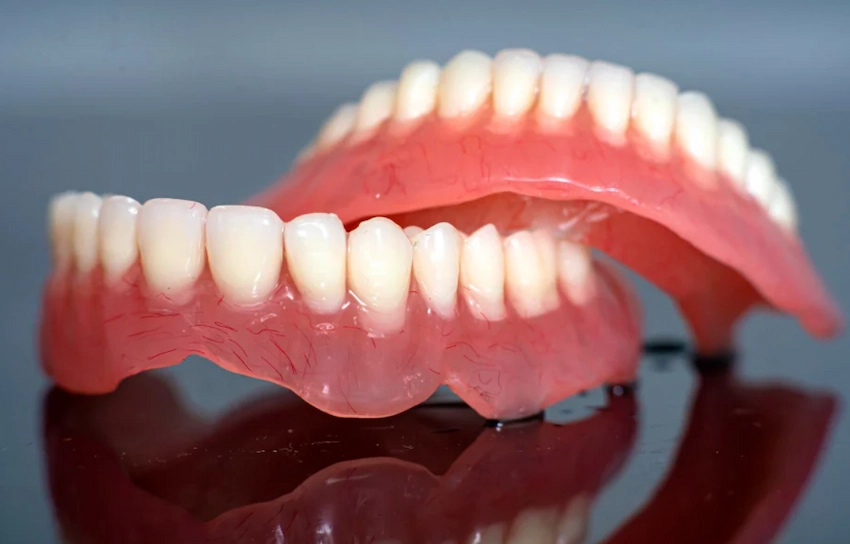
Vous venez de sortir d'une consultation dentaire. Vos gencives sont encore en phase de cicatrisation. On vous a posé un rebasage souple pour vos prothèses dentaires afin d'améliorer votre confort. Lorsque vous mordez, vous sentez toujours que la prothèse est un peu lâche. Vous commencez à vous demander, naturellement : « L'adhésif pour prothèses dentaires peut-il être utilisé avec un rebasage souple ? » En fait, un adhésif pour prothèse dentaire combiné à un rebasage souple endommagera presque certainement votre travail dentaire. Pour avoir une idée claire de la façon dont cela se produira, il pourrait être utile aux lecteurs de comprendre un peu la structure et le fonctionnement d'un rebasage souple pour prothèse dentaire. Un rebasage souple pour prothèse dentaire est une couche de silicone malléable qui agit comme un coussinet doux. De la même manière que les coussinets en mousse à mémoire de forme dans un lit, il est doux et souple. La dureté d'une base de prothèse dentaire en résine acrylique standard est un tel choc pour les mâchoires atrophiées ou sensibles. Par conséquent, un rebasage souple pour prothèse dentaire fait de silicone souple et poreux est une meilleure option comme coussinet de prothèse dentaire qui peut être utilisé en toute sécurité pour faciliter la guérison des tissus gingivaux, dans les cas après des extractions ou des chirurgies implantaires. Pour mieux comprendre cela, il faut examiner de près les caractéristiques du matériau en silicone. Sa grande porosité en est une, ce qui implique une respiration et une absorption d'humidité par le matériau.Comment le revêtement souple de la prothèse dentaire sera détruit par l'utilisation de la colle pour prothèse dentaire
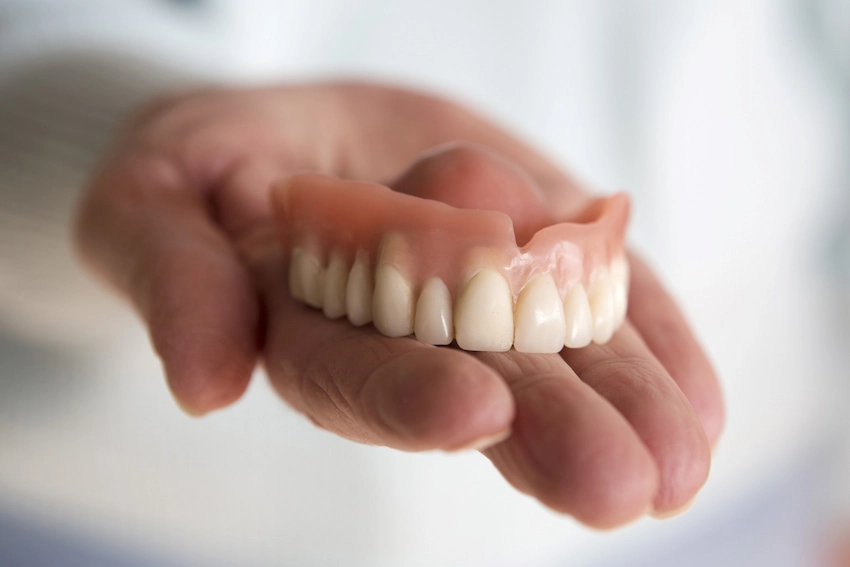
Stabilité des prothèses dentaires : Options de stabilité des prothèses dentaires
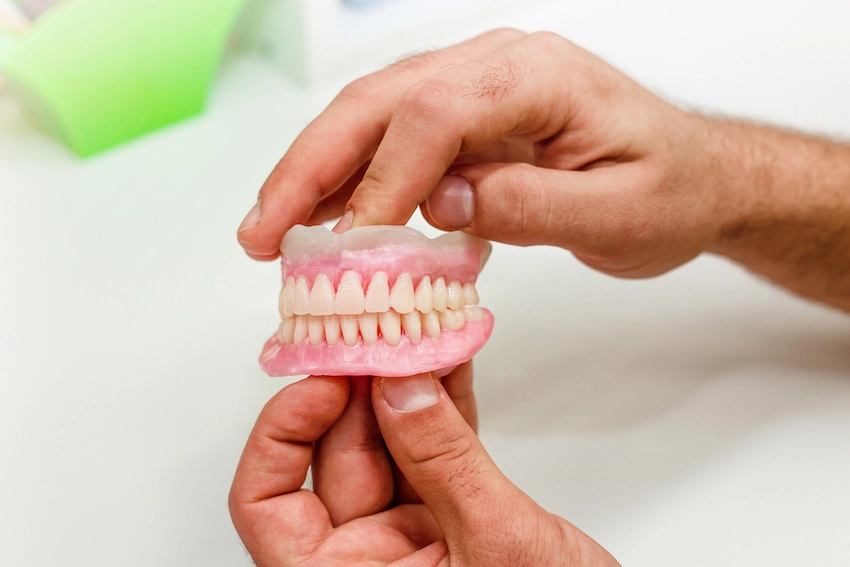
| Caractéristique | Rebasage souple | Rebasage dur | Adhésif pour prothèse dentaire |
| Caractéristiques | Une couche de confort temporaire pour la prothèse qui favorise également la guérison des tissus gingivaux. | Offre un ajustement à long terme et une stabilité structurelle de la prothèse pour un meilleur maintien. | Agit comme un maintien quotidien temporaire pour les prothèses dentaires en résine acrylique dure uniquement. |
| Durée de vie moyenne | Généralement 3 à 6 mois. | Généralement de 1 à 2 ans. | Seulement 12 à 24 heures. |
| Interaction | Détruit le matériau souple si un quelconque type de colle pour prothèse dentaire a été appliqué. | Utilisation sûre avec les prothèses dentaires en résine acrylique dure. | S/O. |
Foire aux questions
Références académiques
- Zarb, G. A., Hobkirk, J., Eckert, S., & Jacob, R. (2013). Prosthodontic Treatment for Edentulous Patients: Complete Dentures and Implant-Supported Prostheses (13th ed.). Mosby.
- Murata, H., Hong, G., Hamada, T., & McCabe, J. F. (2008). Dynamic viscoelastic properties of tissue conditioners and soft lining materials. Journal of Prosthetic Dentistry, 99(1), 74-81.
- Kulak-Ozkan, Y., Kazazoglu, E., & Arikan, A. (2003). Clinical evaluation of soft relining materials. European Journal of Prosthodontics and Restorative Dentistry, 11(4), 163-166.
- Chladek, G., Zmudzki, J., & Kasperski, J. (2014). Long-term soft denture lining materials. Materials, 7(8), 5816-5842.
- Garcia, L. T., Bohnenkamp, S. G., & Rudd, K. D. (2014). Kratochvil's Fundamentals of Removable Partial Dentures. Quintessence Publishing.
Questions fréquentes
Why do my dentures feel loose even after a soft reline is done?
When the soft dental reline is placed, it is to care for the gums that are undergoing a shrinking process. The case is such that if you have had a tooth extraction lately, your jaws are undergoing significant morphing, and your jaw will gradually start becoming thinner and shorter. The soft material of the reline is used as a cushion while you have this transition period. Once you start going down without swelling, the gap becomes available again. To address the problem properly, do not simply hide it with your denture glue but take it into professional consideration by visiting your clinic again,n and we’ll do a suitable modification of your reline.
Is it okay to apply powder-type denture adhesive on a soft reline?
Don’t use any kind of adhesive. Though it may appear powder is easier on your teeth than it is, the truth is that it will still transform into a sticky glue when it becomes mixed with your saliva. That sticky glue can easily fill every little pore in a soft reline just as effectively as the super-dry glue will. That glue-like substance will be locked tight there, permanently changing your smooth surface.
How do I clean my soft denture reline without harming it?
You have to be really careful. First of all, brush it with an ultra-soft toothbrush and a denture foam specially formulated for this task. Avoid brushing with ordinary toothpaste, as it contains abrasive ingredients that could damage the silicone. Also, unless your dentist has clearly and specifically approved of the brand, refrain from soaking the denture in effervescent tablets overnight.
When should I consider replacing my soft dental liner with a hard one?
The normal period for changing from a soft denture reline material to the hard one is between 6 months and 6 months. A soft dental reline is only an intermediate solution to the problem. Once your gum tissue has recovered 100% in Turkey after a dental treatment, we can take a new impression to create for you a hard reline of the denture for a permanent fit.
But what if relines and denture paste aren’t working for me anymore?
After a certain period, it’s quite likely that the jawbone will get so weak that a traditional denture won’t even stick. At that stage, the best solution is to get implant-supported dentures. As we insert titanium rods into the jawbone, we can then secure the denture firmly in place, and you’d no longer need any form of denture adhesive.