

Kan man bruge proteseklæbemiddel med en blød rebasering?
Brug kun proteseklæbemiddel med en blød rebasering, hvis din tandlæge godkender det.
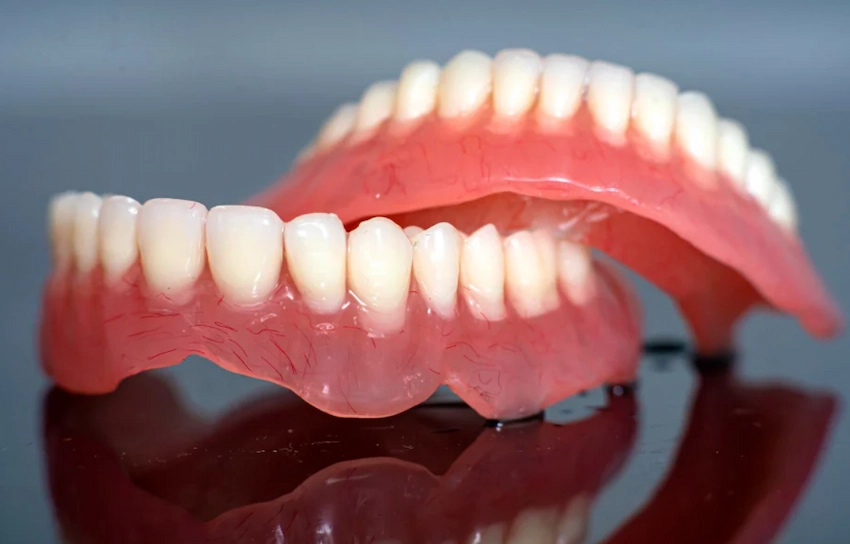
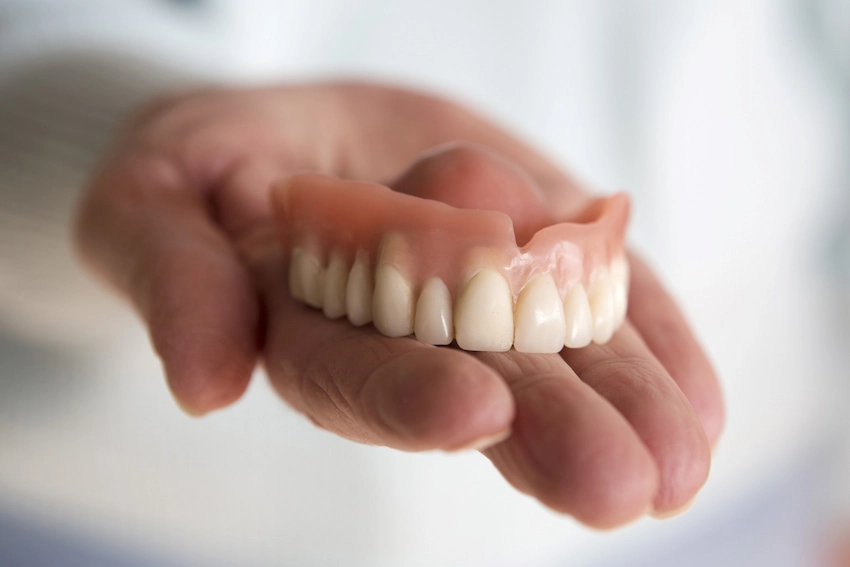
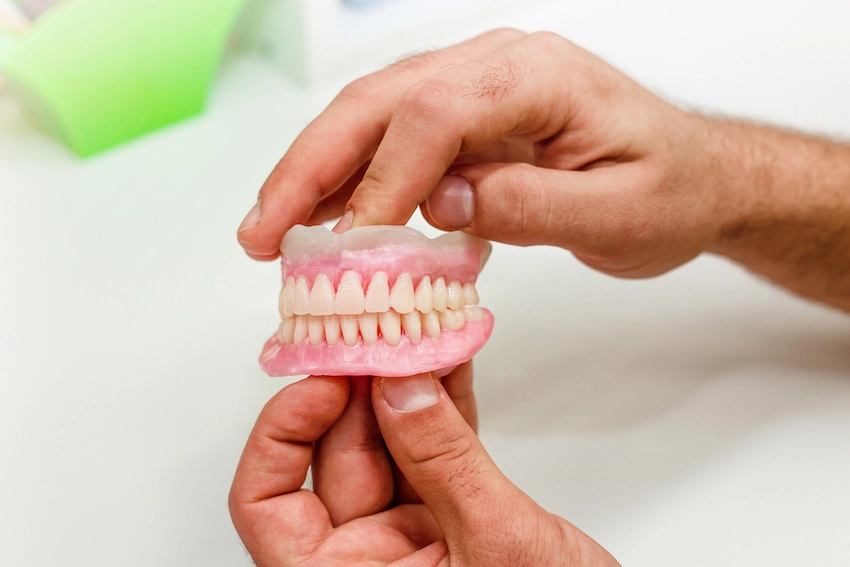
Du er netop kommet fra en tandlægekonsultation. Dit tandkød er stadig i helingsfasen. Du har fået en blød rebasering af dine proteser som en komfortforanstaltning. Når du bider sammen, føler du stadig, at protesen sidder lidt løst. Du begynder naturligvis at spørge, “Kan proteseklæber bruges sammen med en blød rebasering?” Faktisk vil proteseklæbemiddel kombineret med en blød proteserebasering næsten helt sikkert beskadige dit tandarbejde. For at få et klart billede af, hvordan det vil ske, kan det være nyttigt for læserne at forstå lidt om strukturen og funktionen af en blød proteserebasering. En blød proteserebasering er et bøjeligt silikonelag, der fungerer som en blød pude. På samme måde som memory foam-puder i en seng er den blød og bøjelig. Hårdheden af en standardprotesebase af akryl er et chok for de atrofierede eller følsomme kæbeknogler. Derfor er en blød proteserebasering lavet af bøjelig, porøs silikone en bedre mulighed end en protesepude, der kan bruges sikkert til at fremme heling af tandkødsvæv i tilfælde af ekstraktioner eller implantatoperationer. For bedre at forstå dette, må man se nærmere på silikonematerialets egenskaber. At være meget porøst er en af dem, og det indebærer, at materialet ånder og absorberer fugt.Hvordan en blød proteseforing ødelægges ved brug af proteselim
Protesestabilitet: Muligheder for protesestabilitet
| Egenskab | Blød rebasering | Hård rebasering | Proteseklæbemiddel |
| Karakteristika | Et midlertidigt komfortlag til protesen, der også heler tandkødsvæv. | Giver langvarig pasform og strukturel stabilitet af protesen for en bedre protesepasform. | Fungerer kun som et midlertidigt dagligt hold for hårde akrylproteser. |
| Gennemsnitlig levetid | Typisk 3 - 6 måneder. | Generelt fra 1 til 2 år. | Kun 12 til 24 timer. |
| Interaktion | Ødelægger blødt materiale, hvis nogen form for proteselim er påført. | Sikker at bruge med hårde akrylproteser. | Ikke relevant. |
Ofte stillede spørgsmål
Akademiske referencer
- Zarb, G. A., Hobkirk, J., Eckert, S., & Jacob, R. (2013). Prosthodontic Treatment for Edentulous Patients: Complete Dentures and Implant-Supported Prostheses (13. udg.). Mosby.
- Murata, H., Hong, G., Hamada, T., & McCabe, J. F. (2008). Dynamic viscoelastic properties of tissue conditioners and soft lining materials. Journal of Prosthetic Dentistry, 99(1), 74-81.
- Kulak-Ozkan, Y., Kazazoglu, E., & Arikan, A. (2003). Clinical evaluation of soft relining materials. European Journal of Prosthodontics and Restorative Dentistry, 11(4), 163-166.
- Chladek, G., Zmudzki, J., & Kasperski, J. (2014). Long-term soft denture lining materials. Materials, 7(8), 5816-5842.
- Garcia, L. T., Bohnenkamp, S. G., & Rudd, K. D. (2014). Kratochvil's Fundamentals of Removable Partial Dentures. Quintessence Publishing.
Ofte stillede spørgsmål
Why do my dentures feel loose even after a soft reline is done?
When the soft dental reline is placed, it is to care for the gums that are undergoing a shrinking process. The case is such that if you have had a tooth extraction lately, your jaws are undergoing significant morphing, and your jaw will gradually start becoming thinner and shorter. The soft material of the reline is used as a cushion while you have this transition period. Once you start going down without swelling, the gap becomes available again. To address the problem properly, do not simply hide it with your denture glue but take it into professional consideration by visiting your clinic again,n and we’ll do a suitable modification of your reline.
Is it okay to apply powder-type denture adhesive on a soft reline?
Don’t use any kind of adhesive. Though it may appear powder is easier on your teeth than it is, the truth is that it will still transform into a sticky glue when it becomes mixed with your saliva. That sticky glue can easily fill every little pore in a soft reline just as effectively as the super-dry glue will. That glue-like substance will be locked tight there, permanently changing your smooth surface.
How do I clean my soft denture reline without harming it?
You have to be really careful. First of all, brush it with an ultra-soft toothbrush and a denture foam specially formulated for this task. Avoid brushing with ordinary toothpaste, as it contains abrasive ingredients that could damage the silicone. Also, unless your dentist has clearly and specifically approved of the brand, refrain from soaking the denture in effervescent tablets overnight.
When should I consider replacing my soft dental liner with a hard one?
The normal period for changing from a soft denture reline material to the hard one is between 6 months and 6 months. A soft dental reline is only an intermediate solution to the problem. Once your gum tissue has recovered 100% in Turkey after a dental treatment, we can take a new impression to create for you a hard reline of the denture for a permanent fit.
But what if relines and denture paste aren’t working for me anymore?
After a certain period, it’s quite likely that the jawbone will get so weak that a traditional denture won’t even stick. At that stage, the best solution is to get implant-supported dentures. As we insert titanium rods into the jawbone, we can then secure the denture firmly in place, and you’d no longer need any form of denture adhesive.