

Puteți folosi adeziv pentru proteze dentare cu o rebazare moale?
Utilizați adeziv pentru proteze dentare cu o căptușeală moale doar dacă medicul dumneavoastră dentist aprobă.
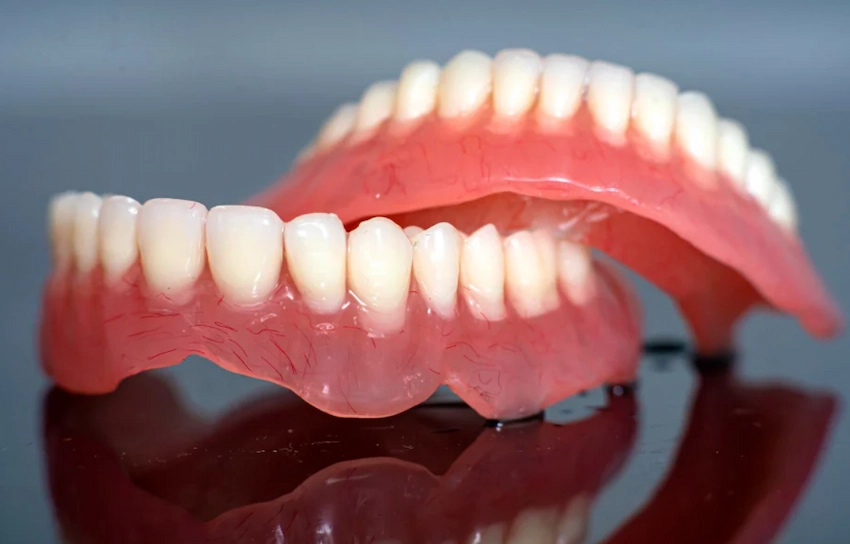
Tocmai ați ieșit de la o consultație stomatologică. Gingiile dumneavoastră sunt încă în faza de vindecare. Vi s-a aplicat o căptușeală moale pentru protezele dentare ca măsură de confort. Când mușcați, simțiți în continuare că proteza este puțin slăbită. Începeți să vă întrebați, în mod firesc, „Poate adeziv pentru proteze fi utilizat împreună cu o căptușeală moale?” De fapt, adezivul pentru proteze dentare combinat cu o căptușeală moale a protezei va deteriora aproape sigur lucrarea dumneavoastră dentară. Pentru a înțelege clar cum se va întâmpla acest lucru, ar putea fi util pentru cititori să înțeleagă puțin despre structura și funcționarea unei căptușeli moi pentru proteze dentare. O căptușeală moale pentru proteze dentare este un strat flexibil de silicon care acționează ca o pernă moale. La fel ca pernele din spumă cu memorie dintr-un pat, este moale și flexibilă. Duritatea bazei acrilice standard a protezei dentare este un șoc pentru oasele maxilare atrofiate sau sensibile. Prin urmare, o căptușeală moale pentru proteze dentare realizată din silicon flexibil, poros, este o opțiune mai bună ca pernă pentru proteză care poate fi utilizată în siguranță pentru a facilita vindecarea țesuturilor gingivale, în cazuri după extracții sau intervenții chirurgicale de implant. Pentru a înțelege mai bine acest lucru, trebuie să analizăm cu atenție caracteristicile materialului siliconic. Faptul că este foarte poros este una dintre ele, iar asta implică respirabilitatea și absorbția umidității de către material.Cum va fi distrusă căptușeala moale a protezei dentare prin utilizarea adezivului pentru proteze
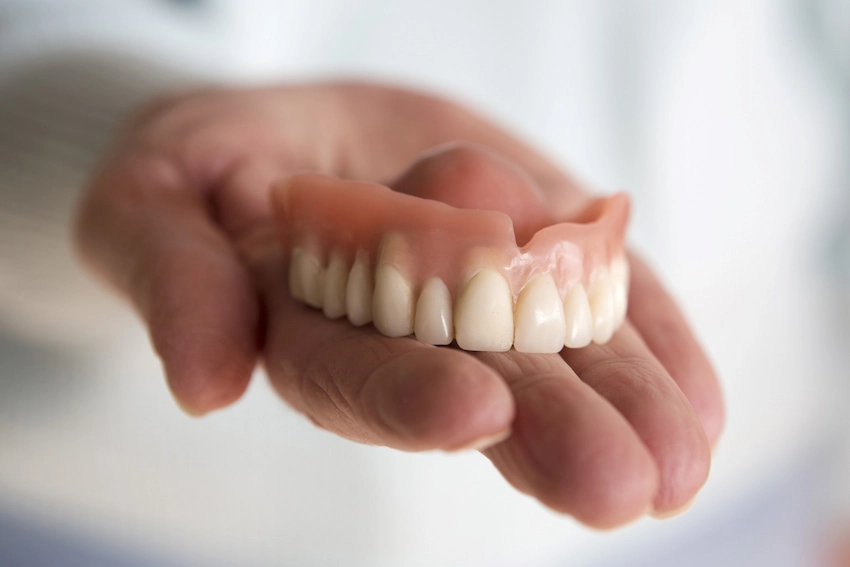
Stabilitatea Protezelor Dentare: Opțiuni pentru Stabilitatea Protezelor
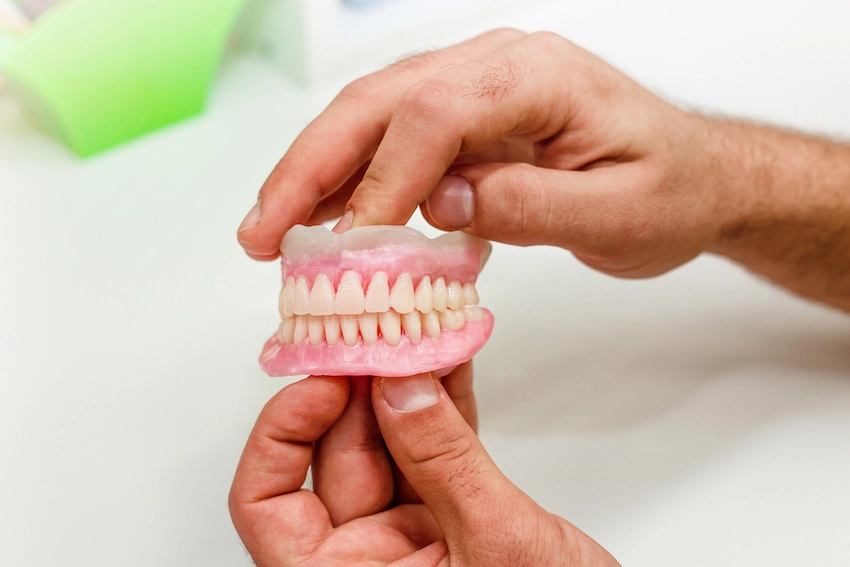
| Caracteristică | Căptușeală Moale | Căptușeală Dură | Adeziv pentru Proteze Dentare |
| Caracteristici | Un strat temporar de confort pentru proteză care, de asemenea, vindecă țesutul gingival. | Asigură o potrivire pe termen lung și stabilitate structurală a protezei pentru o mai bună adaptare a acesteia. | Acționează ca o fixare zilnică temporară doar pentru protezele acrilice dure. |
| Durata Medie de Viață | De obicei 3 - 6 luni. | În general de la 1 la 2 ani. | Este de numai 12 până la 24 de ore. |
| Interacțiune | Distruge materialul moale dacă a fost aplicat orice tip de adeziv pentru proteze. | Utilizarea este sigură cu protezele acrilice dure. | N/A. |
Întrebări Frecvente
Referințe Academice
- Zarb, G. A., Hobkirk, J., Eckert, S., & Jacob, R. (2013). Prosthodontic Treatment for Edentulous Patients: Complete Dentures and Implant-Supported Prostheses (Ediția a 13-a). Mosby.
- Murata, H., Hong, G., Hamada, T., & McCabe, J. F. (2008). Proprietățile viscoelastice dinamice ale materialelor de condiționare a țesuturilor și ale materialelor de căptușeală moale. Journal of Prosthetic Dentistry, 99(1), 74-81.
- Kulak-Ozkan, Y., Kazazoglu, E., & Arikan, A. (2003). Evaluarea clinică a materialelor de căptușeală moale. European Journal of Prosthodontics and Restorative Dentistry, 11(4), 163-166.
- Chladek, G., Zmudzki, J., & Kasperski, J. (2014). Materiale de căptușeală moale pentru proteze dentare pe termen lung. Materials, 7(8), 5816-5842.
- Garcia, L. T., Bohnenkamp, S. G., & Rudd, K. D. (2014). Kratochvil's Fundamentals of Removable Partial Dentures. Quintessence Publishing.
Întrebări frecvente
Why do my dentures feel loose even after a soft reline is done?
When the soft dental reline is placed, it is to care for the gums that are undergoing a shrinking process. The case is such that if you have had a tooth extraction lately, your jaws are undergoing significant morphing, and your jaw will gradually start becoming thinner and shorter. The soft material of the reline is used as a cushion while you have this transition period. Once you start going down without swelling, the gap becomes available again. To address the problem properly, do not simply hide it with your denture glue but take it into professional consideration by visiting your clinic again,n and we’ll do a suitable modification of your reline.
Is it okay to apply powder-type denture adhesive on a soft reline?
Don’t use any kind of adhesive. Though it may appear powder is easier on your teeth than it is, the truth is that it will still transform into a sticky glue when it becomes mixed with your saliva. That sticky glue can easily fill every little pore in a soft reline just as effectively as the super-dry glue will. That glue-like substance will be locked tight there, permanently changing your smooth surface.
How do I clean my soft denture reline without harming it?
You have to be really careful. First of all, brush it with an ultra-soft toothbrush and a denture foam specially formulated for this task. Avoid brushing with ordinary toothpaste, as it contains abrasive ingredients that could damage the silicone. Also, unless your dentist has clearly and specifically approved of the brand, refrain from soaking the denture in effervescent tablets overnight.
When should I consider replacing my soft dental liner with a hard one?
The normal period for changing from a soft denture reline material to the hard one is between 6 months and 6 months. A soft dental reline is only an intermediate solution to the problem. Once your gum tissue has recovered 100% in Turkey after a dental treatment, we can take a new impression to create for you a hard reline of the denture for a permanent fit.
But what if relines and denture paste aren’t working for me anymore?
After a certain period, it’s quite likely that the jawbone will get so weak that a traditional denture won’t even stick. At that stage, the best solution is to get implant-supported dentures. As we insert titanium rods into the jawbone, we can then secure the denture firmly in place, and you’d no longer need any form of denture adhesive.