

Si può usare l'adesivo per protesi dentale con una ribasatura morbida?
Utilizzare l'adesivo per protesi con una ribasatura morbida solo se approvato dal dentista.
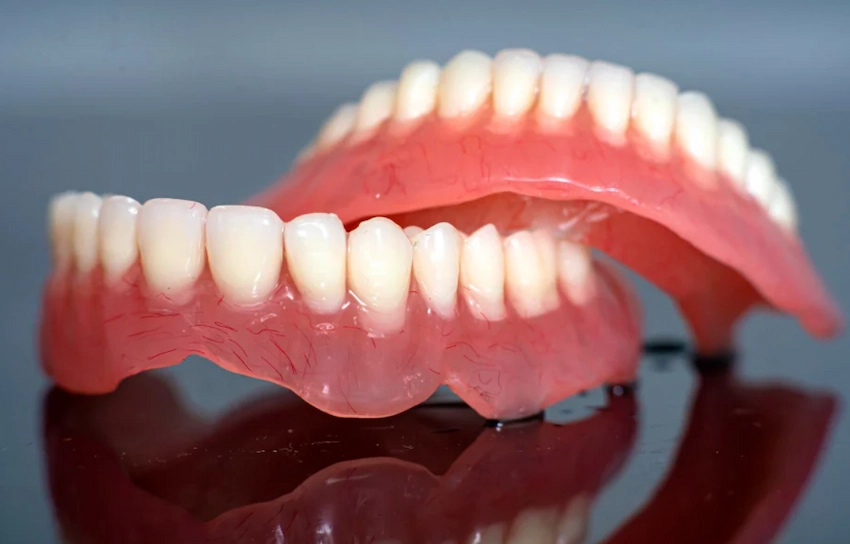
Siete appena usciti da una visita odontoiatrica. Le vostre gengive sono ancora in fase di guarigione. Vi è stata applicata una ribasatura morbida per le vostre protesi come misura di comfort. Quando mordete, sentite ancora che la protesi è un po' allentata. Iniziate a chiedervi, naturalmente, "L'adesivo per protesi dentarie può essere usato insieme alla ribasatura morbida?" Infatti, l'adesivo per protesi combinato con una ribasatura morbida della protesi danneggerà quasi certamente il vostro lavoro dentale. Per avere un quadro chiaro di come ciò avverrà, potrebbe essere utile per i lettori capire un po' la struttura e il funzionamento di una ribasatura morbida della protesi. Una ribasatura morbida della protesi è uno strato di silicone flessibile che agisce come un morbido cuscinetto. Allo stesso modo dei materassini in memory foam in un letto, è morbida e flessibile. La durezza di una base acrilica standard per protesi è un tale shock per le ossa mascellari atrofizzate o sensibili. Per questo, una ribasatura morbida della protesi fatta di silicone flessibile e poroso è un'opzione migliore come cuscinetto per protesi che può essere usato in sicurezza per facilitare la guarigione dei tessuti gengivali, in casi dopo estrazioni o interventi chirurgici di impianto. Per comprendere meglio questo aspetto, è necessario esaminare attentamente le caratteristiche del materiale siliconico. Essere altamente poroso è una di queste, e ciò implica la traspirazione e l'assorbimento dell'umidità da parte del materiale.Come la ribasatura morbida della protesi verrà distrutta dall'uso della colla per protesi
Stabilità delle protesi: Opzioni per la stabilità delle protesi
| Caratteristica | Ribasatura Morbida | Ribasatura Dura | Adesivo per Protesi |
| Caratteristiche | Uno strato temporaneo di comfort per la protesi che favorisce anche la guarigione del tessuto gengivale. | Fornisce un adattamento a lungo termine e stabilità strutturale della protesi per una migliore aderenza. | Agisce come una tenuta quotidiana temporanea solo per protesi acriliche dure. |
| Durata Media | Di solito 3 - 6 mesi. | Generalmente da 1 a 2 anni. | Solo 12 - 24 ore. |
| Interazione | Distrugge il materiale morbido se è stata applicata qualsiasi tipo di colla per protesi. | L'uso è sicuro con protesi acriliche dure. | N/D. |
Domande Frequenti
Riferimenti Accademici
- Zarb, G. A., Hobkirk, J., Eckert, S., & Jacob, R. (2013). Prosthodontic Treatment for Edentulous Patients: Complete Dentures and Implant-Supported Prostheses (13a ed.). Mosby.
- Murata, H., Hong, G., Hamada, T., & McCabe, J. F. (2008). Dynamic viscoelastic properties of tissue conditioners and soft lining materials. Journal of Prosthetic Dentistry, 99(1), 74-81.
- Kulak-Ozkan, Y., Kazazoglu, E., & Arikan, A. (2003). Clinical evaluation of soft relining materials. European Journal of Prosthodontics and Restorative Dentistry, 11(4), 163-166.
- Chladek, G., Zmudzki, J., & Kasperski, J. (2014). Long-term soft denture lining materials. Materials, 7(8), 5816-5842.
- Garcia, L. T., Bohnenkamp, S. G., & Rudd, K. D. (2014). Kratochvil's Fundamentals of Removable Partial Dentures. Quintessence Publishing.
Domande frequenti
Why do my dentures feel loose even after a soft reline is done?
When the soft dental reline is placed, it is to care for the gums that are undergoing a shrinking process. The case is such that if you have had a tooth extraction lately, your jaws are undergoing significant morphing, and your jaw will gradually start becoming thinner and shorter. The soft material of the reline is used as a cushion while you have this transition period. Once you start going down without swelling, the gap becomes available again. To address the problem properly, do not simply hide it with your denture glue but take it into professional consideration by visiting your clinic again,n and we’ll do a suitable modification of your reline.
Is it okay to apply powder-type denture adhesive on a soft reline?
Don’t use any kind of adhesive. Though it may appear powder is easier on your teeth than it is, the truth is that it will still transform into a sticky glue when it becomes mixed with your saliva. That sticky glue can easily fill every little pore in a soft reline just as effectively as the super-dry glue will. That glue-like substance will be locked tight there, permanently changing your smooth surface.
How do I clean my soft denture reline without harming it?
You have to be really careful. First of all, brush it with an ultra-soft toothbrush and a denture foam specially formulated for this task. Avoid brushing with ordinary toothpaste, as it contains abrasive ingredients that could damage the silicone. Also, unless your dentist has clearly and specifically approved of the brand, refrain from soaking the denture in effervescent tablets overnight.
When should I consider replacing my soft dental liner with a hard one?
The normal period for changing from a soft denture reline material to the hard one is between 6 months and 6 months. A soft dental reline is only an intermediate solution to the problem. Once your gum tissue has recovered 100% in Turkey after a dental treatment, we can take a new impression to create for you a hard reline of the denture for a permanent fit.
But what if relines and denture paste aren’t working for me anymore?
After a certain period, it’s quite likely that the jawbone will get so weak that a traditional denture won’t even stick. At that stage, the best solution is to get implant-supported dentures. As we insert titanium rods into the jawbone, we can then secure the denture firmly in place, and you’d no longer need any form of denture adhesive.