


Use denture adhesive with a soft reline only if your dentist approves it.
You just came out of a dental consultation. Your gums are still in the healing phase. You have been given a soft reline for your dentures as a comfort measure. When you bite down, you still feel the prosthesis is a bit slack. You start questioning, naturally, “Can denture adhesive be used together with soft reline?”
In fact, denture adhesive combined with a soft denture reline will almost definitely damage your dental work.
To get a clear picture of how that will happen, it might be useful for readers to understand a little about the structure and working of a soft denture reline. A soft denture reline is a pliable silicone layer which acts as a soft cushion. In the same way as memory foam pads in a bed, it is soft and pliable.
The hardness of a standard denture acrylic base is such a shocker for the atrophied or sensitive jawbones. Hence, a soft denture reline made of pliable, porous silicone is a better option as a denture cushion that can be used safely to facilitate gum tissues to heal, in cases after extractions or implant surgeries.
To better understand this, one must look closely at silicone material characteristics. Being highly porous is one of them, and that implies breathing and moisture absorption by the material.
How Soft Denture Liner Will Be Destroyed By The UseOf Denture Glue
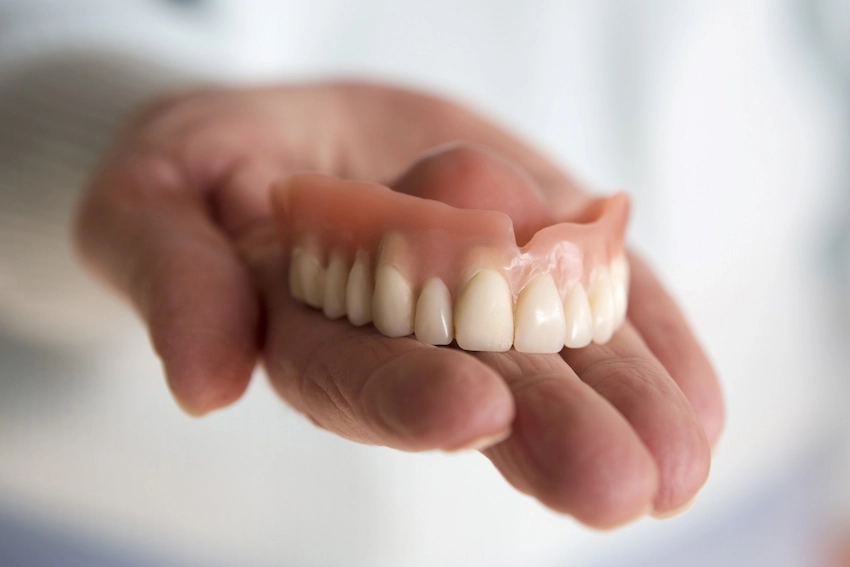
Denture adhesives are like industrial glues. They are developed to become sticky and thick upon contact with your saliva.
You spread the denture adhesive directly on one of your soft relines, and then the sticky stuff will penetrate to the deepest levels of your silicone. Once that hard denture adhesive is locked into those micro-holes, it is practically impossible for that stuff to come out. Scrubbing the denture adhesive is also a problem and one way that you can tear the delicate line. A smooth soft line that was once so easy in your mouth can become a very stiff bacteria-catcher in only a few days.
This is exactly what our dentist sees in daily practice. People come with broken relines. As for them, it seems that their dentures are no better than they were before, as the use of a denture adhesive caused their very soft dentures to become hard, in fact, and their gums were severely affected in the sense of fungal infection like the one called Thrush (Candidiasis).
Professor Doctor Coşkun Yıldız, a famous dentist, always said: “A soft reline is a means of healing which does not permanently alter the structure of the denture. If a denture glue or paste is a necessary way for you to be able to use a soft reline, then it’s the structural base of the jawbone that we are looking to deal with in the dental clinic right and immediately.”
At Lema Dental Clinic in Turkey, the Dentist Polen Akkılıç, together with her professional staff, has expertise in managing cases which involve soft to hard relining transitions. Moreover, a patient’s denture that keeps moving around a little after the preline procedure can be easily fixed with proper alignment, which can be a professional solution. A chemical-based adhesive is never recommended.
Stability Of Dentures: Denture Stability Options
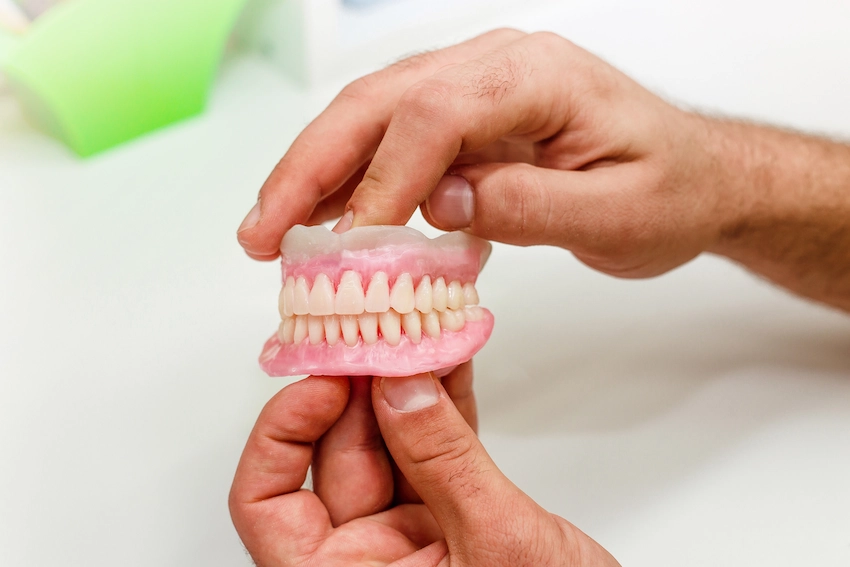
Before grabbing a quick solution, one should first know what the different ways of getting denture stability are. Then one can decide based on the situation.
| Feature | Soft Reline | Hard Reline | Denture Adhesive |
| Characteristics | A temporary denture comfort layer that also heals gum tissue. | Provides long-term fit and structural stability of the denture for a better denture fit. | It acts as a temporary daily hold for hard acrylic dentures only. |
| Average Lifespan | Usually 3 – 6 months. | Generally from 1 to 2 years. | It is 12 to 24 hours only. |
| Interaction | Destroys soft material if any kind of denture glue has been applied. | Use is safe with hard acrylic dentures. | N/A. |
Still the dilemma: what could be done if you do not use a denture adhesive and your dentures with a soft reline simply will not stick? What could be your options?
Frequently Asked Questions
Why do my dentures feel loose even after a soft reline is done?
When the soft dental reline is placed, it is to care for the gums that are undergoing a shrinking process. The case is such that if you have had a tooth extraction lately, your jaws are undergoing significant morphing, and your jaw will gradually start becoming thinner and shorter. The soft material of the reline is used as a cushion while you have this transition period. Once you start going down without swelling, the gap becomes available again. To address the problem properly, do not simply hide it with your denture glue but take it into professional consideration by visiting your clinic again,n and we’ll do a suitable modification of your reline.
Is it okay to apply powder-type denture adhesive on a soft reline?
Don’t use any kind of adhesive. Though it may appear powder is easier on your teeth than it is, the truth is that it will still transform into a sticky glue when it becomes mixed with your saliva. That sticky glue can easily fill every little pore in a soft reline just as effectively as the super-dry glue will. That glue-like substance will be locked tight there, permanently changing your smooth surface.
How do I clean my soft denture reline without harming it?
You have to be really careful. First of all, brush it with an ultra-soft toothbrush and a denture foam specially formulated for this task. Avoid brushing with ordinary toothpaste, as it contains abrasive ingredients that could damage the silicone. Also, unless your dentist has clearly and specifically approved of the brand, refrain from soaking the denture in effervescent tablets overnight.
When should I consider replacing my soft dental liner with a hard one?
The normal period for changing from a soft denture reline material to the hard one is between 6 months and 6 months. A soft dental reline is only an intermediate solution to the problem. Once your gum tissue has recovered 100% in Turkey after a dental treatment, we can take a new impression to create for you a hard reline of the denture for a permanent fit.
But what if relines and denture paste aren’t working for me anymore?
After a certain period, it’s quite likely that the jawbone will get so weak that a traditional denture won’t even stick. At that stage, the best solution is to get implant-supported dentures. As we insert titanium rods into the jawbone, we can then secure the denture firmly in place, and you’d no longer need any form of denture adhesive.
Academic References
- Zarb, G. A., Hobkirk, J., Eckert, S., & Jacob, R. (2013). Prosthodontic Treatment for Edentulous Patients: Complete Dentures and Implant-Supported Prostheses (13th ed.). Mosby.
- Murata, H., Hong, G., Hamada, T., & McCabe, J. F. (2008). Dynamic viscoelastic properties of tissue conditioners and soft lining materials. Journal of Prosthetic Dentistry, 99(1), 74-81.
- Kulak-Ozkan, Y., Kazazoglu, E., & Arikan, A. (2003). Clinical evaluation of soft relining materials. European Journal of Prosthodontics and Restorative Dentistry, 11(4), 163-166.
- Chladek, G., Zmudzki, J., & Kasperski, J. (2014). Long-term soft denture lining materials. Materials, 7(8), 5816-5842.
- Garcia, L. T., Bohnenkamp, S. G., & Rudd, K. D. (2014). Kratochvil’s Fundamentals of Removable Partial Dentures. Quintessence Publishing.

