

Ar galima naudoti protezų klijus su minkštuoju perbazavimu?
Protezų klijus su minkštu paklojimu naudokite tik tuo atveju, jei jūsų odontologas tai patvirtina.
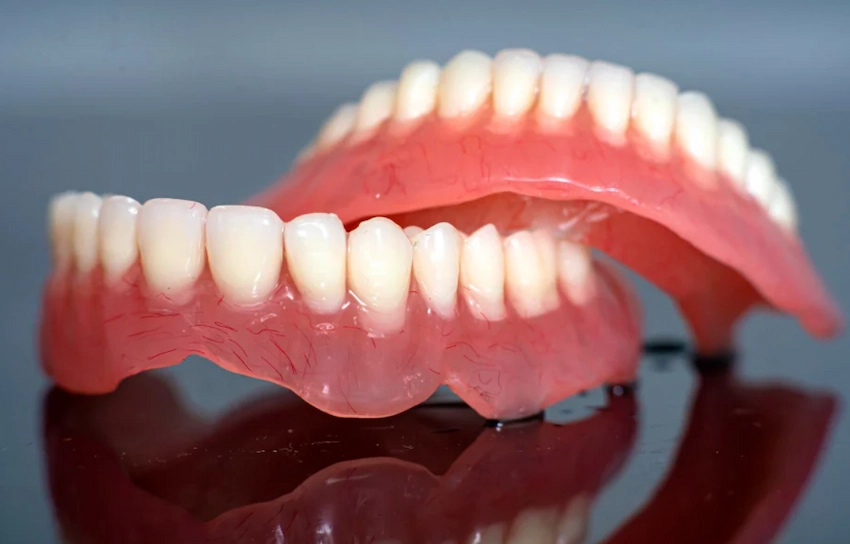
Ką tik grįžote iš odontologo konsultacijos. Jūsų dantenos vis dar gyja. Jums buvo atliktas minkštas protezų paklojimas, siekiant užtikrinti komfortą. Kai sukandate dantis, vis dar jaučiate, kad protezas šiek tiek laisvas. Natūraliai pradedate klausti: „Ar protezų klijai gali būti naudojami kartu su minkštu paklojimu?“ Tiesą sakant, protezų klijai kartu su minkštu protezo paklojimu beveik neabejotinai sugadins jūsų dantų darbą. Kad geriau suprastumėte, kaip tai nutiks, skaitytojams gali būti naudinga šiek tiek sužinoti apie minkšto protezo paklojimo struktūrą ir veikimą. Minkštas protezo paklojimas yra lankstus silikono sluoksnis, kuris veikia kaip minkšta pagalvėlė. Panašiai kaip ir atminties putų pagalvėlės lovoje, jis yra minkštas ir lankstus. Standartinio protezo akrilinio pagrindo kietumas yra didelis smūgis atrofuotiems ar jautriems žandikauliams. Todėl minkštas protezo paklojimas, pagamintas iš lankstaus, porėto silikono, yra geresnis pasirinkimas kaip protezo pagalvėlė, kurią galima saugiai naudoti dantenų audiniams gyti, ypač po danties rovimo ar implantavimo operacijų. Norint tai geriau suprasti, reikia atidžiau pažvelgti į silikono medžiagos savybes. Didelis porėtumas yra viena iš jų, o tai reiškia medžiagos kvėpavimą ir drėgmės absorbciją.Kaip minkštas protezo paklojimas bus sugadintas naudojant protezų klijus
Protezų stabilumas: protezų stabilumo galimybės
| Savybė | Minkštas paklojimas | Kietas paklojimas | Protezų klijai |
| Charakteristikos | Laikinas protezo komforto sluoksnis, kuris taip pat gydo dantenų audinį. | Užtikrina ilgalaikį protezo prigludimą ir struktūrinį stabilumą geresniam protezo fiksavimui. | Veikia kaip laikinas kasdienis fiksatorius tik kietiems akriliniams protezams. |
| Vidutinė tarnavimo trukmė | Paprastai 3–6 mėnesiai. | Paprastai nuo 1 iki 2 metų. | Tik 12–24 valandos. |
| Sąveika | Sugadina minkštą medžiagą, jei buvo naudojami bet kokie protezų klijai. | Saugus naudoti su kietais akriliniais protezais. | Netaikoma. |
Dažnai užduodami klausimai
Akademinės nuorodos
- Zarb, G. A., Hobkirk, J., Eckert, S., & Jacob, R. (2013). Prosthodontic Treatment for Edentulous Patients: Complete Dentures and Implant-Supported Prostheses (13th ed.). Mosby.
- Murata, H., Hong, G., Hamada, T., & McCabe, J. F. (2008). Dynamic viscoelastic properties of tissue conditioners and soft lining materials. Journal of Prosthetic Dentistry, 99(1), 74-81.
- Kulak-Ozkan, Y., Kazazoglu, E., & Arikan, A. (2003). Clinical evaluation of soft relining materials. European Journal of Prosthodontics and Restorative Dentistry, 11(4), 163-166.
- Chladek, G., Zmudzki, J., & Kasperski, J. (2014). Long-term soft denture lining materials. Materials, 7(8), 5816-5842.
- Garcia, L. T., Bohnenkamp, S. G., & Rudd, K. D. (2014). Kratochvil's Fundamentals of Removable Partial Dentures. Quintessence Publishing.
Dažniausiai užduodami klausimai
Why do my dentures feel loose even after a soft reline is done?
When the soft dental reline is placed, it is to care for the gums that are undergoing a shrinking process. The case is such that if you have had a tooth extraction lately, your jaws are undergoing significant morphing, and your jaw will gradually start becoming thinner and shorter. The soft material of the reline is used as a cushion while you have this transition period. Once you start going down without swelling, the gap becomes available again. To address the problem properly, do not simply hide it with your denture glue but take it into professional consideration by visiting your clinic again,n and we’ll do a suitable modification of your reline.
Is it okay to apply powder-type denture adhesive on a soft reline?
Don’t use any kind of adhesive. Though it may appear powder is easier on your teeth than it is, the truth is that it will still transform into a sticky glue when it becomes mixed with your saliva. That sticky glue can easily fill every little pore in a soft reline just as effectively as the super-dry glue will. That glue-like substance will be locked tight there, permanently changing your smooth surface.
How do I clean my soft denture reline without harming it?
You have to be really careful. First of all, brush it with an ultra-soft toothbrush and a denture foam specially formulated for this task. Avoid brushing with ordinary toothpaste, as it contains abrasive ingredients that could damage the silicone. Also, unless your dentist has clearly and specifically approved of the brand, refrain from soaking the denture in effervescent tablets overnight.
When should I consider replacing my soft dental liner with a hard one?
The normal period for changing from a soft denture reline material to the hard one is between 6 months and 6 months. A soft dental reline is only an intermediate solution to the problem. Once your gum tissue has recovered 100% in Turkey after a dental treatment, we can take a new impression to create for you a hard reline of the denture for a permanent fit.
But what if relines and denture paste aren’t working for me anymore?
After a certain period, it’s quite likely that the jawbone will get so weak that a traditional denture won’t even stick. At that stage, the best solution is to get implant-supported dentures. As we insert titanium rods into the jawbone, we can then secure the denture firmly in place, and you’d no longer need any form of denture adhesive.