

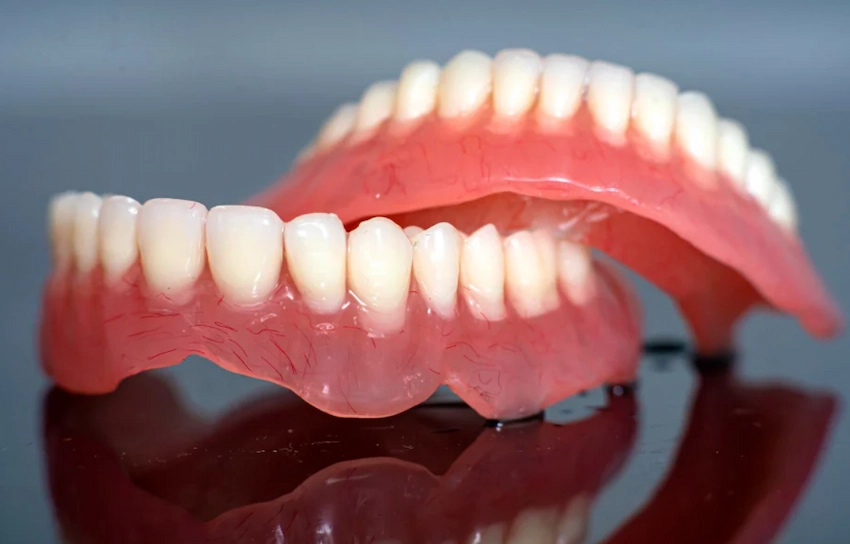
Kas saab kasutada proteesiliimi koos pehme aluskihiga?
Kasutage proteesiliimi pehme aluskihiga ainult siis, kui teie hambaarst selle heaks kiidab.
Tulite just hambaravi konsultatsioonilt. Teie igemed on veel paranemisfaasis. Teile on antud proteesidele mugavusmeetmena pehme aluskiht. Kui hammustate, tunnete ikka, et protees on veidi lõtv. Hakkate loomulikult küsima: „Kas proteesi liim saab kasutada koos pehme aluskihiga?” Tegelikult kahjustab proteesiliimi ja pehme proteesi aluskihi kombinatsioon peaaegu kindlasti teie hambaparandust. Et saada selge pilt sellest, kuidas see juhtub, võib lugejatele olla kasulik mõista veidi pehme proteesi aluskihi struktuuri ja toimimist. Pehme proteesi aluskiht on painduv silikoonkiht, mis toimib pehme padjana. Sarnaselt mäluvahust patjadele voodis on see pehme ja painduv. Standardse proteesi akrüülbaasi kõvadus on atroofeerunud või tundlikele lõualuudele šokeeriv. Seetõttu on painduvast, poorsest silikoonist valmistatud pehme proteesi aluskiht parem valik proteesipadjana, mida saab ohutult kasutada igemekudede paranemise soodustamiseks pärast hammaste eemaldamist või implantaadioperatsioone. Selle paremaks mõistmiseks tuleb lähemalt uurida silikoonmaterjali omadusi. Üks neist on kõrge poorsus, mis tähendab materjali hingavust ja niiskuse imendumist.Kuidas proteesiliimi kasutamine hävitab pehme proteesi aluskihi
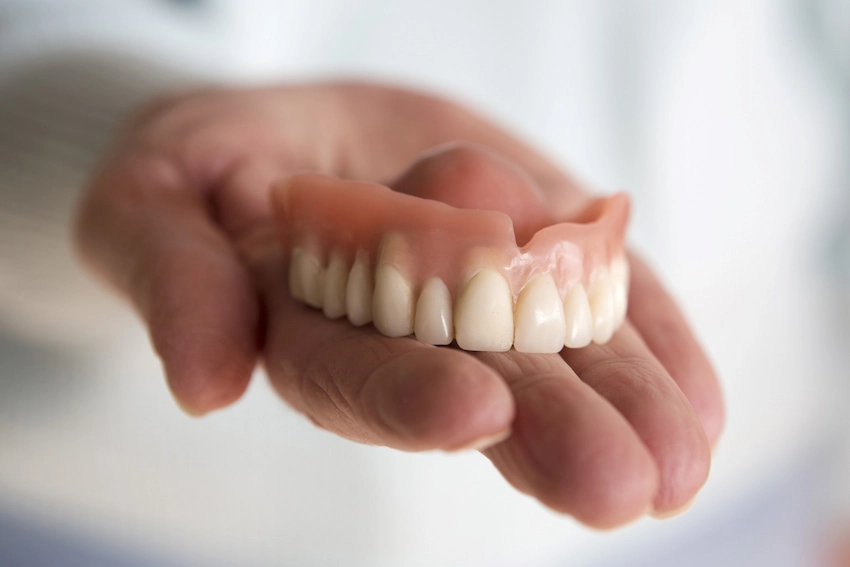
Proteeside stabiilsus: proteeside stabiilsuse valikud
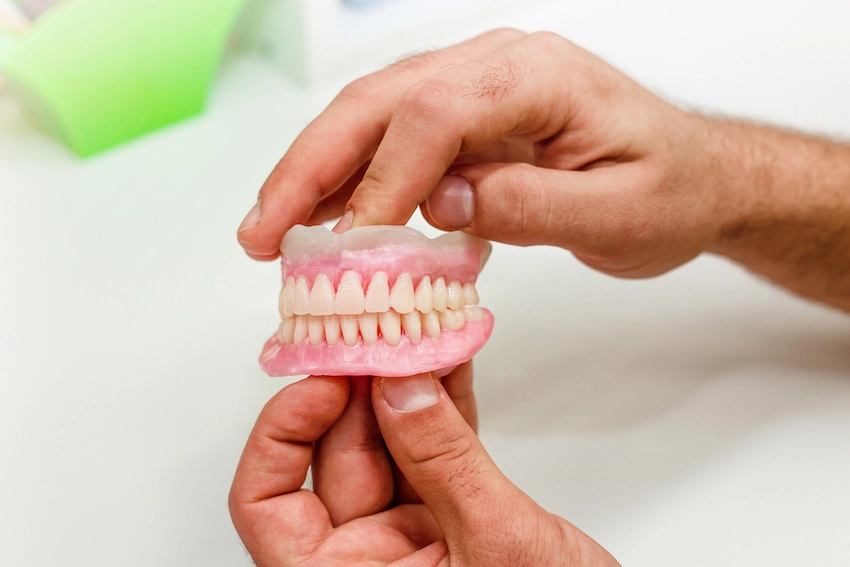
| Omadus | Pehme aluskiht | Kõva aluskiht | Proteesiliim |
| Omadused | Ajutine proteesi mugavuskiht, mis aitab ka igemekude paraneda. | Tagab proteesi pikaajalise sobivuse ja struktuurse stabiilsuse parema istuvuse jaoks. | See toimib ainult kõvade akrüülproteeside ajutise igapäevase kinnitusena. |
| Keskmine eluiga | Tavaliselt 3–6 kuud. | Üldiselt 1 kuni 2 aastat. | Ainult 12 kuni 24 tundi. |
| Koostoime | Hävitab pehme materjali, kui on kasutatud mis tahes tüüpi proteesiliimi. | Kasutamine on ohutu kõvade akrüülproteesidega. | Ei kohaldata. |
Korduma kippuvad küsimused
Akadeemilised viited
- Zarb, G. A., Hobkirk, J., Eckert, S., & Jacob, R. (2013). Prosthodontic Treatment for Edentulous Patients: Complete Dentures and Implant-Supported Prostheses (13th ed.). Mosby.
- Murata, H., Hong, G., Hamada, T., & McCabe, J. F. (2008). Dynamic viscoelastic properties of tissue conditioners and soft lining materials. Journal of Prosthetic Dentistry, 99(1), 74-81.
- Kulak-Ozkan, Y., Kazazoglu, E., & Arikan, A. (2003). Clinical evaluation of soft relining materials. European Journal of Prosthodontics and Restorative Dentistry, 11(4), 163-166.
- Chladek, G., Zmudzki, J., & Kasperski, J. (2014). Long-term soft denture lining materials. Materials, 7(8), 5816-5842.
- Garcia, L. T., Bohnenkamp, S. G., & Rudd, K. D. (2014). Kratochvil's Fundamentals of Removable Partial Dentures. Quintessence Publishing.
Korduma kippuvad küsimused
Why do my dentures feel loose even after a soft reline is done?
When the soft dental reline is placed, it is to care for the gums that are undergoing a shrinking process. The case is such that if you have had a tooth extraction lately, your jaws are undergoing significant morphing, and your jaw will gradually start becoming thinner and shorter. The soft material of the reline is used as a cushion while you have this transition period. Once you start going down without swelling, the gap becomes available again. To address the problem properly, do not simply hide it with your denture glue but take it into professional consideration by visiting your clinic again,n and we’ll do a suitable modification of your reline.
Is it okay to apply powder-type denture adhesive on a soft reline?
Don’t use any kind of adhesive. Though it may appear powder is easier on your teeth than it is, the truth is that it will still transform into a sticky glue when it becomes mixed with your saliva. That sticky glue can easily fill every little pore in a soft reline just as effectively as the super-dry glue will. That glue-like substance will be locked tight there, permanently changing your smooth surface.
How do I clean my soft denture reline without harming it?
You have to be really careful. First of all, brush it with an ultra-soft toothbrush and a denture foam specially formulated for this task. Avoid brushing with ordinary toothpaste, as it contains abrasive ingredients that could damage the silicone. Also, unless your dentist has clearly and specifically approved of the brand, refrain from soaking the denture in effervescent tablets overnight.
When should I consider replacing my soft dental liner with a hard one?
The normal period for changing from a soft denture reline material to the hard one is between 6 months and 6 months. A soft dental reline is only an intermediate solution to the problem. Once your gum tissue has recovered 100% in Turkey after a dental treatment, we can take a new impression to create for you a hard reline of the denture for a permanent fit.
But what if relines and denture paste aren’t working for me anymore?
After a certain period, it’s quite likely that the jawbone will get so weak that a traditional denture won’t even stick. At that stage, the best solution is to get implant-supported dentures. As we insert titanium rods into the jawbone, we can then secure the denture firmly in place, and you’d no longer need any form of denture adhesive.