


Denture adhesive may cause headaches if overused or if it contains too much zinc.
Lots of patients come to our office, rubbing at their temples. They tell us about constant jaw pain, terrible migraine headaches, and they’re getting all sorts of advice from doctors, changing what they eat, etc., drinking more water. Yet the pain remains.
In truth, the main trigger might not be the toothache but rather, literally, the tooth glue at the back of the toothpaste cupboard!
If you are one of the ones who use denture adhesive every day, then it could be that you are sacrificing your teeth, which have gotten loose with age, for a very painful headache experience. The pattern at Lema Dental Clinic in our clinical records is very clear. In most cases,s when we make dentures tighter so that they don’t slip, we see patients get rid of headaches completely.
Skip ahead to the reason a small amount of adhesive can disrupt your life greatly.
The Mechanical Trap: Jaw Strain and Tension
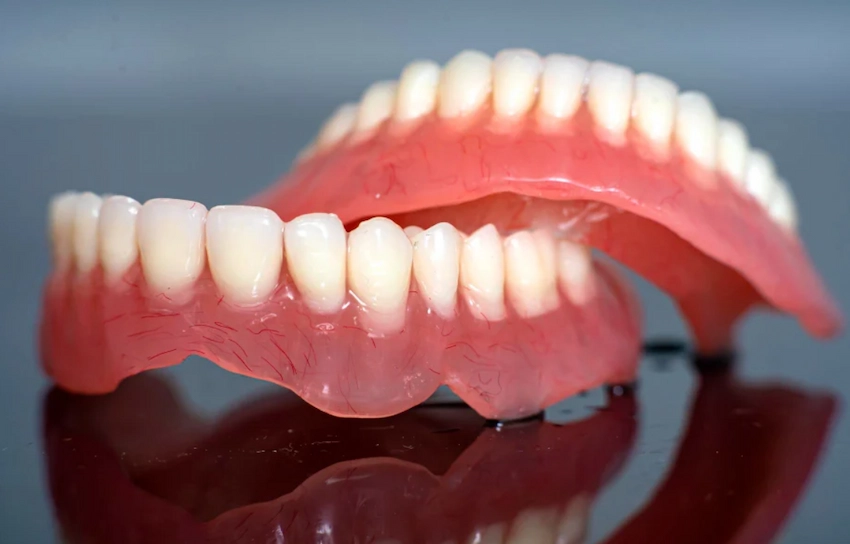
A jawbone could well be described as an underlying support system, or you can compare it to a base for a house. A firm foundation supports the house and enables it to stand without movement. After missing teeth, however, the jaw is affected in many ways and, therefore, the size of the jaw tends to decrease naturally,y and consequently, the fitting of the old denture becomes problematic.
Patients cover the space by laying a thick layer of powder/cream. However, that results in the biting system getting messed up and, in turn, causes the patients to experience a whole range of discomfort as follows:
- Abnormal Bite: With a heavy layer of glue, your top and bottom teeth are not matching properly.
- Continuous Movement: Even with the help of glue, the denture is still able to move during speech and chewing actions.
- Strained Muscles: Your jaw muscles are working at maximum performance, trying, for instance, to fix your teeth by making small adjustments every time.
Such constant movement can lead to jaw and temporomandibular disorder (TMD), and the jaw gets very tired due to the heavy strain. The tension in the muscles is transferred to the face through facial nerves. That tension can wrap really tight around the temples. Hence, a massive headache is the result by mid-afternoon at work.
Zinc Overload: The Hidden Chemical Danger
Many types of headaches have a muscular component. The burning question is whether there is a bigger problem than the one related to muscles? Definitely, there is a bigger danger that is a hidden risk in aging or heavily-used adhesive.
Some manufacturers are adding huge amounts of zinc to their product formula in denture pastes so as to have dentures stay all day. Although zinc is a mineral that is very much an essential one for the body, the fact remains that humans can only take in about three milligrams per day.
Prof. Dr. Coşkun Yıldız says very often: “Overdose zinc from denture glue/creams causes zinc poisoning. In fact, too high levels of zinc will rapidly rob your nervous system of copper. So, before you realize the severe nerve damage, patients usually complain of constant headaches, extreme fatigue, and nausea.”
The following signs and symptoms are typical of patients in the clinic who use zinc-containing dental adhesives:
- Patients arrive in a tired mood.
- The main thing these patients are looking for is pain relief from their daily suffering.
- They are unaware of the fact that their toothpaste is slowly causing serious health issues for their nerves.
Leaving Behind Glue in Turkey
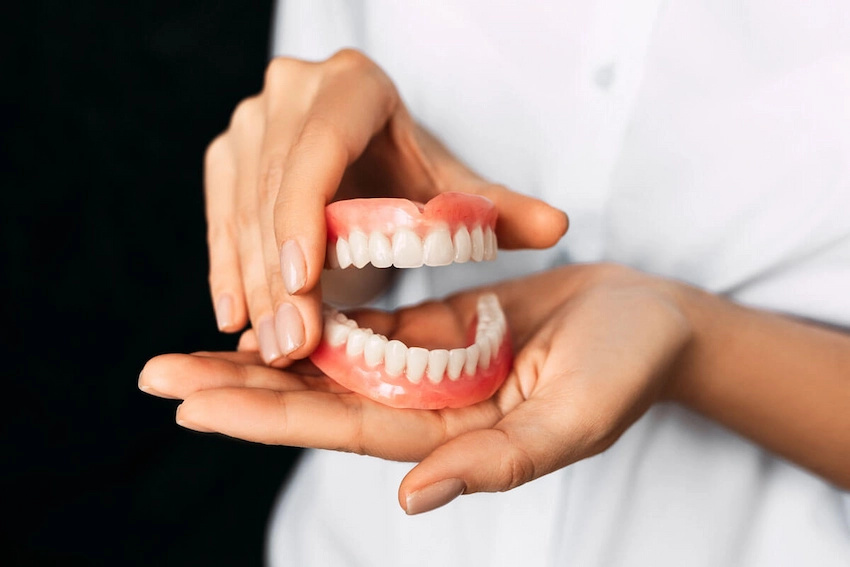
Why should people have to take the glue out again every morning just to have a meal? It’s a lifestyle that’s quite a draining one.
Dentist Polen Akkılıç and her team at Lema Dental Clinic in Turkey are working hard to dissuade their patients from relying on quick patch-up techniques. We concentrate on finding the most reliable, permanent dental treatments, so that we help a patient’s jaws and teeth remain stable and do not move. We will not be fighting a battle of slipping and moving of the plastic by using the glue; instead, we will implant your teeth on your jaw by the means of advanced techniques.
Choosing between Denture Glue and Teeth Implants
| Feature | Traditional Dentures + Gluing | Implant-Supported Solutions (All-on-4/6) |
| Bite Stability | Generally unstable. It relies mainly on physical vacuum or chemical glue. | Highly stable. Teeth are firmly attached to your jawbone via reliable dental implants. |
| Headache Risk | High probability. Daily muscle tension and massive zinc exposure drive this risk. | Very unlikely. Your jaw function is perfectly balanced, removing excessive muscle pressure. |
| Bone Health | Accelerates bone loss. Surface pressure points are the only way to achieve stability. | Actively maintains bone density. Chewing forces channel directly into the bone. |
| Routine Maintenance | Requires messy, time-consuming glue. You must store them safely overnight and clean them rigorously. | Effortless care. Brush and floss them exactly like natural teeth to maintain oral health. |
| Long-term Costs | High recurring costs. You constantly buy adhesive and pay for periodic denture realignments. | A single financial commitment. This investment provides lifelong clinical health and maximum stability. |
Frequently Asked Question
What if I only get the headaches resolved by having my denture adjusted?
For certain. If your regular headaches are actually caused by muscle tension in trying to cope with a sliding denture. When we make the bite stable, the tensions that come with it stop. The tense jaw muscles will relax, and as a consequence, the headaches that were caused will also go away gradually.
How can I know if the adhesive is causing me the symptoms of zinc toxicity?
Early signals of zinc toxicity are vague kinds of headaches, a weird taste in your mouth, and tiredness. If not taken care of, later symptoms of zinc toxicity are the sensation of numbness in hands and feet, which indicates that there is a need to go to medical facilities for immediate examination through blood tests and possibly a doctor’s intervention.
I am the guy who hardly ever uses the glue. So the danger is out?
If you’re careful enough to apply only a drop of it, like on the tip of the finger, the chances of poisoning through the dental glue are almost non-existent. When the usage amounts to thick layers applied many times throughout the day is the beginning of real potential danger.
Which is the best way of making one’s dental adhesive free?
With implant-supported dentures such as All-on-4 or All-on-6, we permanently attach your denture at a jawbone implant location. At our clinic,c we use titanium implants that are inserted in your jawbone,s serving as tooth roots, and the custom-made denture is fixed with these implants; it is a perfect match so that they don’t move and cannot be affected even by wearing and chewing activities. The result of the combination is totally different because there is neither glue nor movement of the teeth, nor a possibility of headaches.
Why should I come to Lema Dental in Turkey for treatment?
We can provide you with world-class surgical procedures at rates which you would normally expect if you had to visit the US or UK but with the advantage of much lower prices. Our team will take you through a process that is quite a big part of dental work, mapping out your precise bite. In short, our dental services will be a source not only of physical, but also of emotional and, perhaps even spiritual,l comfort when, en at the end of a session in our clinic, you’re going to leave with a relaxed jaw, a stable, beautiful smile, and with the pain gone and without a headache.
Academic References
- Nations, S. P., Boyer, P. J., Love, L. A., Burritt, M. F., Butz, J. A., Wolfe, G. I., … & Trivedi, J. R. (2008). Denture cream: an unusual source of excess zinc, leading to hypocupremia and neurologic disease. Neurology, 71(9), 639-643.
- Carlsson, G. E., & Omar, R. (2010). The future of complete dentures in oral rehabilitation. A critical review. Journal of Oral Rehabilitation, 37(2), 143-156.
- Hedegård, B., & Karlsson, S. (1990). The masticatory apparatus and the aging process. A clinical and electromyographic study of patients with complete dentures. Journal of Prosthetic Dentistry, 63(3), 272-277.
- Okesko, A., & Okeson, J. P. (2019). Management of Temporomandibular Disorders and Occlusion (8th ed.). Elsevier.
- Polido, M. T., & Misch, C. E. (2014). Bone maintenance and the role of implant-supported prostheses in preventing facial collapse. International Journal of Oral & Maxillofacial Implants, 29(1), 45-52.

