


No, use temporary dental cement instead of denture adhesive.
It happens at the worst possible time. You are having dinner with friends. Just then, you hear a sound. You check, and the temporary crown you are wearing has fallen off. You get anxious and rush to the nearest pharmacy to get hold of a pack of denture adhesive glue. All you want is to put the crown back in place. It appears to be an easy option. But wait, this quick action may cause damage to the underlying sensitive tooth.
The situation described above often occurs in dental clinics in Lema Dental Clinic. Sometimes, foreigners just looking for a fast dental-related solution go and look for denture paste. To them, it is a convenient shortcut. The truth is that this is a recipe for disaster, as in doing so, you are actually rotting your tooth before even going back to the dentist is your first.
Temporary Crown
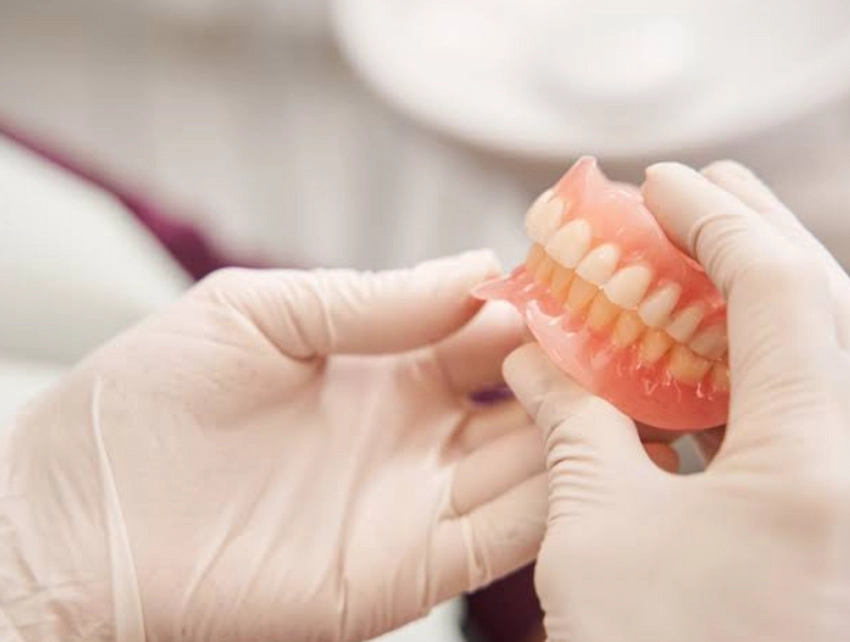
What makes the glue fail? Let us find out how your teeth are actually working.
A temporary crown can be likened to the head protection that you would wear on a construction site to guard your head from falling materials or flying particles. The tooth that has been cut away to accommodate the space needed to fit the crown is called an abutment. We have removed the tough outer layer of the tooth wh, which is the enamel. This action leaves thousands of tiny pores on the surface of the tooth completely exposed, and the tooth is extremely open for bacteria.
The purpose of denture adhesive is to provide a close, vacuum-sealed fit by sticking to flat and soft gum tissue. It is absolutely not intended for cementing the two surfaces of a hard acrylic crown and a bare dentin tooth (the two main components which are the crown and the base of a tooth below the gums) The use of the adhesive paste, a very thick and damp kind, is, in effect, to glue together one puzzle piece with the help of thick, wet clay that is, of course, a bit clumsy as glue.
Hidden Risks Behind the “Quick Fix”
This is what happens when you leave a thick toothpaste to dry under your crown.
The Professor Doctor Coşkun Yıldız regularly reminds us of the main consequence of an error. Reattachment of the Crown is definitely not the main issue, Professor says. What gets inside your tooth is the main reason for worry.
When the adhesive is too thick, the crown will not lie precisely flat wh, which allows for small cracks. A bacterial infestation occurs from this.
- Bacterial Infection: The mouth is a very damp place, and your saliva will transport bacteria and sugars. These secretions go directly into the gap you have made. The bacteria are able to multiply rapidly under the crown. The decay could be really extensive before you meet us for your final appointment.
- Bad Changes in Your Bite: The paste being so thick pushes the crown upwards. The difference, even by one millimeter, though the bite is still very light, is enough for you to start using that tooth first. You can bruise your tooth root, and this can lead to excruciating continuous pain.
- Damage to the Nerves Inside: The chemical agents in denture pastes bought at pharmacies will deeply irritate the raw living tooth nerve. A minor discomfort soon becomes a terrible tooth pain.
The Correct Thing You Ought to Do
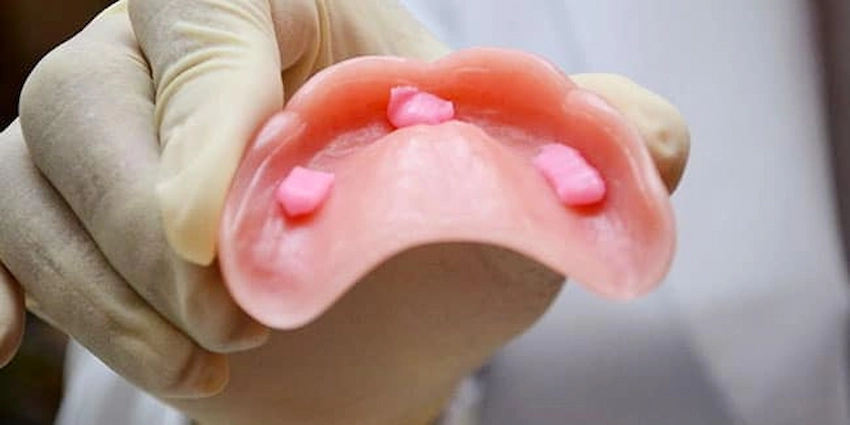
The big question is, how can you adequately secure your tooth until you get to see the dentist?
If Dentist Polen Akkılıç and her team contact her urgently, our advice remains the same: locate the lost crown, gently clean it, and, at all costs, do not use any denture adhesive products. Should the tooth give you pain and you decide to visit the pharmacy, you will find only a few types of dental cements for emergency use. You have to make sure that the one you choose is the right product for this sort of emergency.
When we carry out comparisons of these emergency solutions, we can easily point out the difference: We do the following in the Lema Dental Clinic:
| Method of Treatment | Stickiness | Condition of the Tooth | Solution |
| Use of Denture Glue | Very poor | Highest risk (only bacterial leak) | Not Recommended |
| Temporary Dental Cement from Pharmacy Only | Little more than a stick | Medium (the tooth should be absolutely clean for that, though) | Acceptable only for approximately 50 hours |
| Use of Glue / Superglue for Household Purposes | Very dangerous/permanent | Severe damage to the nerve resulting in loss of the tooth | Use in the case of emergency only |
| Clinical Bonding | Purely chemical | No threat | Only possible solution |
You should still come to see us even when you put the crown back at home. We have to professionally wash and reposition the crown on the tooth again. These restorative procedures are a routine for our very advanced dental facilities in Turkey, and we guarantee absolutely clean and healthy foundations of your tooth to prepare for a permanently attached crown.
Frequently Asked Questions
Am I going to be fine if I accidentally bite the denture cement?
Yes. Small amounts are not considered dangerous. The denture adhesives are the safest way to fix a tooth, and a few drops swallowed are no harm to anyone. Be aware t, though, that if the cement is being washed off your tooth, bacterial infection could occur, as your tooth is no longer protected.
For how long can I avoid taking my temporary crown?
Don’t let it remain out for longer than 48 hours. Otherwise, surrounding teeth will move wh, which can destroy the expensive permanent crown we will soon be putting on you.
I use superglue because I don’t want the crown to drop again. Can I do that?
Absolutely not. A home remedy glue is highly poisonous,s and a root canal or even loss of the tooth is an expected outcome when superglue is applied to the dental nerve.
Is dropping of a temporary crown the sign of failure of my final crown too?
No, in case of a temporary crown we use cement that has a weak holding power. This way we can simply remove the crown from the tooth after a while. On the contrary wh, when it comes to your permanent Zirconium or E-max crown, it is bonded permanently with a specialized and highly advanced resin light-cured system that really becomes part and parcel of the tooth.
What reasons am I supposed to give a patient to make him prefer Turkey for the procedures of putting a permanent crown on a tooth?
Lema Dental Clinic, located in Istanbul, is a facility offering a top-level combination of surgical skills and in-house design and manufacturing laboratories. Our work results in very well-designed, perfectly shaped, and well-seated permanent crowns made at very high speed. The high-quality results can also be delivered within a reasonably shorter time period compared to a regular clinic wh, which enables the patients to have both an attractive, healthy smile and also a memorable vacation on top of their dental treatment
Academic References
- Rosenstiel, S. F., Land, M. F., & Fujimoto, J. (2015). Contemporary Fixed Prosthodontics (5th ed.). Mosby.
- Shillingburg, H. T., Sather, D. A., Wilson, E. L., Toeppen, J. R., Dawson, D. V., & Campagni, W. V. (2012). Fundamentals of Fixed Prosthodontics (4th ed.). Quintessence Publishing.
- Donovan, T. E., & Cho, G. C. (1999). Materials for conservative restorations. Journal of the California Dental Association, 27(11), 856-861.
- Amin, B. M., & Arany, P. R. (2020). Dental materials and their impact on pulp biology. Journal of Dental Research, 99(13), 1435-1442.
- Garg, N., & Garg, A. (2015). Textbook of Operative Dentistry (3rd ed.). Jaypee Brothers Medical Publishers.

