


Possible, but damages the veneer.
It seems like the trends in cosmetic dentistry are changing so rapidly. One minute, everyone wants their teeth to be perfectly white and the next, people are into “tooth bling” – little diamonds or crystals that are glued to the enamel and they sparkle when the light hits them. This is definitely a trend that has gotten a lot of attention from the rap music scene and fashion world.
But there is a very special scenario that comes to Lema Dental Clinic in Turkey when a patient walks in and tells us that they want to have a movie star smile (porcelain veneers) and tooth gem sparkle at the same time.
This is not just a matter of “Is it possible?”—there’s no doubt that it is. The true question that Professor Doctor Coşkun Yıldız asks the patients is “Why would you want to do that?” This is because the biology of a natural tooth and the chemistry of a porcelain veneer are very different, so if you treat them the same way, it is like setting yourself up for trouble and an expensive lesson in the end.
Enamel vs. Glass: What’s the Difference in Bonding?
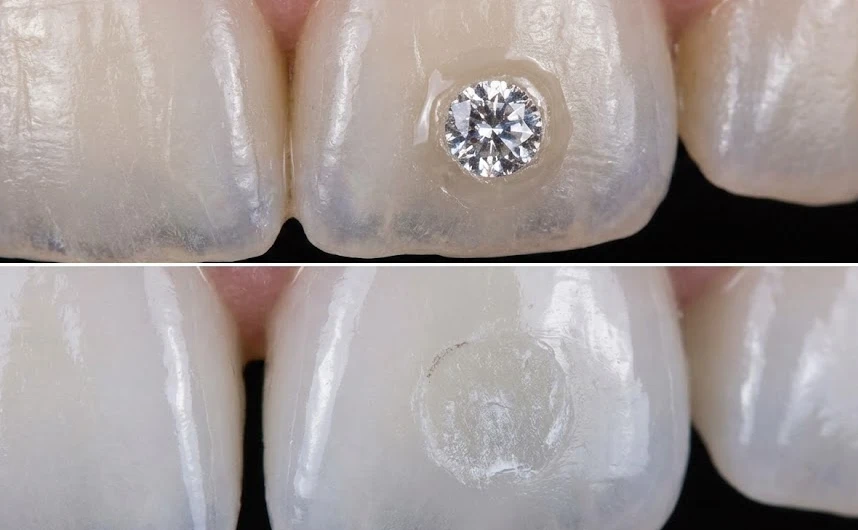
So to get an answer, you must know what adhesion is. What we do first is we roughen the surface of the enamel by a mild acid to etch tiny holes in it to which the resin can flow, and once it dries, it locks in. Gem on the tooth will only be removed when the tooth has been polished to the original, smooth surface. It’s reversible.
However, with porcelain veneers (most certainly E-max) and Zirconium, it is so different. They are basically ceramics with a glaze.
Dentist Polen Akkılıç and her staff really do a great job in educating their patients by using this example: Attaching a gem to a natural tooth is like putting tape on paper—you get a good grip. Attaching a gem to a veneer is like putting tape on a mirror covered with grease. The surface is so smooth and non-porous that it is practically impossible for a dental adhesive to find a grip.
Paying the Price of Adhesion: Destroying a Masterpiece
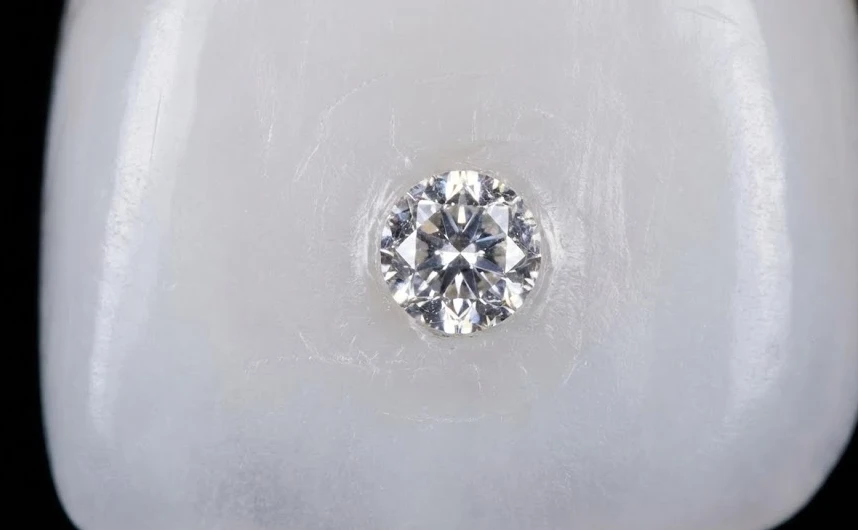
What is needed for a diamond to stay on a veneer is more than just a standard glue application. Altering the surface of the veneer would be necessary.
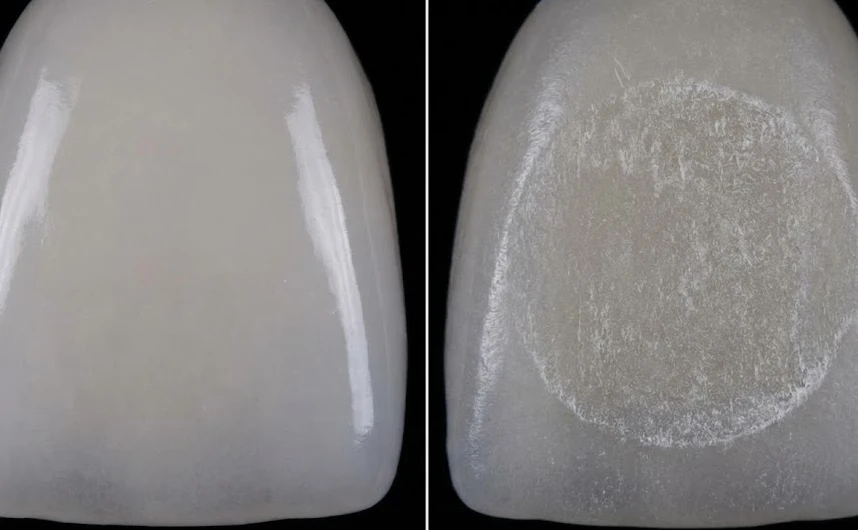
There have been some cases in our Lema Dental Clinic’s practice where the bond was achieved by the dentists roughening the porcelain with a dental bur or by etching with hydrofluoric acid. However, doing so actually removes the shiny, highly protective glaze layer.
What actually happening is that we are leaving a permanent “scar” on the surface of the veneer. In contrast to natural enamel, once the porcelain surface is disturbed, it is not possible for it to regain its original shiny glaze in the same way that the factory-baked glaze can be re-polished. If the gem falls off (which is more common with veneers than with natural teeth), or if you just decide that you don’t want to follow this trend anymore, an expensive restoration with a dull and rough spot is what you will be facing. This rough spot will also be very prone to staining, so it will look like your smile is dirty with a dark patch right in the middle of it, even though it is white all over.
Comparing the Risks: Natural Tooth vs. Veneer
Before you make a decision, we lay out the facts. Here is how the procedure differs depending on the surface we are working with:
| Feature | Natural Tooth Enamel | Porcelain Veneer / Zirconium |
| Surface Preparation | Mild Acid Etch (Phosphoric Acid) | Strong Acid (Hydrofluoric) or Drilling |
| Reversibility | 100% Reversible (Polish off) | Irreversible (Glaze is ruined) |
| Retention (Grip) | High (Locks into pores) | Low to Moderate (Slippery surface) |
| Long-Term Risk | Minimal | Surface roughness, staining, micro-cracks |
| Recommendation | Safe | Not Recommended |
The Lema Protocol: How We Do It Safely
Does this mean we simply say “no” to patients in Turkey who want this look? Not necessarily. We just approach it with strategic planning.
If a patient is determined to combine veneers and gems, Dentist Polen Akkılıç suggests two safer pathways:
- The “Pre-Molar” Compromise: We often recommend placing the gem on a tooth that is not veneered. For example, if your veneers cover the front 8 or 10 teeth, placing the gem on the 4th or 5th tooth (which might be natural) allows you to have the style without damaging the restoration.
- Custom Embedding: If you are in the design phase of your Hollywood Smile, we can instruct our ceramists to embed the gem into the porcelain structure during the firing process. This makes the gem flush with the tooth surface and permanent. However, this is a “forever” choice—you cannot take it off without replacing the entire veneer.
A Warning on “DIY” Kits
We see a troubling rise in patients trying to use at-home kits or superglue to attach gems to their veneers. Professor Doctor Coşkun Yıldız issues a strict warning: Never use cyanoacrylate (Superglue) in your mouth. Not only is it toxic, but as it cures, it releases heat that can actually crack the thin ceramic of a veneer, turning a small fashion statement into a dental emergency requiring a full replacement.
FAQ: Direct Insights from Our Doctors
It won’t leave a hole unless the dentist drilled one to set the stone (which we advise against). However, it will leave a rough, etched patch where the protective glaze was removed. This patch will feel like sandpaper to your tongue and will stain quickly.
Yes, but you must be gentle. Electric toothbrushes can sometimes create enough vibration to dislodge a gem bonded to porcelain, as the bond is weaker than on natural teeth. Also, the area around the gem is a ‘plaque trap,’ so extra hygiene is non-negotiable.
On a natural tooth, a gem can last 6 months to a year. On a veneer, because of the glass-like surface, the lifespan is unpredictable. It might last months, or it might pop off in a few days while eating something crunchy.
We can, but color-matching a single new veneer to an older set is notoriously difficult. The new veneer will look brand new, while the others may have settled in color slightly. It is an expensive way to reverse a trend.
Currently, dental adhesives rely on mechanical retention (roughness). Without roughening the porcelain, the gem will likely slide off within hours. There is no ‘magic glue’ that holds strongly to glazed ceramic without surface preparation.
- Ozcan, M., & Bernasconi, M. (2015). Adhesion to zirconia used for dental restorations: A systematic review and meta-analysis. Journal of Adhesive Dentistry, 17(1), 7-26.
- Blatz, M. B., Sadan, A., & Kern, M. (2003). Resin-ceramic bonding: A review of the literature. Journal of Prosthetic Dentistry, 89(3), 268-274.
- Matinlinna, J. P., et al. (2018). Surface conditioning for bonding to zirconia: A review. Journal of Adhesion Science and Technology, 32, 1-19.
- Peumans, M., et al. (2000). Porcelain veneers: A review of the literature. Journal of Dentistry, 28(3), 163-177.
- Alex, G. (2008). Universal adhesives: The next evolution in adhesive dentistry? Compendium of Continuing Education in Dentistry, 29(1), 20-33.

