


Yes, diabetics can get dental implants if their diabetes is well controlled.
Living with diabetes means adhering to numerous restrictions and being very careful about all aspects of your health—from the shoes you wear to the way you cut your nails. So naturally, when you think about restoring your smile, the question of whether your body will accept a titanium screw is a big concern.
The simple answer is yes. But at the same time let’s explain the details.
We at Lema Dental Clinic, Turkey, have the clinical experience of treating hundreds of diabetic patients annually. The story of diabetes disqualifying you from implants is just a myth. On the other hand, the success of your new smile will be mainly if we succeed in conditioning the “soil” for the “seed” to be planted.
The “Sugar” Barrier: What Is the Biological Challenge?
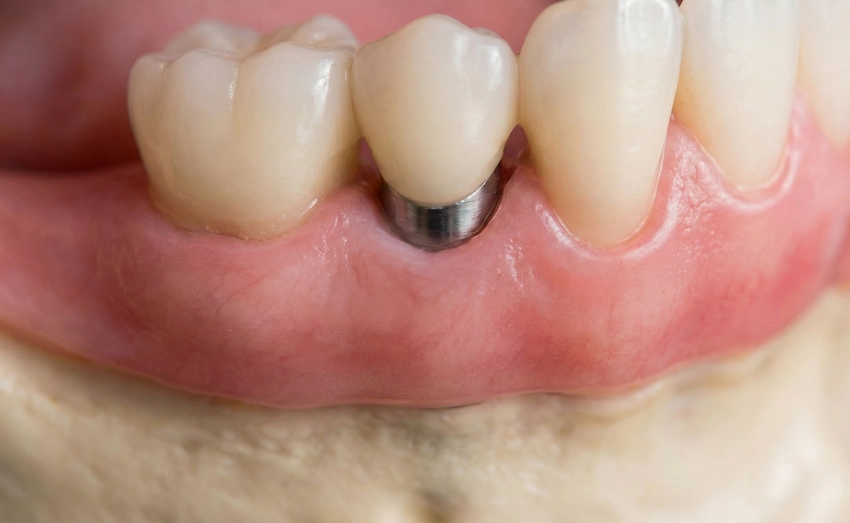
Before the implant surgery starts, you need to know how osseointegration works – that is, a medical term for implants fusing with the bone.
The jawbone is like a concrete slab for a house to be built on. The house (the crown) can only stand if the concrete (the bone) properly encloses the rebar (the implant). Unfortunately, in this analogy, high blood sugar amounts to adding extra water to the concrete mix such that the bone will not be able to tightly and securely surround the titanium post.
Since glucose levels are uncontrolled, this hampers blood circulation and slows down the supply of oxygen and nutrients to the area where a surgical procedure has been carried out. This is not to say that the house will cave in at once, but it definitely means that we have to be more careful architects.
The Lema Protocol: How We Deal with Diabetes in Turkey
The difference comes down to the level of expertise. Professor Doctor Coşkun Yıldız at our clinic says that the most crucial tool in implant dentistry is not the drill but the blood test.
We don’t only consider your glucose readings from the daily finger stick. We also review your glycated hemoglobin (HbA1c). This number tells us the story of your blood sugar over the last three months.
- By and large, an HbA1c under 7% is usually good news. Your risk profile will be almost as good as a non-diabetic’s.
- Second: If your HbA1c is between 7% and 9%, you should expect an individual plan to be put together for you, which will possibly include antibiotics and more extended healing periods, too.
- Third, with an HbA1c above 9% or 10%, Doctor Polen Akkılıç and her team might be forced to halt the procedure. It is not a rejection, but rather a postponement so that you can get your health back on track and thus not have a failed goods situation when you invest in yourself.
Note from the Clinic: We consider the whole patient, rather than only the mouth. If your levels are elevated, then we are going to work together with your endocrinologist. We would prefer you to stabilize within three months this way rather than operate on a body that would not be able to support the trauma of the procedure.
Controlled vs. Uncontrolled: Risks at a Glance
Diabetes as a whole, is too broad a label. The danger is in how well the condition is managed. Here’s our approach to explaining to our patients in Istanbul the concept:
| Feature | Controlled Diabetes (HbA1c < 7%) | Uncontrolled Diabetes (HbA1c > 8–9%) |
| Implant Success Rate | 95%–98%, comparable to non-diabetic patients | Significantly lower; failure risk is high |
| Healing Speed | Normal, around 3–4 months | Delayed, typically 5–8 months |
| Infection Risk | Standard | High infections require aggressive management |
| Gum Health | Generally manageable with proper care | Highly susceptible to periodontitis |
| Bone Grafting | Feasible with standard protocols | High likelihood of graft failure |
The Procedure: What to Expect in the Chair

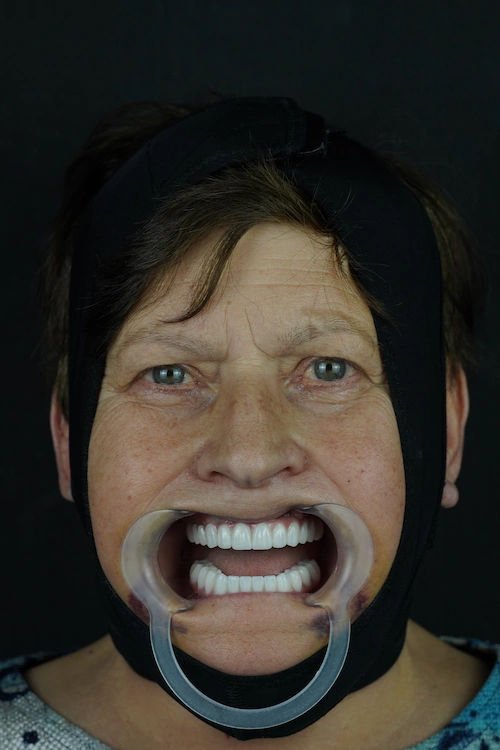
Once you fly off to Turkey for your treatment, we do not do everything at a brisk pace. The very first thing Dentist Polen Akkılıç will work on is looking at your gum health. It is a known fact that diabetics are more susceptible to periodontal disease which is basically the foundation we are referring to as “termite damaged”.
As soon as the gums are cleaned and your HbA1c is verified, the surgery is carried out without breach of strict sterile protocols. Since people with diabetes are less efficient at fighting infection, we may keep you on a slightly different medication regimen after surgery.
- Pre–operative: Bone density as well as blood sugar stability evaluation.
- Surgery: Using a low-invasive technique that limits tissue damage.
- Post-operative: We keep an eye on your progress. Prior to you flying back home, we might see you more frequently just to confirm that the healing “concrete” is setting perfectly.
FAQ: The Doctor Answers Your Questions
HbA1c <7% is the ideal target for us. You don’t have to panic if you are around 7.5%. Just send us your latest blood test before you book your trip. Professor Doctor Coşkun Yıldız examines these cases on an individual basis. We may be able to proceed with some extra precautions at times.
It may take a bit longer. A standard patient might be ready for a permanent crown in 3 to 4 months, but we could wait 5 or 6 months for you. We always prefer to be cautious. The primary factor that leads to implant failure is rushing the process.
My concern is that blood sugar control is biologically the same for both types. However, since patients with Type 1 diabetes usually experience the condition for a longer time, bone density may be one of their issues. Before placing the implant, we will perform a 3D Tomography scan at Lema Dental Clinic to make sure that you have enough volume of bone to hold the screw.
Due to diabetes, our handling of any potential infections is very aggressive. Should the side effects of swelling or redness that you experience not go away, immediately contact us. If it comes to the worst, we take out the implant and let the area heal prior to trying again when levels are stabilized; however, our protocols are aimed at making this the least likely to happen.
Most definitely. All-on-4 could indeed be the brilliant solution in that it prevents the need for complicated bone grafting which is a higher risk for diabetics. If your sugar is under control, you are a candidate for full mouth restoration.
- Naujokat, H., Kunzendorf, B., & Wiltfang, J. (2016). Dental implants and diabetes mellitus—a systematic review. International Journal of Implant Dentistry, 2(1), 5.
- Oates, T. W., Huynh-Ba, G., Vargas, A., Alexander, P., & Feine, J. (2013). A critical review of diabetes, glycemic control, and dental implant therapy. Clinical Oral Implants Research, 24(2), 117-127.
- Chrcanovic, B. R., Albrektsson, T., & Wennerberg, A. (2014). Diabetes and oral implant failure: a systematic review. Journal of Dental Research, 93(9), 859-867.
- Michaeli, E., Weinberg, I., Nahlieli, O. (2009). Dental implants in the diabetic patient: systemic and rehabilitation considerations. Quintessence International, 40(8), 639-645.
- Annibali, S., Pranno, N., Cristalli, M. P., La Monaca, G., & Polimeni, A. (2016). Survival analysis of implant in patients with diabetes mellitus: A systematic review. Implant Dentistry, 25(5), 663-674.

