


Diabetic patients can get implants if blood sugar is controlled.
A patient is sitting and gripping the chair’s arms tightly. Then, they collectively utter our most frequently heard question of the day. “Doctor, I have diabetes. Is it still possible for me to get dental implants?”
Your concerns are completely understandable. It is such a pity when an illness not only takes our health but also our smile, right?Fortunately, having diabetes is definitely not a reason that can prevent you from getting dental implants. Having said that, the healing process will be different.
Here is what happens in a case where we see your diabetes is under control: you achieve the same excellent results as anyone else does through dental implants.
The Science of Healing: Soil and Seeds
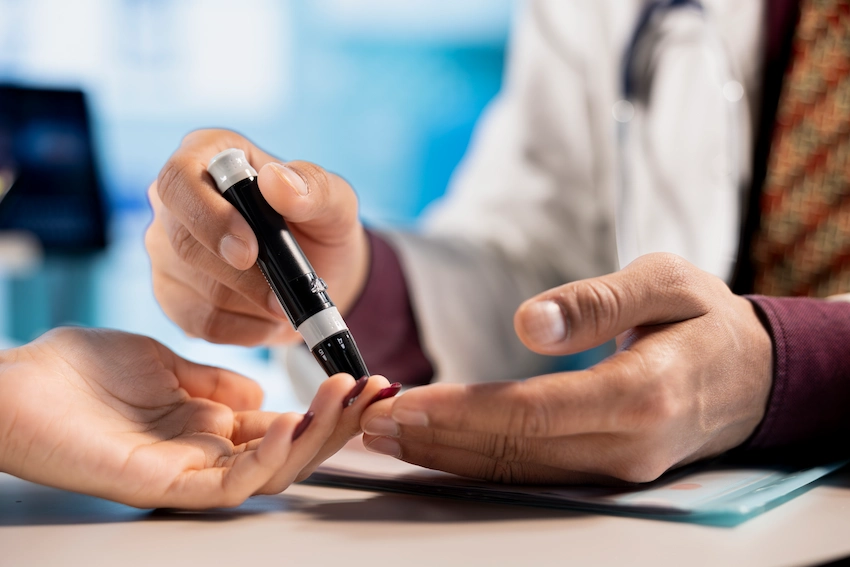
Why does diabetes even matter when we are talking about implants? The answer lies in understanding the mechanism of healing.
One can consider your jawbone as a piece of soil that we till. The titanium implant is the seed. A seed will only grow and bind within the mouth if the “soil” or the bone is suitable. In technical terms, doctors give this process the name “bone fusion” or “osseointegration.”
The very localised blood flow delivers nutrients and osteoprogenitor cells to the surgically operated areas. The situation of a high level of glucose in the blood may be compared to a garden deprived of water, despite the water pipe being clogged and the water being unable to reach the garden cells. WBCs become inactive. The jaws wrapping the implant will hardly get a firm hold. At the same time, the risk of infection will increase.
Still, the key point is: this disadvantage only appears in cases when a person does not take care of his or her diabetes.
The Conditions for Success
We at Lema Dental Clinic in Turkey solve the problems of patients with complex health conditions every single day. Professor Doctor Coşkun Yıldız frequently says, “Diabetes is something we can manage, not a boundary that is impossible to cross. It is just a matter of adjusting our steps to the patient’s level.”
Besides Dentist Polen Akkılıç and the rest of her team, we have been able to give new smiles to several diabetic patients with our help. Before getting started, we verify the following three important points:
- The Golden Number (HbA1c): This is basically the average of your blood sugar level in the past three months. Ideally, you want to have this number below 7%. Between 7% and 8%, we are still fine, but we take extra precautions. We use special drugs and surgical procedures. Over 8.5%? Then we should wait. We first collaborate with your local doctor to get it down.
- A Very Clean Mouth: People with diabetes are susceptible to developing periodontal disease. Your oral hygiene has to be so good that there is no trace of plaque. Putting a perfectly clean implant into infected gums is out of the question for us.
- Taking Our Time: Frequently, the wound healing process in diabetic patients is slower. In fact, we may delay up to four or six months in making the final teeth. Three months is the usual time. Having patience here is a medical necessity.
The Reality in Numbers

In what way does your blood sugar level influence your course of treatment? Check out the chart below to learn what is in store for you. This information has been compiled from both scientific research and our everyday experience here in Turkey.
| Blood Sugar (HbA1c) | Implant Success Rate | Bone Healing Time | Infection Risk |
| Good (< 7%) | 95% – 98% | 3 to 4 months | Low |
| Fair (7% – 8%) | 88% – 92% | 4 to 6 months | Medium |
| Poor (> 8.5%) | Below 80% | Unpredictable | High (Wait to treat) |
Frequently Asked Questions
Not at all. Having diabetes does not influence the effectiveness of the local anesthesia injections. We provide a very strong local numbing agent so that you will only sense some pressure but no pain at all. Ensuring your comfort is our primary concern.
Initially, make two separate plans: a 5 to 7-day stay for implant placement and then a home healing period. Due to your having diabetes, the healing phase will be 4 to 5 months. You will be coming back to the final fitting at that time.
Yes. Your body will benefit from a little extra assistance. First, we will prescribe a course of specialty antibiotics that you will start before and continue for one week after surgery. Then, besides that, we also have a very strong mouthwash to keep your gums in good condition.
We measure your blood sugar right here in the clinic before you get seated. If, due to stress of traveling and/or food, your blood sugar spikes that morning, the operation will be postponed to the next day. Your safety is always paramount.
Yes, etc., However, the risk is negligible so long as you continue doing your blood sugar checks regularly and also brushing your teeth. Implants are manufacturers’ creations of great strength. But the bone to which they get attached is living and can be influenced by several factors. So, maintain good control of the sugar level, brush twice daily, and your implants can last a very long time, even a lifetime.
- Javed, F., & Romanos, G. E. (2009). Impact of diabetes mellitus and glycemic control on the osseointegration of dental implants: a systematic literature review. Journal of Periodontology, 80(11), 1655-1668.
- Naujokat, H., Kunzendorf, B., & Wiltfang, J. (2016). Dental implants and diabetes mellitus—a systematic review. International Journal of Implant Dentistry, 2(1), 5.
- Oates, T. W., Huynh-Ba, G., Vargas, A., Alexander, P., & Feine, J. (2013). A critical review of diabetes, glycemic control, and dental implant therapy. Clinical Oral Implants Research, 24(2), 117-127.
- Retzepi, M., & Donos, N. (2010). The effect of diabetes mellitus on osseous healing. Clinical Oral Implants Research, 21(7), 673-681.
- Schwartz-Arad, D., Samet, N., & Samet, N. (2004). Single tooth replacement of missing molars: A retrospective study of 78 implants. Journal of Periodontology, 75(6), 826-831.

