


Keep 20 teeth by age 80.
In business, the “80/20 rule” (the Pareto Principle) generally indicates that 80% of your results are generated by 20% of your actions. However, when Professor Doctor Coşkun Yıldız talks about the 80/20 rule to patients of Lema Dental Clinic, he isn’t referring to productivity but rather to something more essential – your lifespan.
From a clinical perspective, the 80/20 rule is associated with the 8020 Campaign, which is an international health benchmark that was first established in Japan. The objective is straightforward yet profound in medical terms: to retain at least 20 functional teeth up to the age of 80.
What’s so special about the number 20? And why 80?
The fact is that losing teeth is not just a matter of appearance; it is a serious health problem. At our clinic in Turkey, we are very familiar with the devastating effects of dropping below this “20-tooth level,” as the patient’s entire system, from digestion to the face, is affected.
Why 20 Teeth?
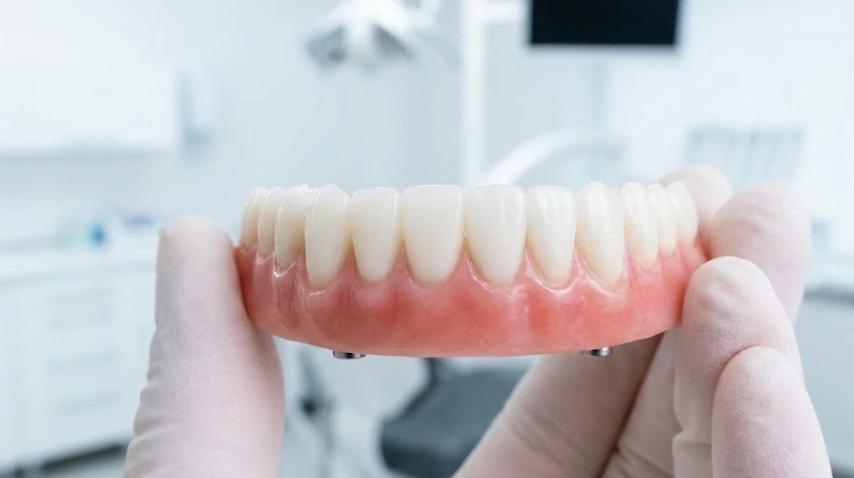
Excluding the wisdom teeth, you have 32 teeth in total. You may think that a few tooth losses won’t hurt. But let’s delve into the chewing capabilities.
Scientific study has shown that 20 teeth is the maximum number of teeth you can lose and still function normally. If you have 20 or more teeth, you can chew almost any type of food – crunchy apples, tough meats, fibrous vegetables, etc. You can eat a well-balanced diet without anyone’s help.
When you go below 20 teeth, your ability to chew (the strength of your mouth) will deteriorate drastically. You will first reject hard proteins and fresh fibers and then you will change into preferring soft, processed carbohydrates. This change in diet is usually the reason for malnutrition, frailty, and a weakened immune system in elderly people.
Dentist Polen Akkılıç often makes a point to her younger patients: “You are not just saving a tooth for a smile today; you are preserving your power to eat a steak at your grandson’s wedding.”
The Secondary 80/20: Prevention v. Intervention
The 80/20 rule is also associated with responsibility at Lema Dental Clinic.
The truth is that many of us think that visiting the dentist twice a year is enough to maintain one’s health. However, the reality is that we only see you for about 2 hours a year. The other 8,764 hours are yours. If your “80%” (daily brushing, flossing, eating wisely) is a failure, then our “20%” (cleanings, fillings, surgeries) won’t be able to save you. It’s a partnership, not a service we just give you.
What if the 80/20 Goal Is Not Met?
The sad truth is, most people don’t get to age 80 with 20 teeth. This is where we are fortunate to have modern implantology, which can literally “turn back the clock”.
It does not mean that you have to live on soups for the rest of your life if you have had too many tooth losses. Treatments such as All-on-4 or All-on-6 dental implants, which we are specialists in here in Turkey, can restore you perfectly to the 80/20 standard immediately. When we place a fixed zirconia bridge, we return to you the functionality of a full set of natural teeth, thus fooling your body into believing that you never lost them.

The Effect of the Number of Teeth on Lifestyle
One of the major reasons why Professor Doctor Coşkun Yıldız spends so much effort in saving natural teeth (or if this is not possible, then with implants) is the huge difference in quality of life brought about by tooth count.
| Feature | 20+ Teeth (The 80/20 Goal) | Less than 20 Teeth (Without Implants) |
| Chewing Efficiency | 90–100% | Drops to 30–50% |
| Dietary Choices | Unrestricted (Meats, Nuts, Raw Veggies) | Limited (Soft foods, purees, carbs) |
| Cognitive Health | Lower risk of Dementia | Higher risk (Due to reduced blood flow to brain while chewing) |
| Jawbone Density | Maintained through pressure | Atrophies (Shrinks) rapidly |
| Facial Structure | Youthful, supported cheeks | “Collapsed” look, premature aging |
Top Queries on Dental Longevity & The 8020 Standard
Absolutely. The 80/20 rule is about function, not just biology. A dental implant acts as a functional tooth root. If you arrive at age 80 with 4 natural teeth and 16 implant-supported teeth, you have successfully met the standard. You can chew, speak, and eat just as well as someone with natural teeth.
No. Wisdom teeth are often excluded from the essential “functional” count. The focus is on the premolars and molars that do the heavy lifting of grinding food. Removing impacted wisdom teeth does not compromise your ability to hit the 80/20 goal.
Genetics plays a role (some people have weaker enamel), but Dt. Polen Akkılıç emphasizes that behavior is the dominant factor. Smoking, high-sugar diets, and neglecting gum disease are choices, not genes. You can “out-behave” bad genetics with excellent hygiene and professional care in Turkey.
Periodontal disease (gum disease). Most adults lose teeth not because of cavities, but because the bone holding the teeth dissolves due to gum infection. Keeping your gums pink and firm is the only way to carry your teeth to the finish line.
It is never too late. Even if you are 60 and have only 10 teeth left, restoring your mouth with implants or bridges can bring you back to functional health. It reverses the malnutrition risk and improves cognitive function immediately
- Watanabe, Y., et al. (2018). The 8020 Campaign and the relationship between masticatory function and quality of life in elderly people. Journal of Prosthodontic Research, 62(4), 450-456.
- Morita, I., et al. (2019). The relationship between the number of teeth and mortality: The 8020 Promotion Foundation Study. Community Dentistry and Oral Epidemiology, 47(3), 225-231.
- American Dental Association. (2023). Tooth Loss in Seniors: Systemic Implications. ADA Science Institute.
- Glick, M., et al. (2020). A new definition for oral health: Implications for dental practice and policy. Journal of the American Dental Association, 147(12), 915-917.
- Tanaka, T., & Takahashi, K. (2021). Chewing ability and cognitive function in the elderly: A review of the 8020 movement data. Geriatrics & Gerontology International, 21(5), 345-352.

