


Yes, teeth can shift after braces without consistent retainer use.
The Relapse Reality: Will Your Teeth Move After Braces?
You’ve just crossed the marathon finish line. Your orthodontic braces have been taken off, the aligners discarded, and you are now basking in the beauty of your smile that you worked so hard for. It’s perfect. But, there is a little suspicion that starts to come in: Are my teeth going to look like this tomorrow?
The fact is, teeth can be very stubborn. They keep a “memory” of their old positions and if proper preventative measures are not taken, they will eventually attempt to return. In dental terminology, we refer to this phenomenon as relapse after orthodontic treatment and it is probably the most irritating part of aftercare.
At Lema Dental Clinic, based in Turkey, we think about more than just the mechanics of changing the position of teeth – we consider the locking in of teeth as well. It doesn’t matter whether you are a patient of Dentist Polen Akkılıç and her team or only have a consultation with Professor Doctor Coşkun Yıldız. We believe that a straight smile is a kind of investment, and like any other investment, it needs to be protected.
We will discuss the reasons for this phenomenon and, what is more, we will tell you how to stop it.
The Science of Relapse: Why Your Teeth Are Inclined to Move Back
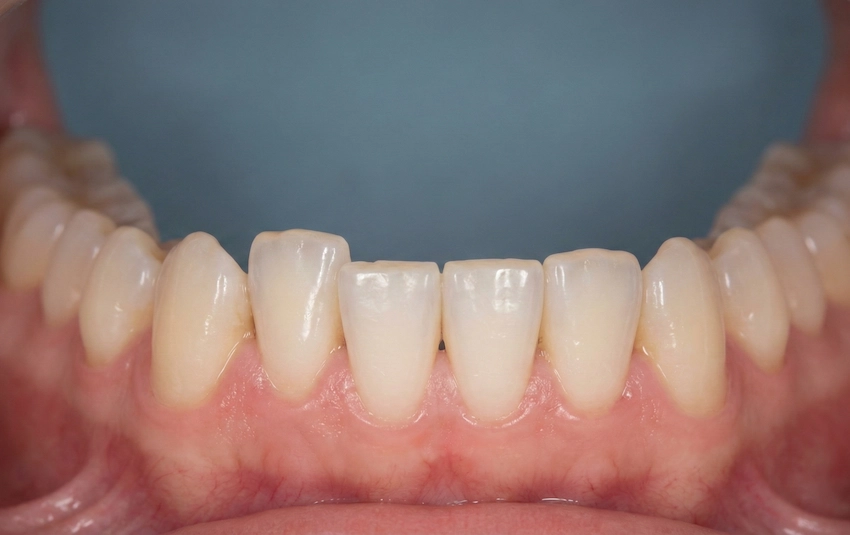
Imagine your teeth as not being stones embedded in concrete but as posts in wet sand. When braces or aligners are used to move them, it is not only the bone that is pushed but the periodontal ligaments are also stretched – these are the tiny, elastic fibers that hold the tooth to the bone of the jaw.
The problem here is that these ligaments are similar to rubber bands. When they are stretched to move a tooth into a new position, tension accumulates. That tension doesn’t just vanish when the braces are taken off. It is mainly these fibers that want to return to their original form and they pull the tooth with them.
Bone remodeling around a tooth’s new position is a process that takes time. The new bone must first be hardened before the fibers can relax completely. During the bone’s healing process which is similar to waiting for concrete to harden around fence posts, your teeth are still in their vulnerable state.
The Typical Causes of Orthodontic Shift
Not only do your gums have an elastic memory, but there are even more reasons why your teeth will move.
1. The Wisdom Tooth Factor
Somewhat surprisingly, we often have patients who find their wisdom teeth deciding to break through the gum line several years after orthodontic treatment. It’s like if a fourth person tries to sit on a three-seat sofa; everyone else will have to scoot a bit to make space. This situation can become a real nightmare as the front teeth get significantly crowded.
2. Bruxism (Teeth Grinding)
Nighttime teeth grinding is not just about the loss of enamel; it is also about the production of lateral forces that can gradually cause teeth to lose their alignment. Professor Doctor Coşkun Yıldız tells the patients that all efforts to realign teeth would be pointless unless the muscular forces of the jaw were also controlled.
3. The Aging Process
This one is rather unpleasant to hear. Like the rest of our body, the jaws also change as we grow older. Soon, the skin wrinkles and the hair turns gray; the jaws also narrow slightly. Normally, the lower front teeth are pushed closer together due to this natural physiological drift.
The Countermeasure: Retention Protocols at Lema Dental Clinic
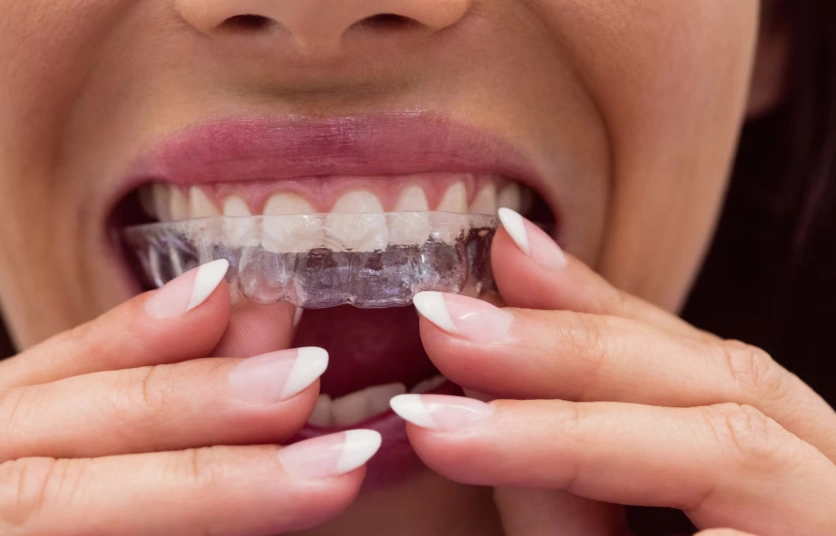
The retention phase starts as soon as you finish your active treatment. You have to understand that this is not an option; it is essential.
In our Turkey clinic, Dentist Polen Akkılıç tells that retention is not a temporary job but a lifelong one. Depending on how difficult the initial problem was, we usually apply a dual-layer defense system.
Types of Retainers: A Quick Comparison
Kindly note that not all retainers have exactly the same function. We illustrate this to our patients as follows:
| Retainer Type | Visibility | Durability | Best Use Case |
| Fixed (Lingual) Wire | Invisible (bonded behind teeth) | High (can last years) | Preventing the “social six” (front teeth) from shifting |
| Essix (Clear) | Nearly invisible | Moderate (needs replacement) | Full arch protection; ideal for patients wanting minimal visibility |
| Hawley (Wire & Acrylic) | Visible (metal wire) | Very high (indestructible) | Complex bite adjustments; allows teeth to settle naturally |
| Vivera | Nearly invisible | High | Heavy grinders need a stronger clear material |
Frequently Asked Questions
In an ideal world, they shouldn’t, but the reality is that, yes, they do. When you complete your orthodontic treatment, your teeth are still very mobile. A brief period without wearing your retainer is enough for some very minor changes to happen on a microscopic level.
We don’t recommend it. Previously, people used to believe retainers were only needed temporarily. But nowadays, clinical evidence proves that natural movements of teeth continue throughout one’s lifetime. The surest way of keeping your smile in great condition is by making nighttime retainer wear a lifetime habit. Think of it as giving anti-aging cream to your teeth.
Yeah, that happens to most people but at times it really can get on your nerves. Basically, a wire only gives support to the six front teeth. The back teeth however, can do several things. They may move inward or it might be that the wire gets detached from a tooth without you noticing (this we call a “dead bond”).
Not always. Having your wisdom teeth removed won’t automatically make any shifting of your teeth (if present) go away. However, to minimize the risk of problems later on, it is common practice we recommend at the beginning of your treatment in Turkey to remove impacted wisdom teeth beforehand. They are usually removed to prevent them from becoming a contributing factor to crowding.
Absolutely not. Do be aware that treatment with the full set of metal braces is not mandatory when you have had a serious relapse. It is actually common that a short treatment with clear aligners or a local cosmetic adjustment performed by Dentist Polen Akkılıç’s team at our Turkish clinic can recover that perfect alignment within a couple of months.
- Little, R. M., Riedel, R. A., & Artun, J. (1988). An evaluation of changes in mandibular anterior alignment from 10 to 20 years postretention. American Journal of Orthodontics and Dentofacial Orthopedics, 93(5), 423-428.
- Proffit, W. R., Fields, H. W., & Sarver, D. M. (2018). Contemporary Orthodontics. Elsevier Health Sciences.
- Al Yami, E. A., Kuftinec, M. M., & Stom, D. (1999). Orthodontic treatment standards: a comparison between the ABO and the expert opinion. American Journal of Orthodontics and Dentofacial Orthopedics, 116(1), 93-97.
- Melrose, C., & Millett, D. T. (1998). Toward a perspective on the relapse of lower anterior crowding. American Journal of Orthodontics and Dentofacial Orthopedics, 113(5), 507-514.
- Zachrisson, B. U. (1996). Important aspects of long-term stability. Journal of Clinical Orthodontics, 31(9), 562-583.

