


Extract teeth only when they can’t be saved.
We all hate hearing that a tooth extraction is necessary! Losing a natural tooth definitely feels like a major setback. However, if we look more closely, we can see that this procedure is sometimes the best way to preserve a person’s long-term health.
Here’s what we observe in our clinic on a day-to-day basis. Patients suffer from weeks of sleeping difficulties, take painkillers endlessly, and they just wish the pain would disappear. Actually, by overlooking these symptoms,s you are allowing the problem to get worse. At Lema Dental Clinic in Turkey, our main guiding principle is to first preserve. However, there is a very obvious point at which holding onto a damaged tooth can become a threat to the whole body.
The Tipping Point: When Must a Tooth Go?
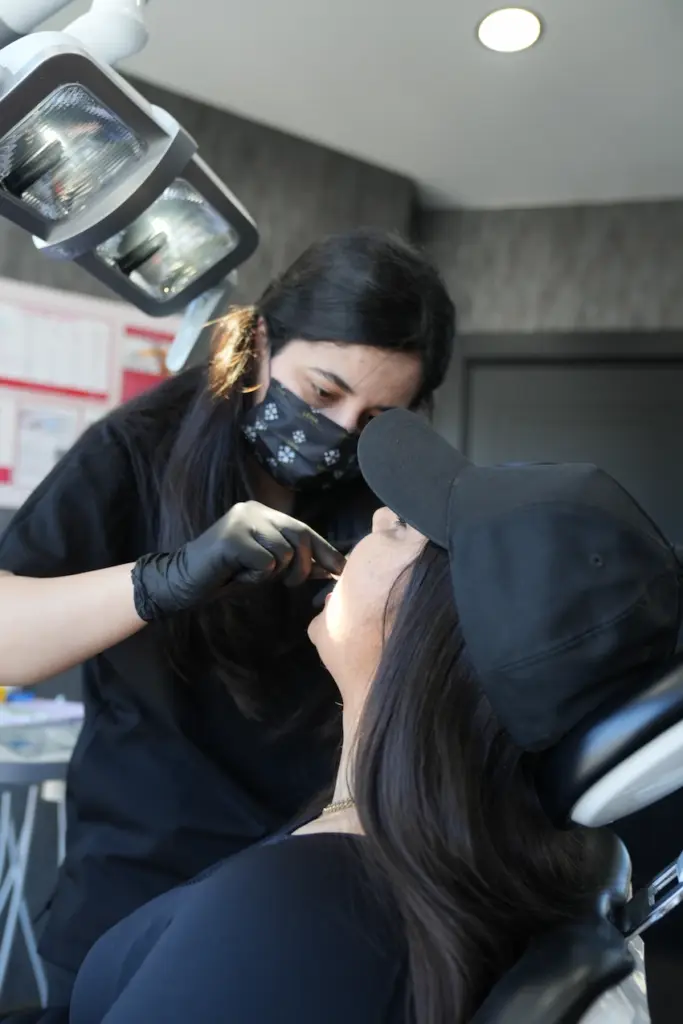
Consider your jawbone and teeth as a closely connected neighborhood. A severely infected house can threaten the whole block.
Based on our work experience at Lema Dental Clinic, trying to prolong the time is like playing with fire. Normally, it ends up in permanent bone loss and profound systemic infection. Besides, Professor Doctor Coşkun Yıldız consistently emphasizes a significant point: extraction is not a failure. To the contrary, it is a tactical decision to safeguard the rest of your mouth. So, what are the clear symptoms of a tooth that should be extracted immediately?
Severe Decay and Deep Infection
Bacteria that cause decay can penetrate through your tooth’s enamel quite effortlessly and get to your pulp, which is the soft, nerve-filled part of your tooth. Imagine that the inner columns of your ‘fortress’ (tooth) have been destroyed. It is not uncommon that even a root canal cannot preserve the remaining tooth structure. At times, a fast extraction is necessary to get rid of infection as well as to protect against the spread of life-threatening and excruciating abscesses through the bloodstream.
Advanced Gum Disease
Gums and bones are like fertile soil, keeping your teeth grounded. Advanced gum disease is a slow landslide that gradually takes away the support structure. After the bone level decreases to such an extent that the tooth becomes completely loose, it is impossible to keep it in place. Holding onto it after that is like trying to keep a huge oak tree standing in a very thin layer of soil.
Impaction and Severe Crowding
This is the most common issue with wisdom teeth. On occasion, there is simply not enough room in the human jaw for the new teeth. Dentist Polen Akkılıç and her team get quite a few cases where teeth grow completely sideways. They are known to be like a battering ram that works very slowly. This piece of work pushes molars that are healthy very hard. Getting rid of the troublemaker instantly eliminates the pain and keeps the teeth from moving around.
Extraction vs. Preservation: Our Clinical Guide
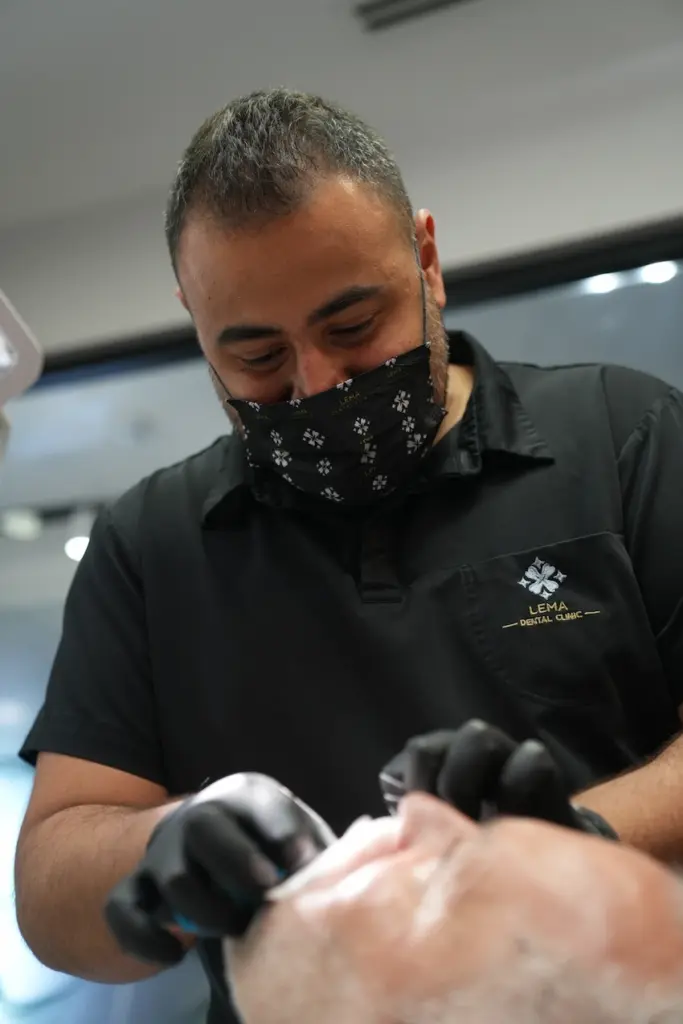
So, here is a question that is still up in the air: how do we know when a tooth is worth saving and when it has to be extracted? We look at a few things to decide whether a patient needs surgery or whether they can continue with the less invasive methods.
| Clinical Scenario | Save the Tooth (e.g., Root Canal) | Extract & Place Implant |
| Tooth Strength | There is sufficient healthy tooth (at least 30%) that remains visible. | The tooth has been completely broken or split below the gum line. |
| Bone Health | The jawbone that surrounds the tooth has healthy bone density and stability. | The bone loss is so advanced that the tooth is hanging loosely. |
| Infection Level | The infection has not spread beyond the tooth. | There is a huge abscess that is threatening the neighboring teeth. |
| Tooth Position | The tooth complements your natural bite, and you do not have any discomfort. | The tooth is still encased in the bone, or it is causing severe crowding. |
| Future Outlook | A long-lasting tooth with no pain is very probable. | Very likely to get broken; replacement is advisable right away. |
Frequently Asked Questions
You may only feel mild pressure, re but never a severe pain. We do local anesthesia that works really well. Conscious sedation is also an option for those patients who are a bit nervous. I will be there for you making sure that you will be comfortable through all the time of your treatment.
It usually takes around a week or ten days for the empty socket to heal. Also, the jawbone below that area is rebuilding, and it takes a couple of months. So, you should just relax for the first 24 hours. Do not use straws as they may interfere with blood clot formation.
It will not get better on its own; in fact, the pain will likely get worse, and the swelling will increase. Further shedding of the jawbone may result from trapped infection. That is a risk that you should never take.
It depends on the conditions, but if they are quite normal, then it is very likely that implantation can be performed the same day. We are very experienced in doing same-day implants, and often our international patients find that quite convenient.
Perhaps not, but we should think about the risk. Even though they are not a problem at the moment, teeth that are not in the proper position are like bombs with timers attached. They are capable of causing crowding and nerve damage, which is irreversible. Therefore, in many cases, preventive extraction is the best option.
- Hupp, J. R., Ellis, E., & Tucker, M. R. (2019). Contemporary oral and maxillofacial surgery (7th ed.). Elsevier.
- Coulthard, P., Bailey, E., Esposito, M., Furness, S., Renton, T. F., & Worthington, H. V. (2014). Surgical techniques for the removal of mandibular wisdom teeth. Cochrane Database of Systematic Reviews, (7).
- Chapple, I. L., Mealey, B. L., et al. (2018). Periodontal health and gingival diseases and conditions on an intact and a reduced periodontium: Consensus report of workgroup 1 of the 2017 World Workshop on the Classification of Periodontal and Peri-Implant Diseases and Conditions. Journal of Periodontology, 89(Suppl 1), S74-S84.
- Laskin, D. M. (2015). Indications and contraindications for the extraction of teeth. Oral and Maxillofacial Surgery Clinics of North America, 27(3), 329-334.
- Friedman, J. W. (2007). The prophylactic extraction of third molars: A public health hazard. American Journal of Public Health, 97(9), 1554-1559.

