


They can narrow the jaw, misalign teeth, and affect facial growth over time.
Our faces, particularly our facial traits, are generally thought to be solely passed down through genes – a direct copy of our father’s or mother’s DNA. However, the fact is othat ur features can be changed to a degree. A child’s jawbone should not be considered a solid concrete structure but rather wet clay being shaped on the potter’s wheel. The gene code equips the clay, while the muscles of the face and tongue are the hands that mold it.
In Lema Dental Clinic here in Turkey, we regularly get patients who think the problem only lies with “crooked teeth.” Nevertheless, if you take a deeper glance, the foundation itself – the jawbone – has been twisted over the years by subtle, continuous pressure.
Mouth breathing and thumb sucking are two of the most potent, but least brought to light, forces in this mouth-deforming process. We cannot simply treat them as “naughty kids episodes” and scold the children to stop such habits; these are physiological phenomena that can significantly change the path of facial growth.
The Tongue: Mother Nature’s Palate Expander
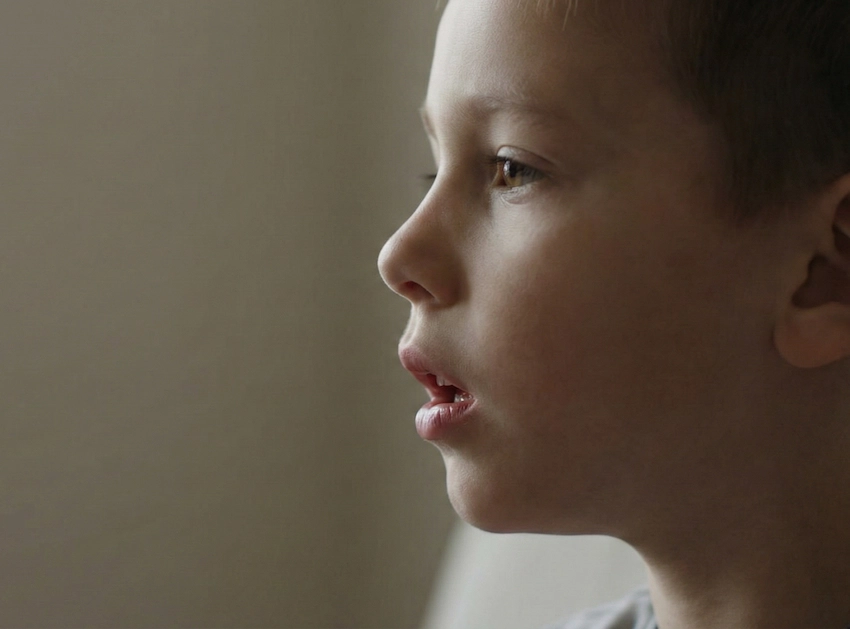
To figure out for sure the cause of the problem, you’ve got to physically acknowledge what good being “right” looks like.
Typically, a tongue rests against the roof of the mouth in a fully developed face. It performs as a natural scaffold pushing the upper jaw slightly outward and forward. This internal force balances the external force coming from the cheeks. So it is basically a friendly tug-of-war situation that results in a wide, U-shaped dental arch and a roomy space for teeth.
Tourist and dental professional Polen Akkılıç together with her staff frequently illustrate it in such a way: The tongue as the chief architect of the upper jaw. If the architect leaves the building site, the walls start to collapse inward.
Does Mouth Breathing Make Your Face Longer? The Silent Impact on Bone Growth
Mouth breathing might be the most sneaky disorder that we handle among all. It is normally an innocent start—pollen allergy, swollen glands, or deviated nose septum put a child in a situation where he has to breathe through his mouth.
Next, the following events take place:
- The mouth and jaw open to get more fresh air.
- The tongue moves down from the upper surface of the mouth to its floor.
- The cheek pressure cannot be normalized anymore.
Gradually, the kid’s upper jaw constricts, and at the same time the teeth crowd. Moreover, the kid’s face gains height instead of width. “Adenoid facies” or “The Long Face Syndrome”, as known in medicine, is a pathology of the face in which the chin forms a sharp angle and the eyelids appear to be hanging or tired.
Thumb Sucking: The Lift of the Forceful Sucker
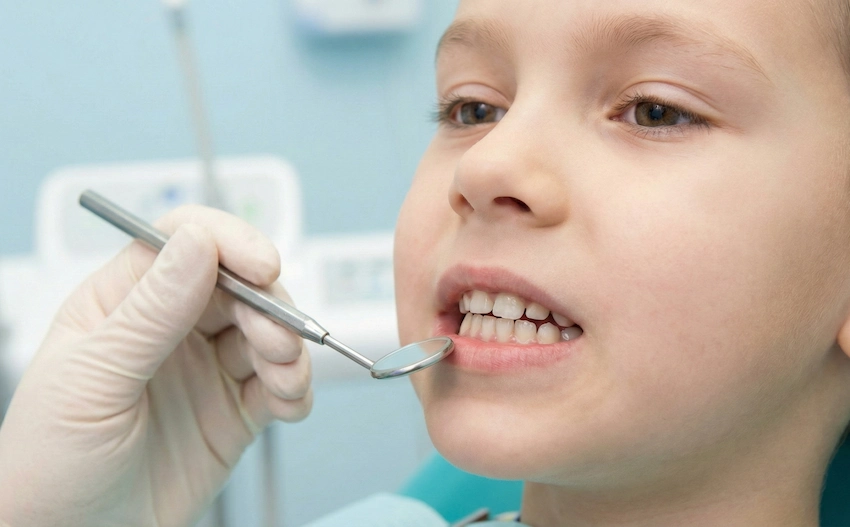
Thumb sucking is a completely contrasting phenomenon to mouth breathing (one of lack of pressure, the other of overpressure). It is a kind of emphasis on the need for comfort in babies; however, if the habit is sustained beyond the toddler years, it becomes a structural hazard.
Consider a thumb as a lever. It exerts pressure on the palate; therefore the vaulted palate becomes very deep. The vacuum created by the sucking action pulls the cheeks in and narrows the dental arch.
According to Professor Doctor Coşkun Yıldız, an extended thumb pacifier’s most distinguishable characteristic is an “anterior open bite.”
Imagine this: the front teeth have been pushed so far out that they really can’t touch when the back teeth are clenched. This creates a literal window between the upper and lower teeth that is perfectly shaped for a thumb.
Impact on Growth
We have summarized the structural impacts that are commonly seen at our clinic in Turkey to help you visualize the differences.
| Feature | Normal Nasal Breathing | Chronic Mouth Breathing | Prolonged Thumb Sucking |
| Jaw Shape | The arch is wide and U-shaped | The arch is narrow and V-shaped | The palate is narrow, deep, and vaulted |
| Facial Profile | Balanced, with forward growth | Long, narrow face with a recessed chin | Protrusion of the upper lip and teeth |
| Teeth Alignment | Teeth are generally straight | Crowding due to a lack of space | “Buck teeth” (flared incisors) |
| Airway | Wide and clear | Constricted; snoring is likely | Usually not affected unless combined with mouth breathing |
| Resting Posture | Lips closed, tongue resting up | Lips parted, tongue resting down | Lips are incompetent (cannot close easily) |
Beyond Appearance
Habit disfigurements not only influence the facial features and smile aesthetic, but they also impact the proper breathing and sleeping of a person. A jawbone that is reduced in size most probably results in a narrowed airway. That is the first factor setting up Obstructive Sleep Apnea (OSA).
When these patients have portraits done in Turkey for smile makeovers or Hollywood Smile treatment we don’t just see a veneer or a crown. We also see the function. Was this patient’s jaw development normal? Shall we fix the underlying skeletal width before the cosmetics?
Getting control over the habit is the first step. Reversing the damage, on the other hand, frequently requires a combination of myofunctional therapy (tongue physical therapy) and orthodontic procedures to expand the “collapsed” base.
FAQ: The Doctor Is In
Not usually. A child’s breathing through the mouth suggests that there is a blockage in the nose (like swollen tonsils), or the mouth breathing has been established as a habit. But what we have to do is first find out the cause and then remove the obstruction. Otherwise, the body will always choose the path of least resistance—the mouth.
Growth changes might self-correct if the habit is discontinued before the eruption of the permanent front teeth (about five or six years old). However, if the habit is continued while the adult teeth are coming in, the damage becomes skeletal, meaning the bone itself changes shape. That’s when we have to step in.
Absolutely. Growth can be guided in children. Adults, just like dried concrete, cannot be changed. However, we can still widen arches orthodontically, or in the extreme cases that Professor Doctor Coşkun Yıldız deals with, use orthognathic surgery to reposition the jaw physically for better breathing and appearance.
Yes, by a small margin. You can simply take away a pacifier, but you can’t just take a thumb away. Still, a prolonged pacifier use (past 2-3 years) can bring about “open bite” problems similar to those caused by thumb. It’s about duration and intensity.
Turkey has turned into a global hub not merely for veneers but also for complex dental rehabilitation. At Lema Dental Clinic, we have the machinery to 3D map the airway and jaw structure. It goes beyond just straightening teeth; it is about bringing harmony to the face. Furthermore, the cost-effectiveness of our treatments makes high-end treatments accessible to you at a price that might even be prohibitive in your country.
- Grippaudo, C., Paolantonio, E. G., Antonini, G., Saulle, R., La Torre, G., & Deli, R. (2016). Association between oral habits, mouth breathing and malocclusion. Acta Otorhinolaryngologica Italica, 36(5), 386–394.
- Jefferson, Y. (2010). Mouth breathing: adverse effects on facial growth, health, academics, and behavior. General Dentistry, 58(1), 18-25.
- Lopatiene, K., & Babarskas, A. (2002). Malocclusion and upper airway obstruction. Medicina (Kaunas), 38(3), 277-283.
- Scariot, R., et al. (2015). Anxiety and oral habits in children: is there an association?. Brazilian Oral Research, 29, 1-7.
- Yamaguchi, H., & Sueishi, K. (2003). Malocclusion is associated with abnormal posture. Bulletin of the Tokyo Dental College, 44(2), 43-54.

