


Apply small dots of adhesive on a clean, dry bottom denture and avoid the edges.
You are likely aware of the constant frustration that lower denture wearers face each day. Unlike the upper denture, which has an ample roof area, making it possible to create a kind of natural vacuum suction cup between the gum and denture, the lower one presents a real challenge. It is a very narrow U-shaped alveolar border that moves the whole time. Besides that, your tongue and cheek muscles are constantly pushing against these parts throughout the day. Attempting to secure the lower denture without the correct method is akin to an endeavour to float a canoe in a swiftly flowing river, which seems impossible anyway.
Sometimes, a well-fitted lower denture also needs extra help to be able to remain fixed permanently. At Lema Dental Clinic, we found out that using adhesive properly works wonders. You get the confidence you desire. You become the master of speaking. And above all, you become the one who can have a good time at lunch without any anxieties.
A Perfect Fit
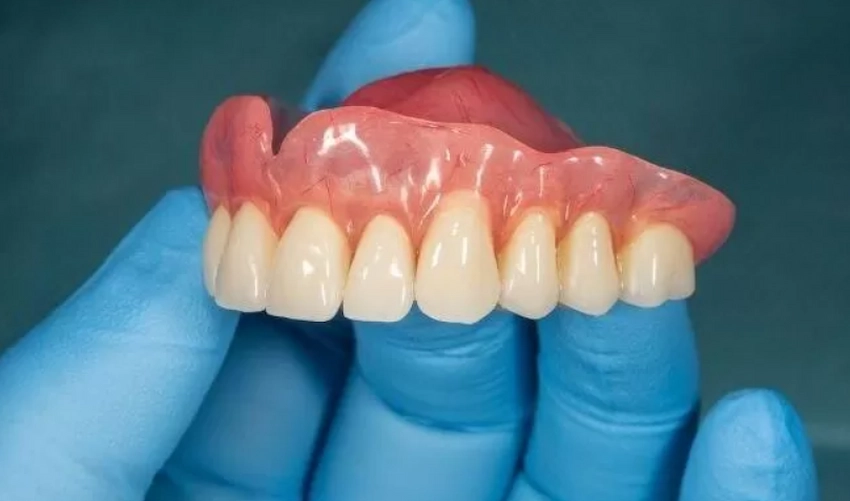
Let’s start the conversation about glue and first deal with your gums. If you apply any adhesive, you’d better be sure your lower jaw is completely clean and dry. Saliva really is the worst enemy of adhesive materials.
Dentist Polen Akkılıç and her team always remind their patients about their morning routines, which are the same for everyone. To begin, clean the denture thoroughly. Then, dry the inner part of the denture with the help of a towel so the surface of your gums is totally dry and free of moisture. Before you put your new prosthesis in your mouth, you can simply swallow a couple of times, or you could use gauze and wipe your inside cheek area softly.
The “Less Is More” Gluethinking
A common mistake is putting on a generous amount of paste, thinking it would result in a strong bond or at least a good result. However, it is the opposite. What you end up with is a huge mess, and the denture would probably lose its tight fit. Just glue will be all over your gums and the denture.
Here is our advice on how you can achieve a strong hold with the adhesive glue:
- A little goes a long way: Only a couple of pea-sized adhesive glue drops placed in the furthest depth of your denture should keep it well fastened.
- Hold it steady: Bite on the denture firmly. Keep your bite slightly open but not too close, to prevent the glue from running into your mouth and to the outside of the denture.
- The bite-together technique: After you put the glue into the groove and place the dental prosthesis on the gum, bite down gently, and apply pressure for a moment of about thirty seconds. This would make the material bond to your gums permanently.
When Adhesive Loses its Grip
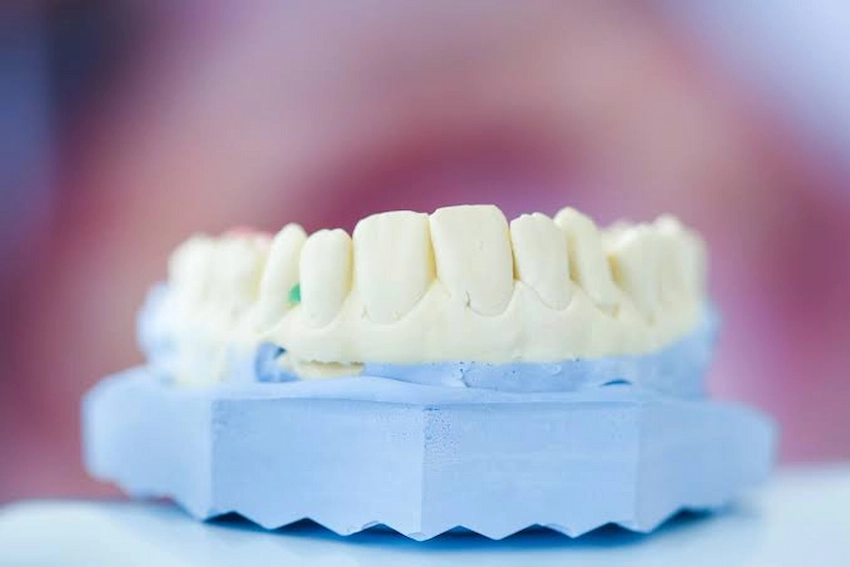
Sadly, the fact of the matter is that over time, your own jawbone loses its strength as the bone constantly shrinks in the absence of natural teeth. Imagine your tooth roots as foundations of the building made of concrete. When you have no more teeth, the foundations will start crumbling, and the bone is being resorbed slowly. The U-shaped alveolus is being flattened over the years, leaving only a flat plane for the denture. In such a situation, even the best quality adhesive will not help anymore. You have a very small area to hold onto, which is not able to provide good denture retention.
Our clinic patients often get to us in total exhaustion, just because they have not been able to eat anything firm unless they had some adhesive applied every few hours throughout the day. According to Prof. Dr. Coşkun Yıldız, adhesive is indeed a good tool in the short run, but it is a crutch that we have to stop relying on. Patients who want a long-term solution can go over to implants by dental professionals. If you think about getting dental implants, we highly recommend top-notch brands like Straumann and Nobel Biocare for your lower dental prosthesis. These are two equally good, premium choices giving you the best of long-term stability.
Your Options Compared
| Stabilization Method | Daily Routine | Comfort/ Variability | Protection to Jawbone | How good in the long run? |
| Standard denture with adhesive | Very High (You have to put adhesive regularly) | Low to Medium | No jawbone protection as it shrinks constantly | Changing your choice is better! |
| Implant-supported snapped-in denture | Medium (Only clean the snap joints) | Secure | Medium to High | Excellent |
| Implant-supported full arch (All-on-4) | Very Low (Just brush your implant as natural teeth) | Fixed (Permanent attachment) – Excellent | Fully Protected Jawbone | Excellent |
Frequently Asked Questions
Will my lower denture constantly come loose when I’m eating?
It’s your very powerful tongue and cheek muscles that are responsible for it, right? The constant activity of these muscles in chewing food can dislodge the edges of your denture. If the contour of your lower jaw has been flat due to the loss of bone, your lower jaw can hardly support the prosthesis. Those muscles are very strong, and they do lift that little piece of plastic out of its seat easily. In such a case, your prosthesis will definitely be out of place.
Is overuse of glue a possibility?
Yes, absolutely it is. If the adhesive has been spread too much around, it may actually prevent the denture from being in direct contact with the supporting structures. It will work more like a lubricant rather than a bonding agent. You have an example where the denture can actually move freely and cause more problems. So, you’d better do a few tiny dots on the contact surface of the gum with the denture and make them the sole means of support. That will be your best option to hold firmly with the adhesive.
What if I have glue left on my gums? How do I remove it?
Some denture wearers find it very difficult to get rid of glue from the skin, but that’s one of those questions with rather complicated answers. Avoid rubbing hard with a stiff brush, since that way is not really helpful. Instead, it is better to use warm water for about a minute to break up the bond that glue is making to the skin. Then, very softly brush your gum with a toothbrush having very soft bristles, or with a warm damp washcloth so any remnants of glue can be wiped away gently.
Is there any recommendation regarding the frequency of adhesive application in a day?
You can do just one single application in the morning and have it work until evening. If you need to reapply it just after a minor lunch and then the main meal, it may point to the fact that your denture has become ill-fitting over time as a result of a shrinking face and jaw, which is not uncommon in the course of years. Such a case deserves your time going to a dentist and being checked if he needs adjustment of the denture, or perhaps the dentist will be able to talk to you about dental implants.
Can I depend on the use of denture adhesive forever?
Only if you keep a so-called denture, which serves as a substitute for the resting jaw. But dentistry these days has brought about some drastic modifications. Just by fixing 2-4 dental implants on the lower jaw i, it becomes possible to snap in the teeth and fix them so strongly that neither pastes nor powders are needed at all.
Academic References
- Carlsson, G. E. (2014). Implant and root supported overdentures – a literature review and some data on bone loss in edentulous jaws. Journal of Advanced Prosthodontics, 6(4), 245-252.
- Felton, D. A. (2009). Edentulism and comorbid factors. Journal of Prosthodontics, 18(2), 88-96.
- Grasso, J. E. (2004). Denture adhesives: changing attitudes. Journal of the American Dental Association, 135(1), 95-96.
- Polyzois, G. L., & Tzoutzas, I. G. (2006). A clinical evaluation of denture adhesives in the stabilization of mandibular complete dentures. International Journal of Prosthodontics, 19(5), 450-452.
- Zarb, G. A., Hobkirk, J. A., Eckert, S., & Jacob, R. (2012). Prosthodontic Treatment for Edentulous Patients: Complete Dentures and Implant-Supported Prostheses (13th ed.). Mosby.

