

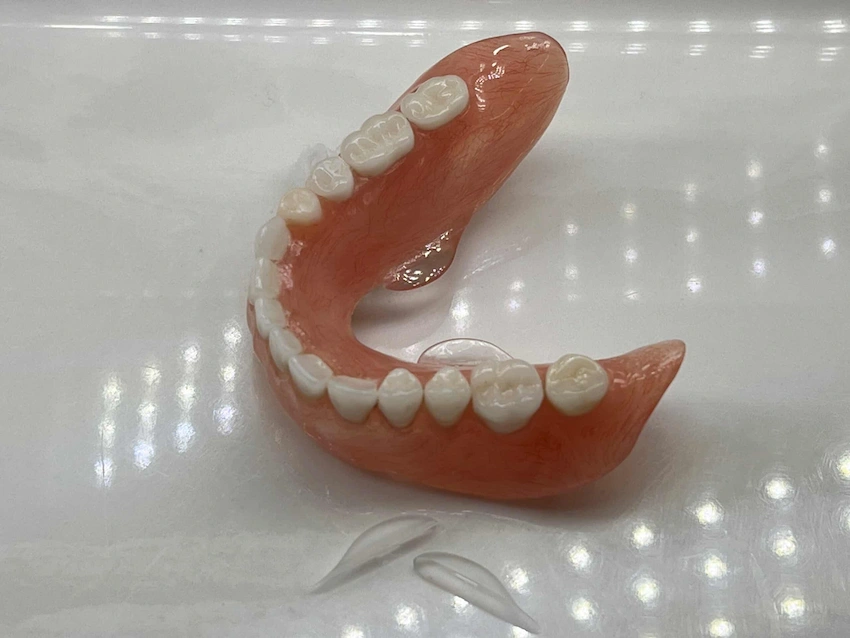
Miglior applicazione adesivo per protesi inferiore.
Applicare piccoli punti di adesivo su una protesi inferiore pulita e asciutta ed evitare i bordi.
Probabilmente siete consapevoli della costante frustrazione che i portatori di protesi dentaria inferiore affrontano ogni giorno. A differenza della protesi superiore, che ha un'ampia area del palato, rendendo possibile creare una sorta di ventosa a vuoto naturale tra la gengiva e la protesi, quella inferiore presenta una vera sfida. Si tratta di un bordo alveolare a forma di U molto stretto che si muove continuamente. Inoltre, la lingua e i muscoli delle guance spingono costantemente contro queste parti durante il giorno. Tentare di fissare la protesi inferiore senza il metodo corretto è come tentare di far galleggiare una canoa in un fiume in piena, il che sembra comunque impossibile. A volte, anche una protesi inferiore ben adattata ha bisogno di un aiuto extra per rimanere fissa in modo permanente. Presso la clinica dentistica Lema, abbiamo scoperto che usare l'adesivo correttamente fa miracoli. Ottenete la fiducia che desiderate. Diventate padroni della parola. E soprattutto, diventate coloro che possono godersi un buon pranzo senza alcuna ansia.Una Vestibilità Perfetta
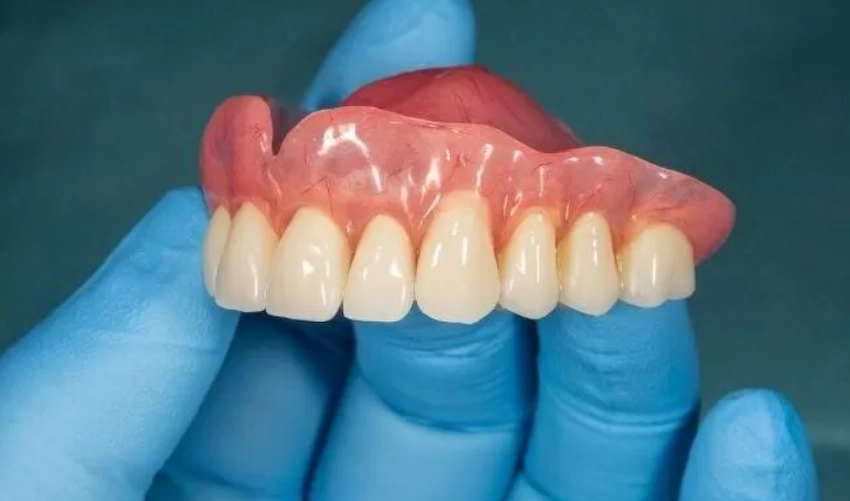
La Filosofia dell'Adesivo "Meno è Meglio"
Un errore comune è applicare una quantità generosa di pasta, pensando che ciò si tradurrebbe in un legame forte o almeno in un buon risultato. Tuttavia, è il contrario. Ciò che si ottiene è un gran pasticcio, e la protesi probabilmente perderebbe la sua aderenza. L'adesivo si spargerebbe su gengive e protesi. Ecco il nostro consiglio su come ottenere una forte tenuta con la colla adesiva:- Poco è sufficiente: Solo un paio di gocce di colla adesiva della dimensione di un pisello, posizionate nella parte più profonda della protesi, dovrebbero mantenerla ben salda.
- Mantenere fermo: Mordere saldamente la protesi. Mantenere il morso leggermente aperto ma non troppo chiuso, per evitare che la colla fuoriesca in bocca e all'esterno della protesi.
- La tecnica del morso congiunto: Dopo aver applicato la colla nel solco e posizionato la protesi dentale sulla gengiva, mordere delicatamente e applicare pressione per circa trenta secondi. Ciò farà sì che il materiale si leghi permanentemente alle gengive.
Quando l'Adesivo Perde la sua Presa
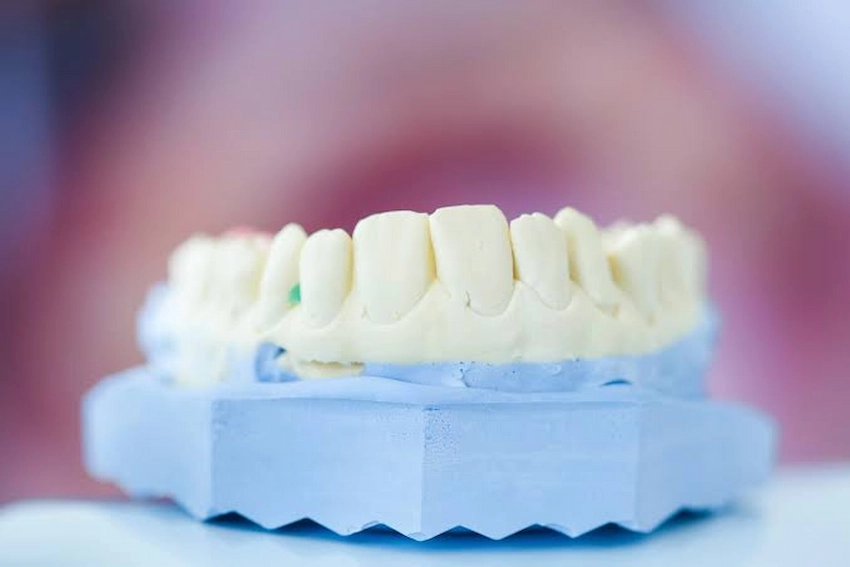
Le Vostre Opzioni a Confronto
| Metodo di Stabilizzazione | Routine Quotidiana | Comfort/Variabilità | Protezione dell'Osso Mascellare | Quanto è valido a lungo termine? |
| Protesi standard con adesivo | Molto Alta (Devi applicare l'adesivo regolarmente) | Basso a Medio | Nessuna protezione dell'osso mascellare poiché si ritira costantemente | Cambiare la tua scelta è meglio! |
| Protesi a scatto supportata da impianti | Media (Pulire solo gli attacchi a scatto) | Sicura | Medio ad Alto | Eccellente |
| Arcata completa supportata da impianti (All-on-4) | Molto Bassa (Basta spazzolare l'impianto come i denti naturali) | Fissa (Attacco permanente) - Eccellente | Osso Mascellare Completamente Protetto | Eccellente |
Domande Frequenti
Riferimenti Accademici
- Carlsson, G. E. (2014). Implant and root supported overdentures – a literature review and some data on bone loss in edentulous jaws. Journal of Advanced Prosthodontics, 6(4), 245-252.
- Felton, D. A. (2009). Edentulism and comorbid factors. Journal of Prosthodontics, 18(2), 88-96.
- Grasso, J. E. (2004). Denture adhesives: changing attitudes. Journal of the American Dental Association, 135(1), 95-96.
- Polyzois, G. L., & Tzoutzas, I. G. (2006). A clinical evaluation of denture adhesives in the stabilization of mandibular complete dentures. International Journal of Prosthodontics, 19(5), 450-452.
- Zarb, G. A., Hobkirk, J. A., Eckert, S., & Jacob, R. (2012). Prosthodontic Treatment for Edentulous Patients: Complete Dentures and Implant-Supported Prostheses (13th ed.). Mosby.
Domande frequenti
Will my lower denture constantly come loose when I'm eating?
It's your very powerful tongue and cheek muscles that are responsible for it, right? The constant activity of these muscles in chewing food can dislodge the edges of your denture. If the contour of your lower jaw has been flat due to the loss of bone, your lower jaw can hardly support the prosthesis. Those muscles are very strong, and they do lift that little piece of plastic out of its seat easily. In such a case, your prosthesis will definitely be out of place.
Is overuse of glue a possibility?
Yes, absolutely it is. If the adhesive has been spread too much around, it may actually prevent the denture from being in direct contact with the supporting structures. It will work more like a lubricant rather than a bonding agent. You have an example where the denture can actually move freely and cause more problems. So, you'd better do a few tiny dots on the contact surface of the gum with the denture and make them the sole means of support. That will be your best option to hold firmly with the adhesive.
What if I have glue left on my gums? How do I remove it?
Some denture wearers find it very difficult to get rid of glue from the skin, but that's one of those questions with rather complicated answers. Avoid rubbing hard with a stiff brush, since that way is not really helpful. Instead, it is better to use warm water for about a minute to break up the bond that glue is making to the skin. Then, very softly brush your gum with a toothbrush having very soft bristles, or with a warm damp washcloth so any remnants of glue can be wiped away gently.
Is there any recommendation regarding the frequency of adhesive application in a day?
You can do just one single application in the morning and have it work until evening. If you need to reapply it just after a minor lunch and then the main meal, it may point to the fact that your denture has become ill-fitting over time as a result of a shrinking face and jaw, which is not uncommon in the course of years. Such a case deserves your time going to a dentist and being checked if he needs adjustment of the denture, or perhaps the dentist will be able to talk to you about dental implants.
Can I depend on the use of denture adhesive forever?
Only if you keep a so-called denture, which serves as a substitute for the resting jaw. But dentistry these days has brought about some drastic modifications. Just by fixing 2-4 dental implants on the lower jaw i, it becomes possible to snap in the teeth and fix them so strongly that neither pastes nor powders are needed at all.