

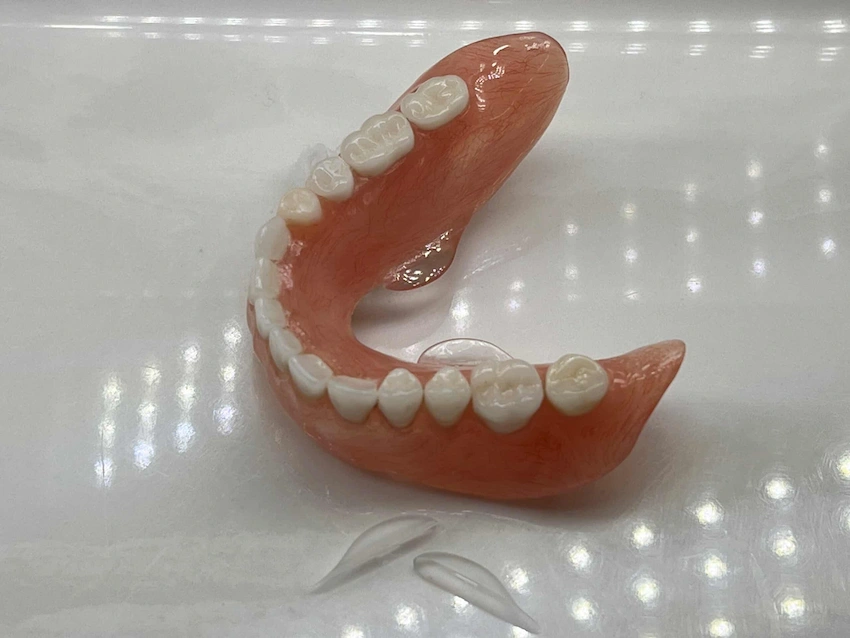
Parim viis proteesiliimi pealekandmiseks alumisele proteesile
Kanna väikesed liimitäpid puhtale, kuivale alumisele hambaproteesile, vältides servi.
Te olete ilmselt teadlik pidevast frustratsioonist, mida alumiste proteeside kandjad kogevad iga päev. Erinevalt ülemisest proteesist, millel on piisavalt suulae ala, mis võimaldab luua omamoodi loomuliku vaakum-imemise igeme ja proteesi vahele, on alumine protees tõeline väljakutse. See on väga kitsas U-kujuline alveolaarne serv, mis liigub kogu aeg. Lisaks suruvad teie keel ja põselihased pidevalt nendele osadele kogu päeva jooksul. Alumise proteesi kinnitamine ilma õige meetodita on sarnane katsega ujutada kanuud kiirevoolulises jões, mis tundub niikuinii võimatu. Mõnikord vajab ka hästi istuv alumine protees lisatuge, et püsivalt paigal püsida. Lema hambakliinikus, oleme leidnud, et liimi õige kasutamine teeb imesid. Saate soovitud enesekindluse. Teist saab kõnelemise meister. Ja ennekõike saate te nautida lõunat ilma igasuguste muredeta.Täiuslik sobivus
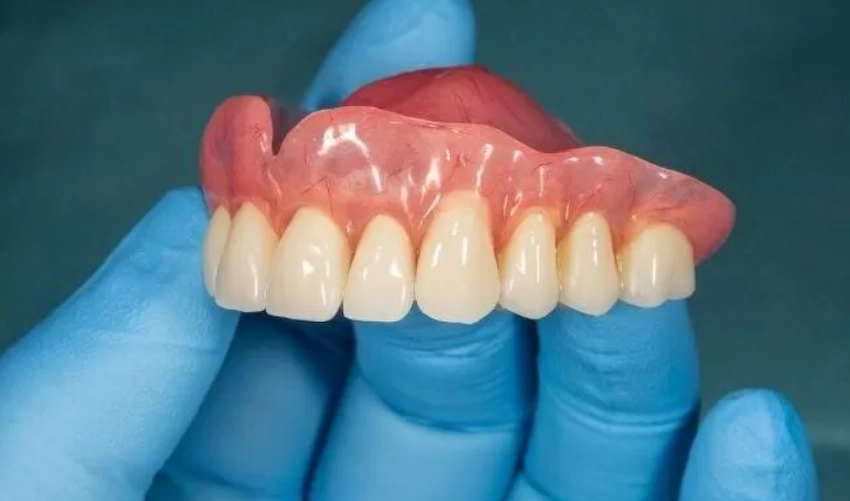
„Vähem on rohkem“ liimimõtteviis
Levinud viga on kanda peale ohtralt pastat, arvates, et see tagab tugeva sideme või vähemalt hea tulemuse. Kuid see on vastupidi. Lõpptulemuseks on suur segadus ja protees kaotaks tõenäoliselt oma tiheda sobivuse. Liim on lihtsalt igal pool teie igemetel ja proteesil. Siin on meie nõuanne, kuidas saavutada liimliimiga tugev kinnitus:- Vähesest piisab kauaks: Vaid paar herneterasuurust liimliimi tilka, mis on asetatud proteesi kõige sügavamasse ossa, peaksid selle hästi kinnitama.
- Hoidke kindlalt: Hammustage proteesile kindlalt. Hoidke oma hammustus veidi avatud, kuid mitte liiga lähedal, et vältida liimi suhu ja proteesi välisküljele sattumist.
- Kokkuhammustamise tehnika: Pärast liimi soonesse panemist ja hambaproteesi igemele asetamist hammustage õrnalt ja avaldage survet umbes kolmkümmend sekundit. See paneks materjali teie igemetele püsivalt kinnituma.
Kui liim kaotab oma haarde
Teie valikud võrreldes
| Stabiliseerimismeetod | Igapäevane rutiin | Mugavus/Variatiivsus | Lõualuu kaitse | Kui hea pikas perspektiivis? |
| Standardprotees liimiga | Väga kõrge (Peate liimi regulaarselt peale kandma) | Madal kuni keskmine | Lõualuu kaitse puudub, kuna see kahaneb pidevalt | Valiku muutmine on parem! |
| Implantaatidel toetuv klõpsuga protees | Keskmine (Puhastage ainult klõpsühendusi) | Turvaline | Keskmine kuni kõrge | Suurepärane |
| Implantaatidel toetuv täiskaar (All-on-4) | Väga madal (Lihtsalt harjake oma implantaati nagu naturaalseid hambaid) | Fikseeritud (Püsikinnitus) – Suurepärane | Täielikult kaitstud lõualuu | Suurepärane |
Korduma Kippuvad Küsimused
Akadeemilised viited
- Carlsson, G. E. (2014). Implant and root supported overdentures – a literature review and some data on bone loss in edentulous jaws. Journal of Advanced Prosthodontics, 6(4), 245-252.
- Felton, D. A. (2009). Edentulism and comorbid factors. Journal of Prosthodontics, 18(2), 88-96.
- Grasso, J. E. (2004). Denture adhesives: changing attitudes. Journal of the American Dental Association, 135(1), 95-96.
- Polyzois, G. L., & Tzoutzas, I. G. (2006). A clinical evaluation of denture adhesives in the stabilization of mandibular complete dentures. International Journal of Prosthodontics, 19(5), 450-452.
- Zarb, G. A., Hobkirk, J. A., Eckert, S., & Jacob, R. (2012). Prosthodontic Treatment for Edentulous Patients: Complete Dentures and Implant-Supported Prostheses (13th ed.). Mosby.
Korduma kippuvad küsimused
Will my lower denture constantly come loose when I'm eating?
It's your very powerful tongue and cheek muscles that are responsible for it, right? The constant activity of these muscles in chewing food can dislodge the edges of your denture. If the contour of your lower jaw has been flat due to the loss of bone, your lower jaw can hardly support the prosthesis. Those muscles are very strong, and they do lift that little piece of plastic out of its seat easily. In such a case, your prosthesis will definitely be out of place.
Is overuse of glue a possibility?
Yes, absolutely it is. If the adhesive has been spread too much around, it may actually prevent the denture from being in direct contact with the supporting structures. It will work more like a lubricant rather than a bonding agent. You have an example where the denture can actually move freely and cause more problems. So, you'd better do a few tiny dots on the contact surface of the gum with the denture and make them the sole means of support. That will be your best option to hold firmly with the adhesive.
What if I have glue left on my gums? How do I remove it?
Some denture wearers find it very difficult to get rid of glue from the skin, but that's one of those questions with rather complicated answers. Avoid rubbing hard with a stiff brush, since that way is not really helpful. Instead, it is better to use warm water for about a minute to break up the bond that glue is making to the skin. Then, very softly brush your gum with a toothbrush having very soft bristles, or with a warm damp washcloth so any remnants of glue can be wiped away gently.
Is there any recommendation regarding the frequency of adhesive application in a day?
You can do just one single application in the morning and have it work until evening. If you need to reapply it just after a minor lunch and then the main meal, it may point to the fact that your denture has become ill-fitting over time as a result of a shrinking face and jaw, which is not uncommon in the course of years. Such a case deserves your time going to a dentist and being checked if he needs adjustment of the denture, or perhaps the dentist will be able to talk to you about dental implants.
Can I depend on the use of denture adhesive forever?
Only if you keep a so-called denture, which serves as a substitute for the resting jaw. But dentistry these days has brought about some drastic modifications. Just by fixing 2-4 dental implants on the lower jaw i, it becomes possible to snap in the teeth and fix them so strongly that neither pastes nor powders are needed at all.