

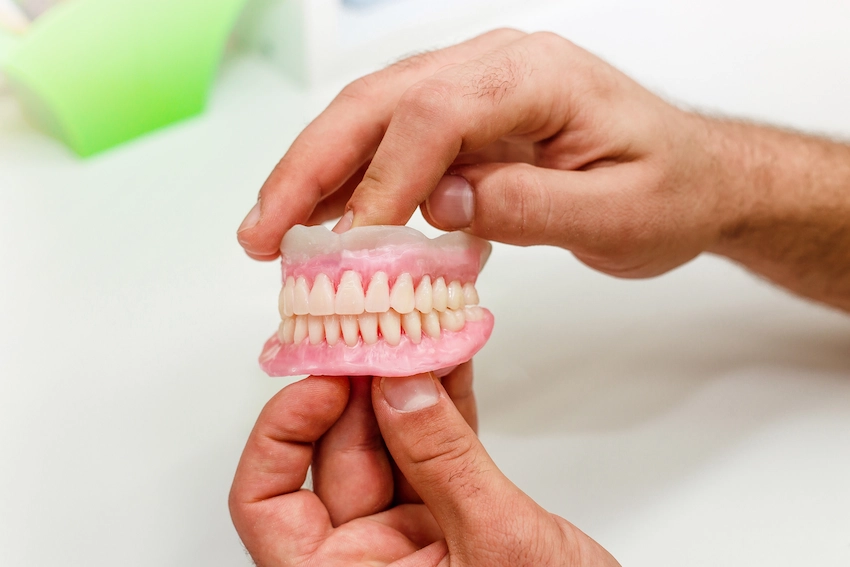
Czy można uczulić się na protezy zębowe?
Tak, niektórzy ludzie mogą stać się uczuleni lub wrażliwi na materiały protetyczne, co powoduje podrażnienie lub obrzęk dziąseł.
Jaka jest przyczyna alergii na protezy zębowe?
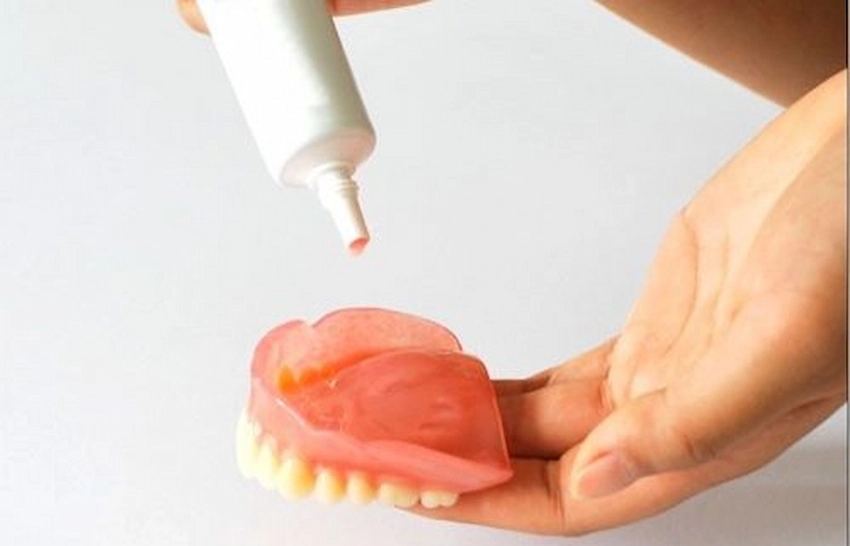
Rozpoznanie objawów: Alergia czy złe dopasowanie?
Najpierw, przyjrzyjmy się bliżej objawom. Następnie, jak odróżnić prawdziwą alergię od po prostu złego dopasowania? Złe dopasowanie, na przykład w przypadku buta, to bardzo ciasny but. Uciska on ciało, a następnie powoduje tylko jeden pęcherz w miejscu, gdzie tarcie jest najsilniejsze. Reakcja alergiczna natomiast nie pojawia się tylko w jednym miejscu, ale zazwyczaj obejmuje cały obszar. Należy zwrócić uwagę na następujące objawy:- Zaczerwienienie i obrzęk błony śluzowej jamy ustnej lub obszarów dziąseł.
- Uczucie pieczenia na języku, wargach lub dziąsłach (Zespół Pieczenia Jamy Ustnej).
- Łuszczenie się tkanki dziąseł: Podobnie jak po powrocie ze słońca po dniu spędzonym bez żadnej ochrony, zewnętrzna warstwa dziąseł może się łuszczyć.
- Nieprzyjemny smak: Gorzki lub metaliczny posmak w ustach, który nie znika.
Nowoczesne zęby dla wrażliwych uśmiechów
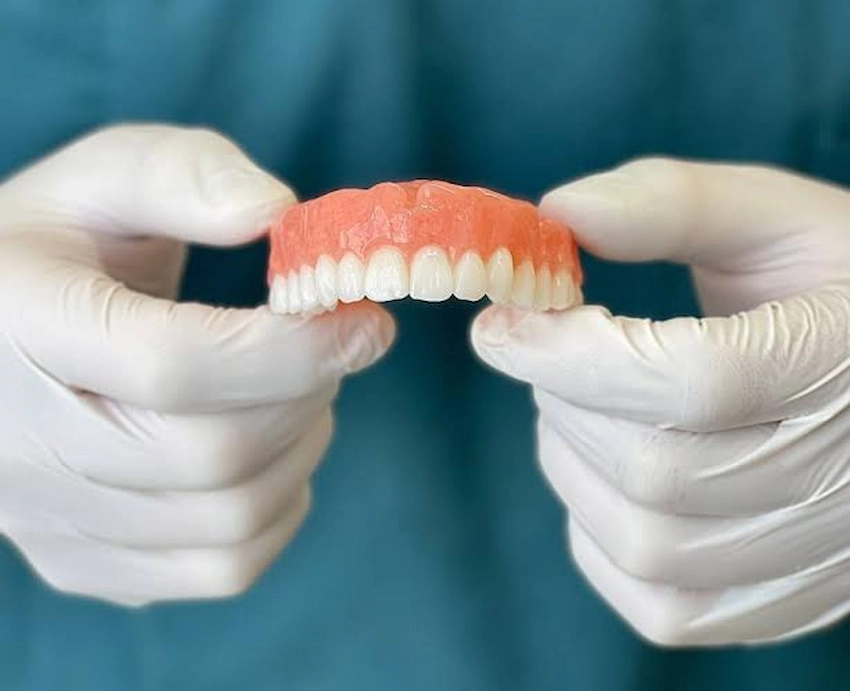
| Rodzaj protezy | Materiał | Prawdopodobieństwo alergii | Korzyść kliniczna |
| Standardowa proteza | PMMA, kobaltowo-chromowa | Umiarkowane do wysokiego | Korzystna ekonomicznie, ale całkowicie opiera się na dziąsłach jako wsparciu. |
| Elastyczna proteza | Nylon (np. Valplast), bez monomerów | Bardzo niskie | Wytrzymała i eliminuje ekspozycję na toksyczność monomerów i metali. |
| Cyrkonowa na implantach | Implanty tytanowe, lity cyrkon | Prawie zerowe | Stabilne zakotwiczenie w kości z luksusową estetyką i bez podrażnień dziąseł. |
Często Zadawane Pytania
Piśmiennictwo naukowe
- Ali, A., Bates, J. F., Reynolds, A. J., & Walker, W. A. (1986). The influence of the curing cycle on the residual monomer levels of acrylic resin denture base polymers. Journal of Dentistry, 14(5), 237-241.
- Leggat, P. A., & Kedjarune, U. (2003). Toxicity of acrylic resin dental materials. International Dental Journal, 53(2), 63-68.
- Syed, M., Chopra, R., & Sachdev, V. (2015). Allergic reactions to dental materials: a systematic review. Journal of Clinical and Diagnostic Research, 9(10), ZE04-ZE09.
- Tosti, A., Peluso, A. M., Fanti, P. A., & Zucchelli, G. (1993). Contact stomatitis due to polymethyl methacrylate. Contact Dermatitis, 28(2), 112-113.
- Weaver, R. E., & Goebel, W. M. (1980). Reactions to acrylic resin dental prostheses. The Journal of Prosthetic Dentistry, 43(2), 138-142.
Pytania pacjentów
For how much time can a soft liner fit well before it starts feeling loose?
A properly fitting soft liner will fit you comfortably anywhere from two to six months. But this also depends on the rate at which your gums shrink. Do not glue it when you find it loose after two weeks; rather, call a dentist to get it safely adjusted.
In the case of soft liners, are there adhesives that are safe and effective?
In case of emergency, an extremely light application of an adhesive powder is somewhat better than applying a thick paste. Powders can be rinsed off more easily. However, this should never be a regular practice, but just a temporary trick.
What is the best method to clean the soft liner without damaging it?
Think of it as a piece of delicate fabric. Do not press with a hard brush or use harsh toothpaste on the soft material,l as in most cases. Wash with warm water. Use a very soft brush or your fingers only to remove food particles.
How come my gums keep shrinking all the time?
The stimulation of natural tooth roots is required by the jawbone for it to stay strong. When you lose your teeth, the body starts absorbing the bone. This will change the shape of your mouth entirely, and in the end, your denture loses its fit.
Are hard reline or implants the only options eventually for me?
Of course, a soft liner is a step only. After the healing of your gums, the soft material is replaced with a hard acrylic resin. A slip-free, non-permanent, bone-loss-stopping solution is a dental implant, and it is a gold standard.